Explainable artificial intelligence has generated extensive technical and human-centered evaluation research, yet substantial uncertainty remains about what explanation evaluations actually demonstrate. This umbrella review synthesizes review-level evidence concerning the evaluation of fidelity, faithfulness, stability, robustness, comprehensibility, cognitive accessibility, decision usefulness, human trust, trust calibration, and reliance. Rather than reviewing explanation algorithms as methods, the article examines the constructs, metrics, study designs, and validity assumptions through which explanation quality has been assessed. The synthesis distinguishes technical correspondence with model behavior from human judgments of plausibility, understanding, usefulness, and satisfaction. It further separates human trust from system trustworthiness and behavioral reliance from beneficial decision support. Review-level evidence indicates that technical metrics are heterogeneous, terminology is inconsistently operationalized, and stable or plausible explanations are not necessarily faithful. Human-centered evaluations frequently rely on self-reported understanding, satisfaction, or trust, while objective comprehension, cognitive load, decision quality, appropriate reliance, overreliance, and underreliance receive less consistent assessment. Evidence linking technical explanation properties to downstream human and institutional outcomes remains limited, particularly across stakeholder groups, realistic decision contexts, repeated use, and changing system conditions. The umbrella synthesis therefore rejects single-metric interpretations of explanation quality and organizes evaluation as a multidimensional evidence problem involving technical validity, cognitive accessibility, decision consequences, calibrated trust, reliance behavior, accountability, and contestability. Its principal contribution is a consolidated evaluation agenda that clarifies what existing measures may support, what they do not establish, and which methodological connections require stronger user-centered, task-specific, longitudinal, and socio-technical validation.
Explainable artificial intelligence has developed from a collection of methods for exposing aspects of opaque model behavior into a broader research domain concerned with transparency, interpretability, human interaction, and responsible system use. Foundational surveys nevertheless reveal substantial heterogeneity in explanation objectives, method families, terminology, and evaluation assumptions [1–3]. Consequently, the presence of an explanation cannot itself demonstrate that the explanation accurately represents a model, helps an intended user, improves a decision, or supports accountable system operation.
Explanation is also a cognitive and social phenomenon rather than solely a technical artifact. People often seek selective, contrastive, context-sensitive accounts that answer particular questions and fit existing knowledge, expectations, and practical goals [4]. An explanation that is mathematically detailed may therefore be inaccessible to its intended audience, whereas an intuitively plausible account may conceal important model behavior. Technical correspondence and human intelligibility must accordingly be treated as related but distinct evaluation targets.
The central evaluation problem is not whether an explanation can be produced, but what the explanation actually achieves. Relevant outcomes include fidelity to the predictive system, stability under appropriate perturbations, comprehensibility for intended stakeholders, support for accurate mental models, usefulness within a decision task, calibrated rather than maximized trust, appropriate rather than indiscriminate reliance, and effective opportunities for scrutiny or challenge. These outcomes occur at different evidentiary levels and should not be collapsed into a general claim that an explanation is “good.”
This article provides an original umbrella review of review-level evidence on explainability evaluation. It compares how prior reviews characterize technical properties, human-centered outcomes, trust, reliance, decision support, and evaluation validity; identifies recurrent construct and measurement gaps; and develops a future evaluation agenda. The synthesis does not independently establish that explanations improve understanding, decisions, accountability, or deployment outcomes. Its contribution is to clarify what existing evaluations measure, which conclusions those measures may support, and where stronger evidence remains necessary.
Explainability evaluation is complicated because explanation systems are designed for different users and purposes. Developers may seek debugging information, auditors may require evidence of model behavior, domain professionals may need decision-relevant reasoning, and affected individuals may need understandable grounds for challenge or recourse. Evaluation should therefore be aligned with the intended stakeholder, explanatory objective, model context, and practical task rather than applying the same success criterion universally [5].
Terminological inconsistency further weakens comparison. Explainability, interpretability, transparency, comprehensibility, fidelity, faithfulness, robustness, usefulness, and trust are sometimes treated as interchangeable despite referring to different properties or outcomes. Reviews of evaluation approaches show that technical, human-grounded, and application-grounded assessments are often combined without clear construct boundaries [6]. Metric validity becomes uncertain when a measure’s label, operational definition, and intended inference do not correspond.
Technical evaluation usually examines whether an explanation reflects some aspect of model behavior. Proposed measures address correctness, fidelity, robustness, consistency, completeness, sparsity, sensitivity, or related properties, but their definitions and implementations vary across explanation families. A systematic review of quantitative evaluation methods found broad metric proliferation alongside uneven coverage and limited standardization [7]. A favorable score may therefore support a narrow property claim while remaining insufficient for claims about comprehension, usefulness, trustworthiness, or decision quality.
Human-centered evaluation introduces additional validity problems. Self-reported clarity, satisfaction, confidence, or trust can be informative, but they do not necessarily demonstrate objective understanding, calibrated reliance, or improved decisions. Ecological validity, external validity, stakeholder diversity, system uncertainty, and repeated-use effects are also frequently underdeveloped. Explainability should consequently be treated as one component of trustworthy artificial intelligence rather than as independent proof of fairness, safety, accountability, or readiness for operational use [8].
The umbrella review addresses six questions: which evaluation challenges recur across review-level XAI evidence; how fidelity, faithfulness, stability, robustness, and consistency are assessed; how comprehensibility, cognitive accessibility, mental models, and understanding are evaluated; how decision usefulness, trust calibration, reliance, and automation bias are examined; which cross-dimensional patterns emerge; and which evidence gaps should guide future evaluation. A meta-survey perspective is appropriate because the objective is to synthesize patterns across reviews rather than reinterpret primary findings as direct umbrella-level proof [9].
Eligible evidence sources comprise peer-reviewed review articles and review-oriented syntheses that contribute directly to explanation evaluation. Systematic reviews, survey reviews, meta-surveys, comprehensive reviews, multidisciplinary syntheses, and selected state-of-the-art assessments were prioritized. Supporting conceptual or methodological studies were reserved for constructs requiring additional clarification. Reviews of user studies are especially important because they reveal variation in study populations, explanation tasks, outcome measures, experimental designs, and interpretations of trust or understanding [10].
Evidence extraction was organized around publication type, explainability context, technical evaluation properties, human-centered constructs, decision and trust outcomes, evaluation methods, principal limitations, and contribution to the umbrella synthesis. Broad XAI reviews were used to contextualize method and application diversity, but their findings were not treated as direct evidence that explanations produce beneficial human outcomes [11]. Categories not clearly reported by a source were treated as unreported rather than inferred.
Synthesis was qualitative and construct-centered. Review-level patterns were compared across fidelity, stability, comprehension, cognitive accessibility, decision usefulness, trust, reliance, accountability, and validity. Particular attention was given to tensions between technical and human outcomes and to emerging evaluation challenges involving foundation models. Contemporary interdisciplinary agendas support movement toward stakeholder-aware, impact-oriented, and longitudinal assessment while cautioning against further metric proliferation without stronger validity evidence [12].
Table 1 summarises the umbrella review logic used to identify, screen, map, and synthesize review-level evidence on explainable AI evaluation.
Table 1. Umbrella Review Logic for Explainable AI Evaluation: Review Questions, Evidence-Source Types, Inclusion Criteria, Exclusion Criteria, Screening Logic, Review-Level Evidence Verification, Evidence Extraction Categories, Evaluation-Dimension Mapping, Citation Planning, and Review Boundaries
Review component | Core review question or purpose | Inclusion logic | Exclusion logic | Evidence mapped | Evaluation dimension addressed | Bias or limitation risk | Umbrella review role |
Review questions | Determine what XAI evaluations measure and establish | Questions address technical, cognitive, behavioral, decision, and accountability outcomes | Questions limited to ranking explanation algorithms | Recurring review findings and limitations | Cross-cutting | Scope may become excessively broad | Structures the synthesis |
Evidence-source types | Prioritize review-level knowledge | Systematic, survey, comprehensive, multidisciplinary, and meta-review sources | Non-peer-reviewed or method-only material without evaluation relevance | Review aims, methods, findings, and gaps | Review-level evidence | Review types use different methods | Supports umbrella-level comparison |
Inclusion criteria | Retain sources supporting planned claims | Relevant peer-reviewed journal source with DOI and verified journal standing | Source lacks evaluation relevance or usable evidence | Technical or human-centered evaluation contribution | All domains | Selection may favor prominent terminology | Preserves claim-level relevance |
Exclusion criteria | Prevent unsupported evidence inflation | Not applicable | Conference-only, preprint-only, legal, commercial, policy, or documentation sources | Publication status and substantive fit | Evidence validity | Relevant interdisciplinary evidence may be omitted | Protects source consistency |
Screening logic | Assess relevance and eligibility without fabricated counts | Title, abstract, full-text, journal, DOI, and publication-type checks | Unverifiable or weakly fitting sources | Eligibility characteristics | Cross-cutting | Screening judgments may be subjective | Produces an auditable logic |
Review-level verification | Separate reviews from supporting studies | Review synthesis is clearly identified | Primary evidence represented as umbrella-level evidence | Review status and synthesis scope | Evidence interpretation | Reviews may reproduce weaknesses in primary studies | Maintains article-type integrity |
Evidence extraction | Capture comparable constructs and limitations | Reported technical, human, decision, trust, reliance, or accountability evidence | Unreported information inferred by the reviewer | Aim, context, construct, method, limitation | Evaluation validity | Reporting detail varies | Enables structured comparison |
Dimension mapping | Link evidence to defined evaluation domains | Source supports at least one mapped construct | Decorative or random citation placement | Fidelity, stability, comprehension, usefulness, trust, reliance | Technical and human-centered | Constructs may overlap | Organizes cross-review synthesis |
Citation planning | Preserve first-appearance order and claim fit | Every source has a planned sentence and section | Unplanned grouped or weakly fitted citation | Claim-to-source relationship | Evidence traceability | Overcitation may obscure interpretation | Protects Vancouver sequencing |
Review boundaries | Prevent unsupported conclusions | Cautious synthesis and proposed future directions | Universal metrics, causal proof, certification, or readiness claims | Non-sufficiency boundaries | Validity and deployment boundaries | Readers may interpret synthesis prescriptively | Defines defensible conclusions |
Figure 1 illustrates the umbrella review evidence-mapping workflow used to move from review questions and review-level evidence screening to evaluation-dimension mapping, synthesis, and future evaluation agenda development.
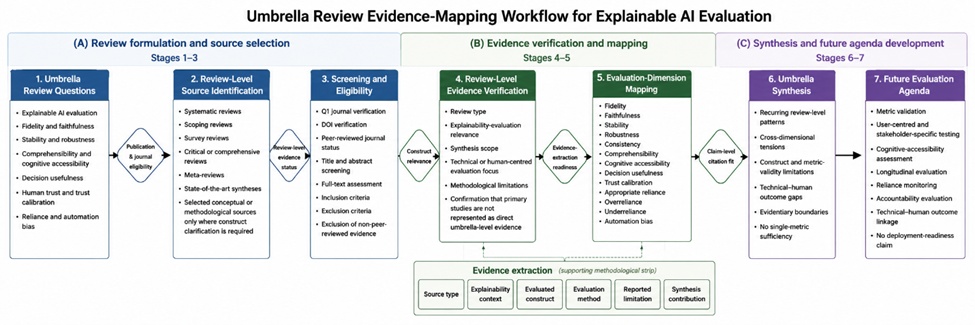
Figure 1. Umbrella Review Evidence-Mapping Workflow for Explainable AI Evaluation
An umbrella review workflow diagram showing review questions, review-level source screening, eligibility checks, evidence verification, evaluation-dimension mapping, evidence extraction, umbrella synthesis, and future evaluation agenda development
Technical evaluation asks whether an explanation corresponds to the behavior of the model it purports to explain. Reviews distinguish attribution, surrogate, perturbation, representation, and example-based assessments, while comparative benchmarks show that explanation methods can receive different rankings under different metrics or tasks [13, 14]. Fidelity scores therefore require interpretation relative to the explanation type, model scope, sampled region, perturbation design, and property being measured.
Fidelity commonly denotes agreement between an explanation or surrogate and model outputs, whereas faithfulness concerns whether the explanation reflects factors actually used by the model. The distinction becomes especially important for post-hoc explanations in high-stakes settings, where a plausible account may rationalize rather than reveal model behavior. Methodological critiques consequently warn against treating post-hoc explanation as equivalent to direct interpretability or transparent reasoning [15].
Model fidelity, explanation fidelity, causal faithfulness, completeness, and sensitivity address related but non-identical questions. A local surrogate can closely reproduce predictions within a restricted neighborhood without characterizing the wider model. Likewise, a complete mathematical decomposition may remain cognitively unusable. Technical surveys of neural-network interpretability show that validity criteria change according to whether the target is a prediction, feature attribution, internal representation, learned concept, or broader model mechanism [16].
Stability, robustness, and consistency concern explanation behavior under repeated computation, input perturbation, model retraining, or adversarial manipulation. Stability is desirable when changes are irrelevant, but sensitivity is necessary when changes are consequential to the model. Evaluation must therefore define which variations should preserve an explanation and which should alter it. In safety-critical contexts, technically polished explanations may otherwise create false reassurance without establishing causal validity, clinical usefulness, or reliable model behavior [17].
No technical property is sufficient by itself. Stable explanations may be consistently wrong; faithful explanations may be too complex for intended users; plausible explanations may be unfaithful; and simple explanations may be incomplete. Feature-importance agreement also provides weak evidence when methods share assumptions or when no independent ground truth exists. Technical evaluation should therefore use property-specific evidence while avoiding transitions from a narrow metric result to claims about human understanding, decision usefulness, trustworthiness, accountability, or deployment readiness.
Table 2 maps review-level evidence on fidelity, faithfulness, stability, robustness, consistency, completeness, plausibility, and technical evaluation limits in explainable AI.
Table 2. Review-Level Evidence on Fidelity, Faithfulness, Stability, and Technical Explanation Evaluation: Model Fidelity, Explanation Fidelity, Causal Faithfulness, Robustness, Consistency, Sensitivity, Completeness, Plausibility, Perturbation Sensitivity, Metric Validity, and Technical-Sufficiency Boundaries
Evaluation construct | Core technical evaluation question | Explanation property assessed | Potential evaluation approach | Review-level evidence pattern | Failure or overclaiming risk | Evidence gap | Umbrella review role |
Fidelity | Does the explanation reproduce relevant model behavior? | Predictive or functional agreement | Surrogate agreement, deletion, insertion, or perturbation tests | Commonly evaluated but operationalized differently | Local agreement may be generalized beyond its tested scope | Weak cross-method comparability | Defines technical correspondence |
Faithfulness | Does the explanation reflect factors actually used by the model? | Model-grounded explanatory accuracy | Ablation, intervention, randomization, or known-ground-truth tests | Often conflated with fidelity or plausibility | Persuasive rationalization may appear faithful | Limited independent ground truth | Establishes model-truth boundary |
Causal faithfulness | Does the stated explanatory cause affect the outcome through the claimed mechanism? | Causal validity | Structural causal modelling and interventions | Rarely demonstrated directly | Correlation or perturbation may be mislabelled causal | Restrictive or absent causal assumptions | Prevents causal overclaiming |
Model fidelity | Does a surrogate approximate the source model in the relevant region? | Surrogate-to-model correspondence | Local or global prediction agreement and coverage | Highly dependent on sampled scope | Narrow fidelity may be presented as global fidelity | Inconsistent coverage reporting | Clarifies surrogate claims |
Explanation fidelity | Does an explanation accurately characterize a particular prediction? | Instance-level correspondence | Feature removal, masking, counterfactual, or attribution tests | Metrics are explanation-family dependent | A metric may favor the assumptions of its own method | Limited cross-family validation | Supports metric-specific caution |
Stability and consistency | Are explanations reproducible across similar inputs, runs, or equivalent models? | Reproducibility and agreement | Rank correlation, repeated fitting, seed variation, or overlap | Definitions and neighbourhoods vary | Repeatability may be mistaken for correctness | No standard semantic neighbourhood | Separates reproducibility from validity |
Robustness | Does the explanation resist irrelevant noise or manipulation? | Resistance to perturbation and attack | Noise, adversarial, retraining, and implementation stress tests | Post-hoc methods can be fragile | Robust appearance may conceal systematic error | Limited standardized stress testing | Connects evaluation to failure analysis |
Sensitivity | Does the explanation change when model-relevant information changes? | Responsiveness to consequential variation | Controlled perturbation and ablation curves | Necessary complement to stability | Excessive stability may signal insensitivity | Few joint stability–sensitivity protocols | Frames context-dependent change |
Completeness | How much relevant model behavior is represented? | Explanatory coverage | Reconstruction, attribution-sum, or coverage measures | Usually method-specific | Formal completeness may be cognitively unusable | Weak connection to user-relevant completeness | Separates formal from practical sufficiency |
Plausibility | Does the explanation appear reasonable to a person? | Human-perceived coherence | Expert judgment or agreement with prior knowledge | Frequently treated as a quality proxy | Plausibility may conceal unfaithfulness | Few joint plausibility–faithfulness tests | Exposes a central evaluation tension |
Perturbation sensitivity | How does explanation output react to controlled changes? | Local response behavior | Masking, insertion, deletion, or input-noise testing | Widely used but design-sensitive | Unrealistic perturbations can distort conclusions | Limited ecological validity | Supports context-specific stress testing |
Metric validity | Does a measure capture the construct attributed to it? | Construct validity | Convergent, discriminant, predictive, and ground-truth validation | Validation remains uneven | Metric labels may imply unsupported properties | Few independently validated measures | Prioritizes measurement validity |
No fidelity-sufficiency boundary | Does technical correspondence establish usefulness or understanding? | Boundary between technical and human validity | Combined technical and user/task evaluation | Review evidence does not support sufficiency | Faithful output may be unusable or harmful | Limited technical–human linkage studies | Core umbrella-review boundary |
No stability-sufficiency boundary | Does repeatability establish correctness or value? | Boundary between stability and validity | Joint stability, sensitivity, fidelity, and outcome assessment | Stable explanations may remain wrong or irrelevant | Reproducibility may be treated as truth | Limited multidimensional assessment | Prevents stability overclaiming |
No technical-metric sufficiency boundary | Can one score establish explanation quality? | Multidimensional adequacy | Purpose-specific metric portfolios | Reviews reveal persistent metric trade-offs | Universal scoring suppresses context and stakeholder differences | No validated universal composite metric | Central technical synthesis |
Comprehensibility concerns whether an intended user can interpret an explanation accurately enough for its stated purpose. Medical-XAI reviews illustrate that explanation format, terminology, granularity, and visual representation must correspond to domain knowledge and clinical tasks rather than satisfy a generic simplicity criterion [18]. A representation that assists a model developer may be unsuitable for a clinician, patient, auditor, or person affected by an automated decision.
Understandability is often evaluated through perceived clarity, satisfaction, preference, or ease-of-use measures. These outcomes describe user experience but do not necessarily establish objective comprehension or accurate mental models. Healthcare evidence shows that terminology, design choices, and evaluation strategies remain inconsistent, limiting comparison between explanations and preventing broad inferences about trustworthy outcomes [19]. Evaluations should distinguish what users believe they understand from what they can correctly infer about system behavior, limitations, and errors.
Cognitive accessibility extends beyond nominal understandability. It includes the mental effort, time, literacy, expertise, accessibility requirements, and workflow conditions under which an explanation is processed. Multidisciplinary evidence indicates that explanation requirements vary across technical developers, healthcare professionals, organizational decision makers, and affected individuals [20]. Explanation evaluation should therefore consider whether users can access, interpret, and use the information under realistic constraints rather than only under idealized study conditions.
Stakeholder goals also shape the appropriate balance between simplicity and completeness. Lay users may require concise contrastive accounts, while technical experts may need detailed evidence for debugging and auditing. Domain experts may require explanations that expose uncertainty, alternative hypotheses, and clinically consequential features. Stakeholder-oriented synthesis consequently shows that explanation quality cannot be judged independently of the explanatory need being served [21]. Preferred explanations may still be inaccurate, insufficient, or ineffective for the target task.
Cognitive load, explanation overload, and explanation mismatch remain comparatively underexamined. Human-centered design work suggests that explanations should fit professional workflow, information needs, interaction patterns, and available decision time [22]. Progressive disclosure, interactive questioning, and adaptable detail may improve accessibility, but these strategies require validation. Comprehensibility alone does not establish fidelity, usefulness, appropriate reliance, or trustworthy system operation, and exposure to an explanation does not guarantee an accurate or durable understanding.
Human trust is a multidimensional attitude influenced by system performance, task characteristics, institutional context, user experience, and presentation. Reviews also reveal substantial variation in the definitions and measurements applied to trust in AI-enabled systems [23, 24]. Trust must therefore be distinguished from trustworthiness: the former concerns a person’s attitude, while the latter concerns whether the system merits confidence based on evidence such as competence, robustness, accountability, and responsible governance.
Explanation effects on trust are heterogeneous. Clinical reviews report that explanations may increase, decrease, or leave trust unchanged depending on explanation type, user expertise, system performance, and study design [25]. A directional change in trust does not establish improvement because reduced trust may be appropriate when a system is unreliable, while increased trust may constitute overtrust when an explanation is persuasive but incomplete or misleading.
Decision usefulness requires evaluation beyond user attitudes. Review-level synthesis suggests tracing a sequence from explanation properties to user perceptions, cognitive responses, behavioral choices, and downstream consequences [26]. Relevant outcomes include error detection, task performance, decision quality, appropriate acceptance of correct advice, rejection of incorrect advice, and effective use of uncertainty. Satisfaction or perceived usefulness should not substitute for evidence that explanations improve the decision process.
Trust calibration concerns whether confidence varies appropriately with system capability and case-level correctness. Evidence from clinical decision-support research indicates that explanation class, presentation, workflow fit, and professional context can affect calibration differently [27]. Calibration should therefore be assessed through users’ responses to both accurate and inaccurate AI recommendations rather than through average trust ratings alone.
Reliance is behavioral and can diverge from stated trust. Explanations may alter confidence without improving performance, or change acceptance behavior without helping users distinguish correct from incorrect recommendations [28]. Appropriate reliance requires correct acceptance and correct rejection; overreliance includes following erroneous advice, whereas underreliance includes rejecting valid assistance. Evaluation must also consider automation bias, uncertainty communication, verification behavior, and human–AI complementarity. No increase in trust or reliance guarantees better decisions.
Table 3 synthesises review-level evidence on comprehensibility, cognitive accessibility, decision usefulness, human trust, trust calibration, reliance, overreliance, underreliance, and automation bias.
Table 3. Review-Level Evidence on Human-Centered Explainability Evaluation: Comprehensibility, Understandability, Cognitive Accessibility, Cognitive Load, Mental Models, Decision Usefulness, Decision Quality, Human Trust, Trust Calibration, Appropriate Reliance, Overreliance, Underreliance, Automation Bias, and Reliance Boundaries
Human-centered evaluation construct | Core human or decision question | User, decision, or task context | Evaluation function | Review-level evidence pattern | Failure or misinterpretation risk | Oversight or validation need | Umbrella review role |
Comprehensibility | Can the intended user interpret the explanation? | Expertise- and task-dependent | Perceived and objective comprehension tests | Commonly assessed, but definitions vary | Clarity may be mistaken for understanding | Separate self-report from demonstrated comprehension | Defines user-level intelligibility |
Cognitive accessibility | Can the explanation be processed under real constraints? | Time, literacy, disability, stress, and workflow | Accessibility and workload assessment | Less studied than general usability | Technically clear information may remain inaccessible | Inclusive and context-sensitive testing | Broadens human-centered validity |
Cognitive load | How much mental effort does processing require? | Complex or time-critical tasks | Workload, response-time, or secondary-task measures | Increasingly recognized but inconsistently measured | Excess detail can impair verification | Link workload to decision outcomes | Frames explanation-overload risk |
Mental-model support | Does the user learn system capabilities and limits? | Repeated human–AI interaction | Prediction, transfer, and error-anticipation tasks | Frequently claimed but rarely tested over time | Explanations may create inaccurate mental models | Longitudinal and transfer assessment | Connects comprehension to calibration |
User expertise | How does knowledge shape explanation use? | Lay, technical, and domain users | Stratified outcome analysis | Expertise affects needs and interpretation | Aggregate findings can conceal subgroup failure | Report role-specific effects | Supports stakeholder adaptation |
Decision usefulness | Does the explanation aid the decision process? | Goal-defined decision task | Error detection, information use, and task outcomes | Less often validated than perceived usefulness | A liked explanation may be practically ineffective | Compare meaningful task outcomes | Defines practical value |
Decision quality | Are final decisions more appropriate? | Human-only, AI-only, and team settings | Accuracy, error cost, or domain-defined quality | Results are context-dependent | Compliance may be mislabelled as improvement | Evaluate correct and incorrect AI advice | Separates uptake from benefit |
Human trust | What attitude does the user hold toward AI? | System-, user-, and context-dependent | Trust scales and qualitative accounts | Concepts and measures are heterogeneous | Higher trust may be unwarranted | Pair trust with system-performance evidence | Separates trust from trustworthiness |
Trust calibration | Does confidence correspond to capability? | Variable system correctness | Case-level alignment and error discrimination | Increasingly emphasized but inconsistently operationalized | Mean trust does not show calibration | Include correct and incorrect cases | Reorients evaluation toward warranted trust |
Appropriate reliance | Does behavior match when AI should be used? | Collaborative decision support | Correct acceptance and rejection | Often conflated with trust | Greater use may reduce decision quality | Measure behavior independently of attitude | Central behavioral criterion |
Overreliance | Are incorrect recommendations accepted? | Plausible AI errors and time pressure | Agreement with wrong advice and missed-error rates | Explanations do not consistently prevent it | Persuasive rationales can strengthen deference | Include wrong-advice trials | Identifies explanation-induced harm |
Underreliance | Are correct recommendations rejected? | Low trust or confusing explanations | Rejection of correct advice | Less studied than overreliance | Useful support may be unnecessarily ignored | Evaluate disuse and missed benefit | Completes reliance analysis |
Automation bias | Does AI distort information search or judgment? | Authority cues and pressured decisions | Omission, commission, and verification measures | Effects vary with explanation design | Explanation may become another authority cue | Bias-sensitive experimental conditions | Connects XAI with cognitive bias |
No trust-sufficiency boundary | Does increased trust prove explanation quality? | All human–AI contexts | Joint trust and performance assessment | Evidence does not support the inference | Trust maximization can encourage overreliance | Assess whether trust is warranted | Core trust boundary |
No reliance-benefit boundary | Does greater reliance improve outcomes? | Depends on AI correctness and complementarity | Conditional reliance analysis | Reliance may help or harm | Adoption may be mistaken for success | Link behavior to decision quality | Prevents reliance overclaiming |
Across the reviewed evidence, explanation evaluation forms a chain rather than a single measurement problem. Technical validity may be necessary for some purposes, but downstream outcomes depend on whether users engage with and verify explanations. Experimental evidence indicates that explanations may reduce overreliance when their information is usable and when users have sufficient motivation and ability to evaluate it [29]. Explanation presence alone is therefore a weak intervention specification.
Automation bias further complicates the relationship between explanation and decision usefulness. Review evidence suggests that explanations can support critical examination, but can also increase deference when they appear authoritative, fluent, or confirmatory [30]. Evaluation should distinguish assistance from cognitive substitution and should examine whether users search for independent evidence, recognize AI errors, and adjust reliance appropriately.
Trustworthy evaluation also extends beyond the explanation interface. Robustness, fairness, privacy, human oversight, security, and accountability remain relevant even when an explanation is technically faithful and understandable [31]. Explanation evaluation should consequently be embedded within broader system assurance rather than used as a substitute for evaluating the intelligent system, organizational process, or decision environment.
Accountability-oriented explanations require more than descriptive transparency. Recourse research distinguishes explanations of why an outcome occurred from recommendations that are feasible, actionable, and capable of producing a consequential change [32]. Contestability additionally requires that explanations support the identification of possible error, meaningful challenge, review by an appropriate authority, and correction or remedy where warranted.
Counterfactual proximity, sparsity, and plausibility may improve presentation but do not guarantee causal validity or feasible recourse [33]. Foundation-model explanations add further concerns because fluent generated rationales may be evaluated as explanations despite uncertain correspondence with internal mechanisms [34]. More broadly, explainability contributes to trustworthy AI only when combined with socio-technical governance, auditability, responsibility, and institutional safeguards [35]. No isolated metric or evaluation layer is sufficient.
Table 4 presents the umbrella synthesis of explainability evaluation evidence, including cross-dimensional tensions, evaluation implications, remaining gaps, and future evaluation needs.
Table 4. Umbrella Synthesis of Explainability Evaluation Evidence: Fidelity Versus Plausibility, Faithfulness Versus Comprehensibility, Stability Versus Context Sensitivity, Understanding Versus Cognitive Load, Trust Versus Trustworthiness, Trust Calibration Versus Persuasion, Decision Usefulness Versus Automation Bias, Technical Metrics Versus Human Outcomes, and Future Evaluation Priorities
Synthesis theme | Evaluation dimensions involved | Review-level evidence pattern | Tension or trade-off | Evaluation implication | Remaining evidence gap | Future evaluation need | Umbrella review contribution |
Fidelity versus plausibility | Faithfulness and human judgment | Usually evaluated separately | Convincing accounts may not reflect model behavior | Measure both independently | Few joint tests | Dual technical–human protocols | Prevents plausible rationalization claims |
Faithfulness versus comprehensibility | Technical validity and accessibility | Faithful detail may be complex | Accuracy versus processing ease | Document simplification and information loss | Weak translation evidence | Layered explanations with fidelity checks | Clarifies non-equivalence |
Stability versus context sensitivity | Stability, robustness, and sensitivity | Perturbation definitions vary | Invariance versus necessary response | Define semantically relevant changes | No standard contextual protocol | Joint stability–sensitivity assessment | Makes stability conditional |
Simplicity versus completeness | Sparsity, coverage, and cognitive load | Simple outputs are frequently preferred | Ease versus omitted information | Evaluate task-relevant sufficiency | Unknown optimal complexity | Adaptive detail and progressive disclosure | Links parsimony to task need |
Understanding versus cognitive load | Comprehension and mental models | Self-report dominates | Detail may aid coverage but impair processing | Use objective and workload measures | Limited retention evidence | Longitudinal mental-model testing | Separates clarity from learning |
Trust versus trustworthiness | Human attitude and system assurance | Constructs are frequently blurred | Confidence may be unwarranted | Evaluate trust alongside system evidence | Few integrated studies | Joint trustworthiness–trust evaluation | Establishes construct boundaries |
Trust calibration versus persuasion | Calibration and influence | Explanations can increase acceptance | Warranted confidence versus persuasion | Condition effects on AI correctness | Limited persuasion audits | Wrong-advice and misleading-explanation tests | Identifies overtrust pathways |
Decision usefulness versus automation bias | Task support and overreliance | Benefits depend on task and error context | Assistance versus cognitive substitution | Measure verification and error correction | Artificial tasks dominate | Realistic decision studies | Makes usefulness error-sensitive |
Technical metrics versus human outcomes | Fidelity, comprehension, trust, and decisions | Evaluation layers remain weakly connected | Model validity versus practical consequence | Use integrated, staged assessment | Sparse causal linkage | Multilevel evaluation designs | Principal umbrella synthesis |
Short-term versus longitudinal evidence | Trust, learning, and reliance | Most user studies are brief | Immediate response versus adaptation | Interpret immediate effects cautiously | Limited repeated-use evidence | Longitudinal and field evaluation | Adds temporal validity |
No single-metric sufficiency boundary | All dimensions | Evidence supports heterogeneous measures | Comparability versus oversimplification | Use purpose-specific portfolios | No universal validated score | Construct-to-measure mapping | Rejects universal metric claims |
Figure 2 presents the umbrella synthesis model of explainability evaluation, linking technical explanation properties, human comprehension, decision usefulness, trust calibration, reliance behavior, evaluation validity, and future evaluation priorities.
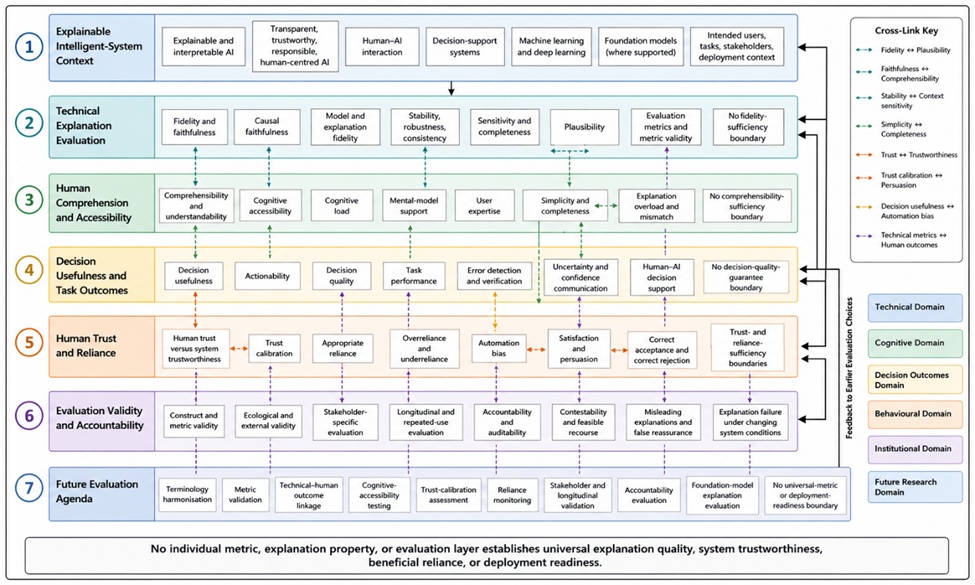
Figure 2. Umbrella Synthesis Model of Explainability Evaluation Outcomes
A conceptual umbrella synthesis model showing explainability evaluation across technical properties, human comprehension, cognitive accessibility, decision usefulness, trust calibration, reliance, evaluation validity, accountability, and future evaluation gaps.
The first priority is construct and metric validity. Fragmented terminology permits fidelity, faithfulness, plausibility, comprehensibility, satisfaction, trust, and reliance to be treated as interchangeable. Future research should define each construct before selecting a measure, state the inference that the measure can support, and test convergent, discriminant, and predictive validity. Proposed metric portfolios should remain purpose-specific rather than becoming universal explanation scores.
A second priority is stronger linkage between technical properties and human outcomes. Evaluations should examine whether variations in fidelity, stability, completeness, uncertainty, or explanation complexity alter objective understanding, cognitive load, error detection, decision quality, and reliance. Stability protocols should distinguish irrelevant perturbations from contextually meaningful change. Comprehensibility studies should include lay users, technical experts, domain professionals, and affected stakeholders rather than assuming that one representation serves all audiences.
A third priority concerns realistic and longitudinal evaluation. Short-term experiments should be complemented by repeated-use studies that assess learning, mental-model development, changing trust, reliance adaptation, system updates, distribution shift, and accumulated error. Decision studies should include correct and incorrect AI advice, meaningful uncertainty, consequences for disagreement, and opportunities for verification. Accessibility, workflow fit, explanation overload, underreliance, overreliance, and automation bias should be treated as primary evaluation concerns rather than incidental observations.
The final priority is institutional validity. Explanations used in consequential systems should be evaluated for whether they support auditability, contestability, feasible recourse, correction, and accountable decision processes. Foundation-model evaluation should distinguish generated rationales from evidence about model mechanisms and should test fluent explanations for misleading confidence. These directions are proposed evaluation priorities grounded in recurring review-level gaps; they do not constitute a validated universal framework or establish legal compliance, operational safety, certification, or deployment readiness.
This umbrella review synthesizes what explainable-AI evaluations measure and what they do not establish across fidelity, faithfulness, stability, robustness, comprehensibility, cognitive accessibility, decision usefulness, human trust, trust calibration, and reliance. The evidence shows that explanation evaluation is multidimensional: technical correspondence does not guarantee understanding, perceived clarity does not prove faithfulness, trust does not equal trustworthiness, and greater reliance does not necessarily improve decisions. Stronger evaluation should connect technical properties to objective comprehension, realistic decision contexts, uncertainty, verification behavior, calibrated reliance, and institutional opportunities for accountability and contestability. The contribution is therefore not a universal explanation metric, but a review-level synthesis that clarifies evidentiary boundaries and supports more valid, stakeholder-specific, longitudinal, and socio-technical evaluation.
None
None
None
None
Open Access The author(s) retain copyright. This article is licensed under the Creative Commons Attribution-NonCommercial-ShareAlike 4.0 International License. It may be shared and adapted for non-commercial purposes with appropriate attribution, an indication of changes, and distribution of adaptations under the same license. Third-party material may be subject to separate terms identified in its credit line. View the license at https://creativecommons.org/licenses/by-nc-sa/4.0/.
 Transparent Intelligence Publishing