Explainable artificial intelligence increasingly seeks to provide more than visualisations of feature importance or simplified descriptions of model outputs. For intelligent systems used in consequential settings, machine reasoning should be open to questioning, inspection, contextualisation, correction, and evaluation under uncertainty. This integrative review examines emerging approaches that may support this broader objective. It connects causal explainability and counterfactual reasoning with neuro-symbolic intelligence, knowledge-grounded inference, uncertainty-aware explanation, reliability evaluation, and human-centred interpretability. The review uses a structured integrative approach to compare how these paradigms represent causes, alternatives, rules, concepts, knowledge sources, inferential steps, confidence, and limitations. Causal and counterfactual approaches can support questions about mechanisms, contrasts, interventions, actionability, and recourse, but their conclusions depend on explicit assumptions, feasible alternatives, and appropriate causal evidence. Neuro-symbolic and knowledge-grounded approaches can make concepts, relations, rules, provenance, and intermediate reasoning more traceable, although symbolic structure or retrieved knowledge does not automatically ensure faithful, valid, or truthful explanation. Uncertainty-aware approaches can qualify predictions and explanations through uncertainty characterisation, calibration, confidence communication, robustness assessment, and human interpretation, but uncertainty estimates alone do not establish reliability. The synthesis indicates that no individual paradigm is sufficient. More defensible machine reasoning requires complementary evaluation of explanation fidelity, causal plausibility, knowledge validity, reasoning traceability, uncertainty communication, cognitive accessibility, contestability, and lifecycle accountability. Important research opportunities concern causal validation, feasible recourse, provenance governance, explanation uncertainty, hybrid-system evaluation, human-centred testing, and cross-paradigm assessment. The review contributes an integrated account of how machine reasoning may become not merely visible, but meaningfully open to question.
Explainable artificial intelligence has developed into a broad field encompassing interpretable modelling, post-hoc explanation, local and global analysis, visualisation, rule extraction, example-based explanation, and responsible-AI considerations. These approaches differ in what they expose, whom they address, and whether they aim to describe model behaviour, support understanding, enable oversight, or justify decisions. Consequently, explanation availability cannot be treated as a uniform property or as sufficient evidence that an intelligent system is trustworthy [1].
Many widely used explanation techniques illuminate correlations between inputs and outputs without revealing a complete inferential process. Feature attribution, surrogate modelling, decision rules, prototypes, and counterfactual examples may provide valuable access to model behaviour, yet each represents only a particular explanatory perspective. A system may therefore be locally explainable while its knowledge sources, causal assumptions, uncertainty, internal dependencies, or decision boundaries remain difficult to inspect [2].
Human explanation also differs from unrestricted technical disclosure. People commonly seek selective and contrastive answers: why one outcome occurred rather than another, what information mattered, what alternatives were possible, and how a decision could be challenged or changed. Explanations are consequently shaped by the recipient’s question, prior knowledge, practical objective, and social context. Machine reasoning becomes meaningfully open to question only when explanatory information supports such situated inquiry [3].
This review integrates emerging approaches that move beyond surface-level visibility toward reasoning that can be interrogated, contextualised, qualified, and criticised. Its central contribution is to connect causal, counterfactual, neuro-symbolic, knowledge-grounded, and uncertainty-aware explainability through shared concerns about reasoning transparency, explanation fidelity, traceability, human critique, and reliability. The synthesis remains evaluative rather than prescriptive: explanation design must be aligned with the intended domain, users, decisions, and validation requirements before it can contribute to trustworthy practice [4].
Established explainability research provides an essential foundation for reasoning-oriented approaches. Model-specific and model-agnostic methods can describe global behaviour, individual predictions, feature influence, decision boundaries, representative cases, and extracted rules. Emerging paradigms should therefore not be understood as replacements for conventional explainability. Rather, they expand the object of explanation from predictive behaviour toward mechanisms, alternatives, structured knowledge, inferential relations, and limitations [5].
Deep-learning explanations illustrate why this expansion is necessary. Attribution maps, relevance propagation, activation analysis, concept methods, and visualisation techniques can reveal how neural models respond to particular inputs. Nevertheless, sensitivity to a feature does not demonstrate that the feature constitutes a causal reason, that the explanation reproduces the complete decision process, or that the same rationale remains stable under meaningful changes. Reasoning transparency requires additional evidentiary and structural support [6].
Reliable machine reasoning also raises a design-level question: whether an opaque model should be explained after prediction or replaced by an interpretable model when a sufficiently accurate transparent alternative is available. In high-stakes contexts, post-hoc explanation can introduce approximation errors and may provide an appearance of understanding without exposing the actual decision logic. Interpretability, explanation fidelity, and model selection must therefore be considered together rather than treated as interchangeable remedies for opacity [7].
Causal explanation, counterfactual questioning, neuro-symbolic reasoning, knowledge grounding, and uncertainty communication represent complementary responses to these limitations. They seek to expose mechanisms, possible alternatives, symbolic relationships, evidence sources, inferential steps, or limits on confidence. However, none automatically establishes dependable reasoning. Their contribution depends on validated assumptions, faithful traces, reliable knowledge, comprehensible communication, and opportunities for human challenge, correction, and oversight [8].
The review addresses six integrative questions: how emerging paradigms make reasoning open to question; how causal and counterfactual approaches support explanation, action, and critique; how neuro-symbolic and knowledge-grounded approaches support traceability; how uncertainty-aware explanation contributes to reliable interpretation; where these approaches can converge; and which research gaps prevent accountable use. Evaluation is treated as multidimensional because existing XAI assessment remains fragmented across fidelity, robustness, plausibility, usefulness, stability, and human-centred criteria [9].
The analytical scope includes peer-reviewed journal scholarship relevant to explainable machine reasoning, causal explanation, counterfactual reasoning, neuro-symbolic intelligence, structured knowledge, uncertainty communication, and trustworthy AI. Sources were retained when they supplied conceptual distinctions, methodological comparisons, human-centred findings, evaluation principles, or integrative implications. Narrow performance studies without a clear reasoning, explanation, reliability, or accountability contribution were excluded. This approach distinguishes explanation objectives and evaluation targets rather than assuming that interpretability has a single accepted meaning [10].
Evidence extraction focused on the reasoning question addressed, the explanatory function performed, the relevant assumptions, the potential human use, the major failure or overclaiming risk, and the required validation or governance process. The synthesis also distinguished fidelity from plausibility, explanation from justification, causal reasoning from associative prediction, structured knowledge from validated knowledge, and confidence from demonstrated reliability. These distinctions reflect the pragmatic principle that explanatory value depends partly on the user’s epistemic situation and practical purpose [11].
The synthesis proceeded through cross-paradigm comparison rather than quantitative aggregation. Each approach was examined according to what can be questioned: model behaviour, causal assumptions, alternatives, rules, semantic relations, knowledge sources, inferential steps, uncertainty, or institutional responsibility. Human–agent explainability was therefore treated as an interaction involving an identifiable recipient, task, timing, and decision context rather than as static information presented independently of use [12].
Table 1 summarises the integrative review logic used to connect causal, neuro-symbolic, knowledge-grounded, and uncertainty-aware explainability as emerging paradigms for reliable machine reasoning.
Table 1. Integrative Review Logic for Reliable Machine Reasoning: Review Questions, Analytical Scope, Inclusion Criteria, Exclusion Criteria, Evidence Extraction Categories, Paradigm Mapping, Reasoning-Transparency Dimensions, Citation Planning, and Review Boundaries
Review component | Core integrative question or purpose | Inclusion logic | Exclusion logic | Evidence mapped | Reasoning or explainability dimension addressed | Bias or limitation risk | Integrative review role |
Problem framing | What makes machine reasoning open to question? | Work addressing explanation, reasoning, reliability, or critique | Work limited to predictive accuracy | Definitions and conceptual boundaries | Reasoning transparency and human critique | Overly broad use of “explanation” | Establishes the review’s central problem |
Causal stream | How are causes, interventions, and assumptions represented? | Causal explanation, inference, graphs, pathways, and interventions | Associational interpretation presented as causality | Causal claims, assumptions, and validation needs | Causal plausibility and intervention reasoning | Causal overclaiming | Defines causal-questioning boundaries |
Counterfactual stream | How are alternatives, actionability, and recourse addressed? | Contrastive, counterfactual, what-if, and recourse research | Alternatives lacking explanatory relevance | Feasibility, proximity, actionability, and consequences | Alternative-based explanation | Unrealistic or ineffective alternatives | Separates explanation from guaranteed recourse |
Neuro-symbolic stream | How are learned and structured reasoning integrated? | Hybrid, symbolic, relational, compositional, and logic-based reasoning | Architecture descriptions without explanatory relevance | Integration points and reasoning traces | Structured reasoning and traceability | Assuming symbols ensure interpretability | Compares hybrid reasoning functions |
Knowledge-grounded stream | What knowledge supports the inference? | Knowledge graphs, ontologies, grounding, provenance, and validity | Retrieval without reasoning or explanation relevance | Source lineage, semantic relations, and knowledge quality | Knowledge traceability | Treating retrieval as factual proof | Connects evidence sources with critique |
Uncertainty stream | How are limitations and confidence communicated? | UQ, calibration, confidence, robustness, and uncertainty communication | Confidence values without reliability relevance | Uncertainty type, estimation, and interpretation | Qualified explanation and reliability | Miscalibration or user misunderstanding | Integrates uncertainty with explanation |
Human-centred stream | Who questions the reasoning and for what purpose? | Human understanding, interaction, contestability, and trust calibration | Explanation evaluated only through technical availability | Audience, task, usefulness, and cognitive demands | Cognitive accessibility | Generalising across stakeholder groups | Connects technical explanations with use |
Synthesis and boundaries | Where can approaches converge without overclaiming? | Evidence supporting complementary functions or identified gaps | Claims of universal sufficiency or readiness | Trade-offs, convergence opportunities, and research needs | Cross-cutting accountability | Normative inference beyond evidence | Produces the integrative contribution |
Figure 1 illustrates the integrative analytical approach used to connect causal, counterfactual, neuro-symbolic, knowledge-grounded, and uncertainty-aware explainability as complementary routes toward machine reasoning that can be questioned.
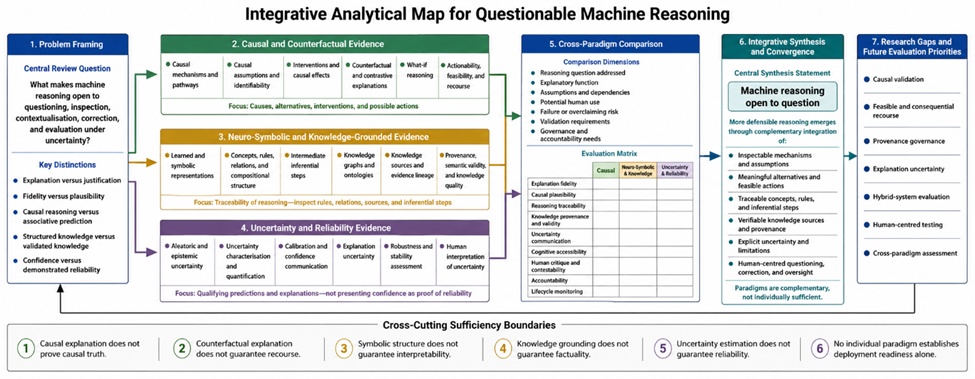
Figure 1. Integrative Analytical Map for Questionable Machine Reasoning
An integrative review map showing causal explainability, counterfactual reasoning, neuro-symbolic intelligence, knowledge grounding, uncertainty-aware explanations, reliability, human critique, accountability, synthesis, and future research gaps.
Causal explainability seeks to move from statistical association toward accounts of variables, mechanisms, and interventions that may influence an outcome. Causal reasoning asks what would occur if a condition were actively changed, whereas causal inference concerns whether such effects can be identified from data under stated assumptions. Causal representation learning may support mechanism-sensitive reasoning and robustness across changing environments, but its conclusions remain dependent on identifiability, invariance, data adequacy, and domain knowledge [13].
A causal explanation should therefore make its assumptions open to challenge. It may refer to a causal graph, pathway, mediator, intervention, or structural relationship, but the presence of causal terminology does not prove that the represented relation is correct. Counterfactual explanation can strengthen questioning by showing how an alternative state relates to a different outcome, yet a generated alternative can remain associational, infeasible, or inconsistent with the underlying data-generating process [14].
Counterfactual methods commonly optimise several competing properties, including proximity to the observed case, sparsity of change, plausibility, diversity, stability, and actionability. Improvements in one property may weaken another. A very close counterfactual can depend on an immutable characteristic, while a plausible alternative can require several costly changes. Counterfactual quality must consequently be evaluated against the intended explanatory and decision context rather than through a single generic criterion [15].
Contrastive explanation addresses why one outcome occurred rather than a specified alternative, while what-if reasoning explores how predictions respond to hypothetical changes. These approaches can be cognitively useful because they correspond to common human questions, but they should not be conflated with intervention-based causal reasoning. Their validity depends on meaningful foil selection, realistic feature dependencies, temporal order, and an explicit distinction between model sensitivity and changes that would occur in the world [16].
Actionability concerns whether a proposed change can be performed, whereas recourse asks whether feasible action is likely to produce a favourable future result. A nearby counterfactual does not guarantee either. Recommendations may fail because of causal dependencies, institutional constraints, model updates, delayed effects, or environmental uncertainty. Responsible recourse therefore requires feasibility assessment, causal and consequential validation, monitoring, and an accountable process through which affected people can question ineffective recommendations [17].
Table 2 maps causal explainability and counterfactual reasoning approaches according to reasoning questions, explanation functions, assumptions, validation needs, accountability roles, and boundary conditions.
Table 2. Causal Explainability and Counterfactual Reasoning for Questionable Machine Reasoning: Causal Explanation, Counterfactual Explanation, Contrastive Explanation, What-If Reasoning, Intervention Reasoning, Actionability, Recourse, Causal Graphs, Causal Assumptions, Feasibility Constraints, and Causal-Truth Boundaries
Approach or concept | Core reasoning question | Explanation function | Potential use | Failure or overclaiming risk | Validation or assumption need | Human critique or accountability role | Integrative review role |
Causal explainability | Which mechanisms are claimed to produce the outcome? | Connects explanation with causal structure | Mechanism-oriented interpretation | Association may be presented as causation | Explicit model, assumptions, and domain evidence | Enables challenges to the proposed mechanism | Extends explanation beyond sensitivity |
Causal inference | What causal effect is identifiable? | Estimates effects under assumptions | Intervention and policy comparison | Confounding or misspecification | Identification strategy and sensitivity analysis | Exposes evidentiary premises | Disciplines causal claims |
Causal explanation | What caused this outcome under the stated account? | Gives an outcome-specific causal justification | Decision and incident review | May imply excessive certainty | Causal definition, contrast, and evidence | Supports dispute over causes | Adds mechanism-sensitive critique |
Counterfactual reasoning | What would happen under an alternative condition? | Compares actual and alternative states | Scenario exploration | Alternative world may be incoherent | Structural dependencies and temporal validity | Tests hidden dependencies | Supports alternative-based questioning |
Counterfactual explanation | What must differ for the output to change? | Produces an output-changing alternative | Local explanation | Minimal change may be infeasible | Plausibility, stability, and causal consistency | Provides a concrete basis for challenge | Links explanation and possible action |
Contrastive explanation | Why this outcome rather than the foil? | Selects differences relevant to a comparison | Human-centred explanation | Misleading foil selection | Explicit and meaningful comparison | Lets users define the relevant alternative | Aligns explanation with user questions |
What-if reasoning | How does the model respond to hypothetical variation? | Reveals prediction sensitivity | Interactive exploration | Hypothetical values may violate dependencies | Realistic ranges and constraints | Supports probing of model behaviour | Offers exploration without causal proof |
Intervention reasoning | What follows from actively changing a variable? | Represents action within a causal system | Planning and decision support | Downstream effects may be omitted | Valid intervention semantics | Enables scrutiny of recommended actions | Bridges causal explanation and action |
Actionability and feasibility | Can the proposed change realistically be made? | Filters alternatives by controllability | Practical guidance | Social or institutional barriers may be ignored | User- and context-specific constraints | Prevents impossible burdens being shifted to users | Grounds counterfactuals in real conditions |
Recourse | Will feasible action improve a future decision? | Converts explanation into consequential guidance | Response to adverse decisions | Outcome improvement may not persist | Prospective validation and institutional support | Supports remedy and appeal | Separates explanation from guaranteed benefit |
Causal graphs and pathways | Which variables, edges, and mediators structure the account? | Makes relationships inspectable | Process analysis | Graphs may be incomplete or disputed | Structure validation and expert review | Allows challenges to nodes, edges, and omissions | Supplies a traceable causal representation |
Causal assumptions | Which premises must hold? | Makes causal conditions explicit | Audit and sensitivity analysis | Hidden assumptions create false authority | Documentation and stress testing | Provides specific propositions to contest | Central condition of questionable reasoning |
No causal-truth or recourse guarantee | What cannot be concluded from the explanation alone? | Defines interpretive boundaries | Responsible communication | Explanation may be mistaken for proof or remedy | Independent evidence and monitoring | Protects users from overclaiming | Preserves the review’s sufficiency boundaries |
Neuro-symbolic intelligence combines statistical learning with structured representations or inference. Its architectures may connect neural perception with relational learning, constraints, rules, logic, or symbolic outputs. Because these combinations differ substantially, neuro-symbolic AI should be treated as a family of hybrid approaches rather than a single reasoning model. Its explanatory value depends on which component is exposed and whether the resulting trace corresponds faithfully to the system’s operation [18].
The prospect of combining adaptive learning with explicit reasoning has motivated descriptions of neuro-symbolic AI as a further wave of intelligent-system research. Symbols, concepts, and rules may make some intermediate operations easier to inspect, but their presence does not make an entire system interpretable. Neural representations, interfaces between components, and conflict-resolution mechanisms can remain opaque and require independent evaluation [19].
Neuro-symbolic designs also differ according to where structured knowledge enters the system. Logic may constrain learning, supervise representation formation, guide inference, validate outputs, or appear only in the final explanation. Compositional and relational reasoning can potentially support reusable concepts and explicit relationships, yet systematic generalisation and trace fidelity must be demonstrated rather than inferred from architectural labels [20].
Knowledge-grounded explanation introduces identifiable domain concepts, entities, relations, or evidence into predictive reasoning. Knowledge graphs can contextualise outputs through semantic paths and structured associations, making it possible to inspect which concepts or relations supported an explanation. Their usefulness nevertheless depends on knowledge coverage, relevance, integration quality, and the extent to which graph-derived paths accurately represent the model’s reasoning [21].
Ontologies, schemas, rules, and provenance records can strengthen traceability by identifying how knowledge was represented, sourced, and transformed. However, structured knowledge may remain incomplete, outdated, disputed, or incorrectly connected to a conclusion. Knowledge grounding should therefore expose source lineage, semantic commitments, and validity limitations rather than functioning as an automatic factuality guarantee [22].
Uncertainty-aware explainability qualifies what a model or explanation claims to know. Epistemic uncertainty concerns limitations in data, knowledge, or model specification and may sometimes be reduced through additional evidence. Aleatoric uncertainty concerns variability associated with the observed process or measurement conditions. These categories are conceptually distinct, although their practical separation can depend on modelling assumptions [23].
Deep-learning uncertainty can be estimated through Bayesian approximations, ensembles, predictive distributions, evidential methods, or related techniques. These approaches differ in computational demands, assumptions, calibration behaviour, and sensitivity to unfamiliar inputs. An uncertainty estimate should consequently be interpreted as a method-dependent output requiring validation rather than as a complete representation of all possible failure [24].
Interpretability and uncertainty can provide complementary information. An explanation may indicate which evidence influenced a prediction, while uncertainty may communicate how cautiously the prediction should be treated. Presenting these signals together may support faster calibration of reliance, but the effect depends on explanation fidelity, uncertainty quality, interface design, user expertise, and decision stakes [25].
Uncertainty communication should help users decide whether to accept, question, defer, corroborate, or seek another opinion. Raw probabilities or confidence labels may be insufficient when users cannot identify what is uncertain or what response is appropriate. Human-centred assessment should therefore test comprehension and decision behaviour rather than assuming that displaying uncertainty automatically improves judgement [26].
Reliability extends beyond confidence estimation. It includes dependable performance under intended conditions, calibration, robustness, external validity, monitoring, and appropriate responses to distribution change. Uncertainty quantification can support responsible decision assistance, but it cannot independently establish that a system is accurate, safe, fair, or operationally dependable [27].
Table 3 synthesises neuro-symbolic, knowledge-grounded, and uncertainty-aware explanation approaches, including reasoning traceability, knowledge provenance, uncertainty communication, reliability, and validation needs.
Table 3. Neuro-Symbolic, Knowledge-Grounded, and Uncertainty-Aware Explainability for Reliable Machine Reasoning: Symbolic Reasoning, Sub-Symbolic Learning, Knowledge Representation, Knowledge Graphs, Ontologies, Rule-Based Inference, Reasoning Traces, Knowledge Provenance, Uncertainty Quantification, Calibration, Confidence Communication, and Reliability Boundaries
Approach or concept | Core reasoning or reliability question | Knowledge, reasoning, or uncertainty function | Potential explanation role | Failure or overclaiming risk | Validation, governance, or monitoring need | Human critique or traceability role | Integrative review role |
Neuro-symbolic AI | How are learning and structured reasoning connected? | Integrates neural and symbolic components | Exposes concepts or intermediate operations | Hybridisation may be mistaken for interpretability | Component and end-to-end evaluation | Enables cross-component inspection | Connects adaptive learning with explicit structure |
Symbolic and rule-based reasoning | Which premises and rules produce the conclusion? | Applies explicit logic or conditions | Produces inspectable derivations | Valid logic may use invalid premises | Rule verification and domain review | Supports rule-level contestation | Strengthens formal traceability |
Sub-symbolic learning | Which statistical patterns support the output? | Learns distributed representations | Supplies predictive inputs to structured reasoning | Internal representations remain opaque | Robustness and representation testing | Requires complementary explanatory access | Provides adaptive pattern recognition |
Hybrid reasoning | How are conflicting reasoning modes reconciled? | Combines statistical and structured inference | Shows complementary evidence and constraints | Interfaces may conceal failure propagation | Integration and conflict-resolution testing | Supports scrutiny of component disagreement | Enables cross-paradigm convergence |
Knowledge representation and ontology | Which concepts and relations define the domain? | Encodes entities, categories, properties, and constraints | Clarifies semantic assumptions | Categories may be incomplete or contested | Ontology governance and version control | Enables challenges to definitions | Grounds reasoning in explicit semantics |
Knowledge graph | Which entities and paths support the conclusion? | Organises relational knowledge | Provides contextual evidence paths | Graph structure may be inaccurate or incomplete | Quality, coverage, and relevance assessment | Supports path-level inspection | Connects explanation with structured evidence |
Knowledge provenance and validity | Where did knowledge originate, and is it appropriate? | Records source and transformation history | Enables evidence attribution | A cited source may not support the inference | Source authentication and correction workflows | Supports audit and correction | Links grounding with accountability |
Reasoning trace | Which steps led to the output? | Records intermediate operations | Makes inference inspectable | Generated traces may be incomplete or post-hoc | Fidelity and reproducibility testing | Provides concrete points for challenge | Operationalises reasoning traceability |
Uncertainty quantification | What uncertainty can the model estimate? | Characterises predictive limitations | Qualifies conclusions | Estimates may be miscalibrated | External validation and recalibration | Supports cautious interpretation | Adds epistemic qualification |
Calibration | Does expressed confidence match observed performance? | Relates probability to empirical frequency | Makes confidence more interpretable | Aggregate calibration can conceal subgroup error | Contextual and subgroup monitoring | Enables scrutiny of confidence claims | Connects confidence with reliability evidence |
Confidence and uncertainty communication | How should limitations be presented to users? | Translates estimates into decision information | Supports deferral and corroboration | Displays may confuse or falsely reassure | Human-centred interface testing | Enables appropriate questioning | Connects technical uncertainty with action |
Reliability and robustness | Does the system remain dependable under intended and changing conditions? | Evaluates performance and stability | Communicates operating boundaries | Explanation may substitute for reliability evidence | Lifecycle testing and shift monitoring | Supports escalation and oversight | Establishes the no-reliability-guarantee boundary |
An integrative account begins with stakeholder needs. Different users may seek causal understanding, actionable alternatives, evidence provenance, reasoning traces, uncertainty, or opportunities to appeal. No explanation paradigm can satisfy these requirements without specifying the recipient, decision context, explanatory objective, and property being evaluated [28].
Trustworthy machine reasoning is therefore multidimensional. Causal plausibility cannot substitute for knowledge validity, and traceability cannot substitute for reliability. Similarly, calibrated confidence does not establish fairness or accountability. Emerging approaches are most defensible when treated as complementary resources within broader responsible-AI evaluation rather than as independent proofs of trustworthiness [29].
Convergence also requires lifecycle governance. Causal assumptions, symbolic rules, knowledge sources, calibration, and explanation interfaces can become outdated as data, environments, institutions, or users change. Validation should therefore continue through monitoring, incident review, provenance management, reassessment of uncertainty, and clearly assigned responsibility for correction [30].
Human trust provides an important but insufficient evaluation outcome. Explanations may increase confidence or acceptance even when they are incomplete, persuasive, or poorly calibrated. The objective should be warranted reliance: users should know when to accept system support, when to question it, and when to seek independent evidence [31].
Perceived explainability and causability can influence trust and acceptance, but subjective approval does not establish causal truth, fidelity, or technical reliability [32]. Visibility alone also fails to create accountability when users lack authority, expertise, or institutional mechanisms for challenge and remedy [33]. Explanatory access should therefore be proportionate to decision stakes and designed to support meaningful contestability rather than exhaustive disclosure for its own sake [34].
Table 4 presents the integrative synthesis of emerging explainability approaches, including cross-paradigm tensions, convergence opportunities, remaining gaps, and future research needs.
Table 4. Integrative Synthesis of Emerging Approaches for Questionable Machine Reasoning: Causal Reasoning, Counterfactuals, Neuro-Symbolic Intelligence, Knowledge Grounding, Uncertainty-Aware Explanation, Reliability, Human Critique, Accountability, Cross-Paradigm Tensions, Convergence Opportunities, and Future Research Priorities
Synthesis theme | Approaches integrated | Core integrative question | Evidence pattern | Tension or trade-off | Convergence opportunity | Remaining gap | Integrative review contribution |
Causal reasoning and uncertainty | Causal inference and UQ | How uncertain is the causal account? | Causal claims depend on assumptions | Qualification may reduce apparent simplicity | Communicate assumption-sensitive uncertainty | Limited joint evaluation protocols | Frames causality as qualified reasoning |
Counterfactuals and recourse | Counterfactual explanation and actionability | When does an alternative become useful guidance? | Proximity differs from feasibility and effect | Simplicity can conflict with realism | Combine constraints, causal effects, and uncertainty | Limited prospective validation | Separates explanation from guaranteed remedy |
Causal and knowledge grounding | Causal models and structured knowledge | Can knowledge expose causal premises? | Knowledge can represent mechanisms and constraints | Structured knowledge may be wrong | Link causal assumptions to validated provenance | Maintenance and consistency gaps | Makes causal premises more criticisable |
Neuro-symbolic traceability | Neural, symbolic, and hybrid reasoning | Is the reasoning trace faithful? | Symbolic components can expose steps | Neural dependencies may remain opaque | Validate traces across interfaces | Limited end-to-end fidelity evidence | Treats traceability as testable |
Grounding and factual reliability | Knowledge graphs and provenance | Does the cited knowledge support the conclusion? | Grounding supplies identifiable evidence | More sources may increase noise | Jointly assess source quality and entailment | Weak user-centred evidence | Separates grounding from truth |
Uncertainty and trust calibration | Explanation and uncertainty communication | Does information support appropriate reliance? | Signals may be complementary | More information may overload users | Adaptive communication by role and stakes | Limited long-term studies | Prioritises calibrated reliance |
Hybrid reasoning and critique | Causal, symbolic, grounded, and uncertainty-aware approaches | What can users challenge? | Structured components create critique points | Technical detail can reduce accessibility | Layered and interactive explanations | Limited human testing | Defines questionability through challenge |
Evaluation across paradigms | Fidelity, plausibility, grounding, calibration, and usefulness | Which criteria are shared or paradigm-specific? | Evaluation remains fragmented | Universal metrics erase distinctions | Modular evaluation profiles | Few shared protocols | Supports comparison without universal scoring |
Reliability versus complexity | Multi-component reasoning systems | Do added components justify verification burdens? | Richer systems expose more assumptions | Complexity increases maintenance needs | Measure marginal explanatory value | Limited lifecycle evidence | Frames integration as a trade-off |
No single-paradigm sufficiency | All approaches | Can one paradigm establish trustworthy reasoning? | Each addresses only part of the problem | Integration creates new failure interfaces | Complementary validation and governance | Mature integrated evidence remains limited | Establishes the review’s central boundary |
Causal explanation requires stronger validation of mechanisms, assumptions, and intervention claims. Counterfactual research also needs more realistic treatment of feasibility, temporal effects, institutional constraints, and uncertainty about whether recommended actions will succeed. Future work should connect causal modelling with participatory constraint identification, sensitivity analysis, and prospective recourse evaluation rather than relying primarily on geometric proximity [13].
Neuro-symbolic and knowledge-grounded systems require scalable evaluation that separates architectural structure from demonstrated interpretability. Research should assess whether reasoning traces are faithful, whether symbolic components improve critique, whether knowledge sources support conclusions, and whether provenance permits correction. Human-centred studies are especially needed to determine whether domain experts and affected users can understand and challenge these outputs [21].
Uncertainty research should extend from prediction uncertainty to explanation uncertainty. Attributions, counterfactuals, rules, retrieved evidence, and reasoning traces may vary across methods or model states even when the prediction is stable. Joint evaluation of fidelity, stability, calibration, communication, and downstream reliance could clarify when uncertainty-aware explanation supports appropriate decisions rather than additional complexity [25].
Cross-paradigm evaluation remains fragmented. Future studies should use modular profiles combining shared criteria, such as fidelity, robustness, usefulness, and contestability, with paradigm-specific criteria for causal validity, feasible recourse, trace correspondence, knowledge provenance, and uncertainty calibration. No universal reasoning-explanation metric is likely to capture all purposes. Foundation-model applications further require cautious study of generated rationales, grounding, source use, abstention, and accountability without assuming that fluent reasoning traces are faithful.
This integrative review connects causal, counterfactual, neuro-symbolic, knowledge-grounded, and uncertainty-aware explainability as emerging routes toward machine reasoning that can be questioned rather than merely observed. Causal assumptions and interventions, alternative outcomes, symbolic structures, knowledge provenance, uncertainty communication, reasoning traces, and human critique provide complementary forms of explanatory access, but none is sufficient alone. Reliable machine reasoning should be assessed through fidelity, causal plausibility, feasibility, knowledge validity, calibration, robustness, cognitive accessibility, contestability, accountability, and lifecycle validation. The resulting synthesis supports disciplined integration and future research rather than a universal architecture, certification mechanism, or deployment-ready prescription.
None
None
None
None
Open Access The author(s) retain copyright. This article is licensed under the Creative Commons Attribution-NonCommercial-ShareAlike 4.0 International License. It may be shared and adapted for non-commercial purposes with appropriate attribution, an indication of changes, and distribution of adaptations under the same license. Third-party material may be subject to separate terms identified in its credit line. View the license at https://creativecommons.org/licenses/by-nc-sa/4.0/.
 Transparent Intelligence Publishing