Intelligent systems increasingly influence decisions, allocate attention, generate recommendations, and mediate interactions across technical, organizational, and social environments. Yet trustworthiness is often approached through isolated interventions, such as improving model accuracy, adding post-hoc explanations, documenting datasets, or assigning nominal human oversight. This article proposes a trustworthy-by-design conceptual framework that treats trustworthiness as a system-level property requiring coordinated design and evaluation across the full intelligent-system lifecycle. The framework begins with system-purpose and risk-context definition, followed by stakeholder and responsibility mapping, data-integrity assessment, provenance and lineage review, data documentation and governance, model-reliability evaluation, robustness and uncertainty assessment, and bias and fairness review where relevant. It then connects explanation quality with human interpretability and decision usefulness, rather than assuming that technically generated explanations will necessarily support understanding. Human oversight, meaningful control, contestability, recourse, institutional accountability, traceability, auditability, monitoring, and feedback updating form additional interdependent layers. The framework’s principal contribution is to clarify how technical evidence must be connected to human decision conditions and institutional responsibility without treating any individual safeguard as sufficient. Data provenance does not establish data appropriateness, robustness does not prove safety, explanations do not guarantee interpretability, human presence does not ensure meaningful control, and governance arrangements do not independently establish accountability. The framework may support conceptual analysis, assurance-oriented evaluation, and lifecycle governance planning, but requires empirical validation, human-centered assessment, domain-specific interpretation, and continuing institutional review.
Trustworthy intelligent systems have become a central concern because technical performance alone does not determine whether a system deserves reliance. Human trust is a psychological and relational state shaped by perceived competence, predictability, transparency, familiarity, and contextual expectations, whereas trustworthiness concerns whether reliance is warranted by the system’s actual qualities and operating conditions. A system may be trusted despite being unreliable, or distrusted despite strong evidence of reliability. Trustworthy-by-design analysis must therefore avoid using reported confidence, user acceptance, or continued use as substitutes for evidence that data, models, explanations, controls, and institutional arrangements are appropriate for the intended purpose [1].
Responsible-AI and ethical-AI discussions have articulated principles such as transparency, fairness, privacy, safety, responsibility, and human agency. Their recurrence across institutional and disciplinary settings demonstrates broad agreement that intelligent systems raise interconnected technical and social concerns. However, apparent convergence at the level of principle can conceal differences in definitions, priorities, implementation responsibilities, and methods of evaluation. Trustworthy-by-design thinking must consequently translate broad commitments into traceable design questions, evidence requirements, decision boundaries, and review processes rather than assume that declaring adherence to commonly accepted principles establishes trustworthy operation [2].
A useful conceptual foundation connects human autonomy, harm prevention, fairness, and explicability while recognizing that these values interact rather than operate independently. Explicability is especially important because it contains both an epistemic dimension—whether relevant actors can understand a system—and an accountability dimension—whether decisions and consequences can be traced to responsible human and institutional actors. Nevertheless, normative principles remain orientation devices rather than validation results. Their contribution lies in identifying what should receive attention and why, while empirical, technical, human-centered, and organizational assessment must determine how those concerns manifest in a particular intelligent system [3].
Principles cannot independently guarantee ethical conduct because intelligent systems are developed and governed through organizations with uneven expertise, incentives, authority, resources, and accountability structures. A trustworthy-by-design approach must therefore address the mechanisms through which principles influence data acquisition, system architecture, validation, explanation design, operational control, documentation, incident handling, and institutional review. This article develops an original conceptual framework for that purpose. It organizes trustworthiness across data, model, explanation, human-control, and institutional-accountability layers and clarifies their lifecycle dependencies without presenting the framework as an assurance certificate, legal determination, universal governance method, or indication of deployment readiness [4].
Trustworthiness is best understood as a multidimensional property of an intelligent system embedded within a socio-technical environment. Relevant qualities include data integrity, privacy, security, reliability, robustness, fairness, transparency, explainability, human agency, accountability, and organizational competence. These qualities cannot be reduced to one score because they answer different questions. Reliability concerns consistent performance, provenance concerns the origins and transformations of data, explanation quality concerns whether a representation accurately and usefully communicates relevant system behaviour, and accountability concerns whether identifiable actors can answer for decisions and consequences. Trustworthy-by-design reasoning must preserve these distinctions while examining their interaction [5].
The trustworthy-AI literature remains distributed across technical, ethical, human-centered, and governance traditions. Robustness research may focus on perturbations and adversarial behaviour; fairness research may analyse subgroup disparities; explainability research may evaluate feature attribution or interpretable representations; privacy and security research may address access, leakage, or manipulation; and governance research may focus on organizational responsibility and oversight. Each area contributes necessary evidence, but fragmentation can encourage dimensional substitution, in which success on one measurable property is treated as evidence of overall trustworthiness. A system-level framework is needed to coordinate evidence without collapsing distinct concerns into a generic checklist [6].
Trust must also be distinguished from reliability and moral responsibility. Reliable operation may support rational reliance, but an intelligent system is not necessarily a moral agent capable of accepting responsibility, justifying institutional choices, or responding to affected persons. Anthropomorphic language can obscure this distinction by attributing intentions, commitments, or accountability to the system itself. Trustworthy-by-design analysis instead locates responsibility among those who define the purpose, supply and govern data, select and validate models, design explanations and interfaces, determine control arrangements, authorize operation, monitor outcomes, and respond to failures [7].
The system-level perspective extends beyond algorithmic properties to the wider effects of intelligent systems on human autonomy, rights, institutional practices, social relationships, and distributions of benefit and burden. AI assurance and governance should therefore consider not only whether components function as intended, but also whether the purpose, decision environment, stakeholder participation, monitoring arrangements, and institutional responses remain defensible over time. Lifecycle governance is necessary because datasets, models, organizations, user practices, and environments change. Even a carefully designed framework cannot establish deployment readiness without domain-specific evidence, operational evaluation, accountable authorization, and continued reassessment [8].
Data documentation is a foundational trustworthy-by-design requirement because datasets embody decisions about populations, sources, collection procedures, annotation, filtering, categorization, and intended use. Dataset records should make these decisions visible, including relevant limitations, excluded populations, annotation conditions, and contexts in which generalization may be unsupported. Documentation can help downstream actors evaluate representativeness, bias, and appropriate reuse, but its value depends on accuracy, maintenance, accessibility, and integration into decision processes. A completed template is not itself evidence that the underlying data are accurate, fair, suitable, or responsibly governed [9].
Data provenance and lineage provide related but distinct evidence. Provenance concerns where data originated, how they were acquired, which actors or processes contributed to them, and what derivations or transformations occurred. Lineage follows movement and dependency through collection, preparation, integration, labelling, feature construction, model training, evaluation, and monitoring pipelines. Together, they can support reproducibility, impact analysis, error investigation, attribution, and auditability. However, a complete lineage record can faithfully describe a flawed process. Provenance therefore supports traceability but cannot independently establish data quality, representativeness, authorization, privacy, security, or fitness for purpose [10].
Data integrity and quality require active examination of accuracy, consistency, completeness, timeliness, missingness, duplication, labelling quality, and contextual relevance. Machine-learning data pipelines frequently involve iterative acquisition, cleaning, transformation, augmentation, and relabelling, making quality a continuing process rather than a one-time gate. Completeness must be evaluated against the intended decision context, because a dataset may contain few missing cells while omitting important populations, environments, time periods, operating states, or edge cases. Bias assessment must similarly consider historical, sampling, measurement, representation, aggregation, and annotation pathways rather than treat bias as a single statistical defect [11].
Data governance connects technical records to institutional authority. Ownership and stewardship concerns determine who may collect, modify, share, retain, restrict, or withdraw data; access control determines who can view or manipulate particular assets; and privacy and security practices address informational harm, unauthorized disclosure, extraction, poisoning, and loss. Traceability, auditability, and evidence trails depend on assigned responsibilities, maintained records, reviewable decisions, and procedures for handling exceptions and changes. Governance cannot convert unsuitable data into trustworthy data, but it can make responsibilities and unresolved limitations more visible and contestable [12]. Table 1 summarises data integrity, provenance, documentation, governance, traceability, and auditability requirements for trustworthy-by-design intelligent systems.
Table 1. Data Integrity and Provenance Requirements for Trustworthy-by-Design Intelligent Systems: Data Lineage, Data Quality, Completeness, Representativeness, Bias, Documentation, Dataset Documentation, Governance, Ownership Concerns, Access Control, Privacy, Security, Traceability, Auditability, Evidence Trails, and Data-Provenance Boundaries
Data requirement | Core trustworthiness question | Required evidence or practice | Trustworthiness function | Potential output | Failure or misuse risk | Governance or validation need | Framework role |
Data integrity | Have relevant data remained accurate and protected from unintended alteration? | Validation checks, version histories, anomaly review, authorized-change logs | Preserves evidential reliability | Integrity profile | Corrupted or silently altered inputs | Stewardship and change control | Entry condition for data assessment |
Data provenance | Can origin and acquisition context be reconstructed? | Source, collection, authority, and derivation records | Establishes origin evidence | Provenance record | Unverifiable or inappropriate reuse | Record-quality review | Connects source to downstream claims |
Data lineage | Can transformations and dependencies be traced end to end? | Pipeline maps, versions, timestamps, transformation records | Supports reproduction and impact analysis | Lineage map | Hidden transformations | Configuration management | Links data and model stages |
Data quality | Are data fit for the defined purpose? | Accuracy, consistency, validity, timeliness, and duplication assessment | Supports contextual validity | Quality profile | Generic quality claims masking poor fit | Domain-specific criteria | Conditions model-development claims |
Data completeness | Are relevant cases, variables, periods, and states represented? | Missingness and coverage analysis | Identifies evidential gaps | Completeness statement | Systematic omission | Use-context review | Informs uncertainty and scope |
Data representativeness | Do data reflect relevant populations and environments? | Sampling and distribution analysis | Supports bounded generalization | Representativeness map | Exclusion and unequal performance | Stakeholder and domain review | Defines data-side operating limits |
Data bias | What bias pathways may be embedded? | Historical, sampling, measurement, proxy, and annotation analysis | Makes patterned distortion visible | Bias register | Reinforcement of inequity or error | Normative and empirical review | Connects data to fairness assessment |
Data documentation | Are purpose, sources, preparation, ownership, and limitations recorded? | Maintained documentation with named owners | Supplies context for downstream actors | Data record | Stale or ceremonial documentation | Review schedule | Persistent lifecycle evidence |
Dataset documentation | Are population, annotation, use, and limitation details recorded? | Dataset statement or equivalent record | Supports appropriate interpretation | Dataset documentation | Unsupported generalization | Change-triggered review | Evidence for scope and reuse |
Data governance | Are decision rights and stewardship responsibilities defined? | Roles, approvals, escalation, and change procedures | Converts records into accountable practice | Governance map | Diffuse responsibility | Institutional oversight | Organizational data-control layer |
Ownership concern | Who has authority over collection, reuse, retention, and access? | Stewardship and authority rationale | Clarifies duties and decision rights | Ownership register | Unauthorized use or disputes | Context-specific review | Input to responsibility mapping |
Access control | Who may access or modify data, and why? | Permissions, access logs, revocation procedures | Limits misuse and supports tracing | Access record | Unauthorized disclosure or alteration | Security review | Links governance and security |
Privacy | Could collection or use create informational harm? | Purpose limitation, minimization, access restriction | Reduces avoidable privacy risk | Privacy-risk statement | Re-identification or secondary use | Domain-specific assessment | Cross-cutting governance condition |
Security | Are data protected from manipulation, extraction, loss, or denial of access? | Threat analysis, safeguards, logging, recovery planning | Protects confidentiality, integrity, and availability | Security evidence | Leakage, poisoning, or evidence loss | Continuous monitoring | Supporting, non-sufficient condition |
Traceability | Can changes, approvals, and dependencies be followed? | Persistent identifiers and linked logs | Supports reconstruction | Traceability chain | Inability to investigate failures | Evidence-retention rules | Connects evidence to accountability |
Auditability | Can relevant claims and records be scrutinized? | Accessible evidence, review scope, exception histories | Enables structured challenge | Auditable evidence package | Selective disclosure or audit theatre | Competent, appropriately separated review | Assurance-oriented function |
Evidence trail | Are claims linked to supporting records and decisions? | Attributable, timestamped, versioned evidence | Preserves accountability evidence | Evidence map | Unsupported retrospective claims | Evidence-quality review | Shared lifecycle artifact |
Data-provenance boundary | Is traceability being mistaken for data trustworthiness? | Separate quality, bias, privacy, security, and governance assessments | Prevents overclaiming | Qualified provenance statement | Traceable but unsuitable data | Cross-dimensional review | Mandatory non-sufficiency boundary |
Model reliability concerns whether an intelligent system performs with sufficient consistency for a defined purpose, population, environment, and decision process. Validity is broader: it asks whether the evaluation evidence supports the interpretation and use claimed for the model. Uncertainty is central to both because predictive outputs can reflect irreducible variability in observations as well as reducible limitations in model knowledge. Distinguishing aleatoric from epistemic uncertainty helps clarify whether uncertainty primarily concerns noisy or inherently variable data, limited knowledge, sparse coverage, model assumptions, or unfamiliar operating conditions. The distinction does not eliminate ambiguity, but it discourages treating every confidence value as the same type of evidence [13].
Uncertainty estimation in deep learning includes Bayesian approximations, ensembles, sampling-based methods, probabilistic outputs, and other techniques with different assumptions and computational demands. Their usefulness depends on whether the resulting estimates are empirically evaluated, appropriately calibrated, stable under relevant conditions, and understandable to the people using them. Uncertainty communication must connect numerical or qualitative representations to decision consequences, escalation pathways, and abstention conditions. A technically sophisticated uncertainty method may still mislead when users interpret it as a guarantee, overlook distribution shift, or cannot determine what action should follow from a high-uncertainty output [14].
Robustness concerns how model behaviour changes under perturbations, noise, missing information, adversarial manipulation, or environmental variation. Meaningful robustness testing requires explicit threat models, plausible disturbance scenarios, reproducible procedures, and transparent scope limitations. Out-of-distribution evaluation should examine whether the system detects unfamiliar inputs, communicates reduced confidence, defers action, or fails confidently. Model safety cannot be inferred from robustness alone because a robust model may remain invalid for the intended decision, produce unfair effects, provide misleading explanations, or operate within an institution unable to detect and respond to harm. Robustness is therefore a bounded evidential component rather than a synonym for trustworthiness [15].
Error analysis should identify not only how often a system is wrong, but also which errors occur, under what conditions, for whom, and with what consequences. Bias and fairness assessment can expose systematic disparities that aggregate performance obscures, although no fairness metric can resolve all normative questions or represent every affected group [16]. Reliability is also time-dependent. Data drift and concept drift can change input distributions, relationships between variables and outcomes, or the meaning of operational categories, thereby weakening previously established validity. Monitoring and feedback updating should therefore be linked to accountable investigation, controlled modification, revalidation, versioning, and rollback rather than unrestricted automatic retraining [17]. Finite validation evidence cannot guarantee future reliability, making lifecycle monitoring and qualified use boundaries indispensable.
Explainability concerns the capacity to provide information about a model, process, or output, whereas interpretability concerns whether a person can form an appropriately accurate understanding of relevant system behaviour. Explanations are not merely technical artefacts: they are selective, contrastive, audience-dependent, and shaped by the question being asked. An explanation useful to a model developer investigating an error may be unsuitable for an operator deciding whether to rely on a recommendation or for an affected person seeking to challenge an outcome. Trustworthy-by-design systems must therefore define the explanation’s audience, purpose, timing, and decision context before selecting an explanatory method [18].
Explanation methods also differ in scope and evidential function. They may be local or global, intrinsic or post-hoc, model-specific or model-agnostic, descriptive or contrastive. Transparency may concern datasets, model architecture, development processes, limitations, responsible actors, or decision rules rather than a single technical disclosure. These distinctions matter because an explanation of feature influence does not necessarily reveal causal relationships, model validity, data suitability, or institutional reasons for using the system. Explainability should consequently be treated as a structured set of design and evaluation questions rather than one binary property [19].
Explanation quality requires explicit assessment of fidelity, usefulness, stability, completeness, clarity, and cognitive accessibility where relevant. Fidelity asks whether the explanation reflects the system’s actual behaviour; usefulness asks whether it supports the intended human task; stability considers whether materially similar cases receive appropriately consistent explanations; and completeness concerns whether sufficient information is provided for the stated purpose without implying total disclosure. Human-centered evaluation should assess comprehension, mental-model accuracy, error recognition, decision quality, and reliance. Technical plausibility, readability, or user satisfaction alone cannot establish that an explanation supports sound understanding [20].
Human interpretability also depends on expertise, workload, interface design, uncertainty communication, and the consequences of misunderstanding. Explanations may increase confidence while failing to improve judgment, particularly when persuasive post-hoc accounts are mistaken for faithful representations of black-box reasoning. In high-stakes contexts, inherently interpretable models may sometimes offer advantages because relevant reasoning can be inspected more directly, although interpretability does not remove the need for validation and governance. Explanations should also support contestability by helping reviewers or affected persons identify relevant factors, limitations, and routes for challenge. Explanation availability does not independently establish reliability, fairness, accountability, or appropriate reliance [21].
Human control concerns the allocation of decision authority between intelligent systems and people. Human-in-the-loop arrangements require human input or approval before specified actions, whereas human-on-the-loop arrangements permit automated activity under human supervision. Meaningful human control demands more than nominal presence. Relevant actors must possess sufficient authority, competence, information, time, and intervention capacity, and system behaviour must remain responsive to relevant human reasons. Control must also be traceable to proximal actors operating the system and distal actors who shape its purpose, design, constraints, and institutional environment [22].
High automation and strong human control need not be opposites. A system may automate complex analytical functions while preserving human authority over goals, exceptional cases, irreversible actions, or decisions carrying substantial consequences. The appropriate arrangement depends on task characteristics, system speed, uncertainty, workload, reversibility, and the operator’s ability to understand system state. Decision boundaries should specify what the system may recommend, decide, execute, defer, or refuse. Override mechanisms require operational testing because an inaccessible, delayed, confusing, or unsafe override cannot be treated as effective control merely because it formally exists [23].
Contestability and recourse extend human control beyond operators. Contestability enables affected persons or authorized reviewers to question outputs, evidence, assumptions, or procedures. Recourse provides a meaningful possibility of reconsideration, correction, or remedy. These mechanisms require identifiable responsible actors, usable explanations, evidence access, response duties, and authority to change outcomes. Responsibility must therefore be mapped across data collection, model development, validation, interface design, operational use, monitoring, and institutional authorization rather than displaced onto the algorithm or concentrated artificially in the final human decision-maker [24].
Institutional accountability requires organizations capable of demanding explanations, assigning responsibilities, reviewing conduct, preserving evidence, and responding to failures. Technical evidence from provenance records, reliability testing, uncertainty assessment, explanation evaluation, and monitoring acquires governance significance only when competent actors can interpret it and take consequential action. Traceability and documentation support this process by linking system states, decisions, changes, approvals, interventions, and outcomes. Figure 1 illustrates the system-level trustworthiness chain linking data provenance, model reliability, explanation quality, human control, institutional accountability, auditability, monitoring, and feedback updating [25].
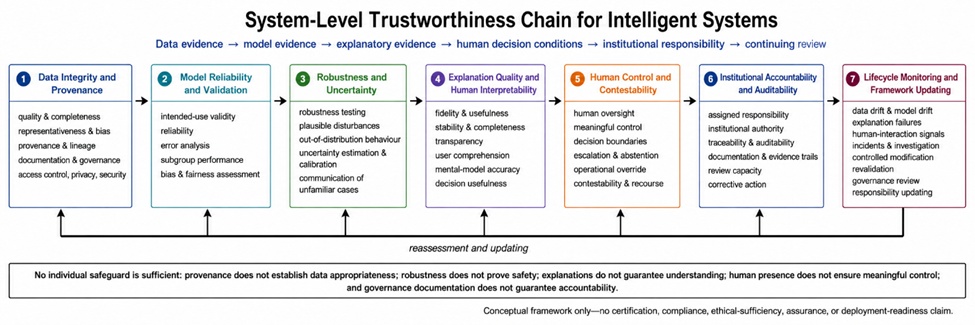
Figure 1. System-Level Trustworthiness Chain for Intelligent Systems
A conceptual chain diagram showing data provenance, data quality, model reliability, robustness, uncertainty, explanation quality, human interpretability, human control, accountability, traceability, auditability, monitoring, and feedback updating.
Auditability can support structured scrutiny of data, models, explanations, controls, and organizational processes, but it does not independently prove ethical sufficiency or effective accountability. Audit evidence is shaped by scope, access, criteria, reviewer competence, independence, and institutional willingness to act on findings. Lifecycle governance should therefore connect monitoring and incident evidence to investigation, corrective action, revalidation, and responsibility updating. Human-control arrangements likewise require continuing evaluation as systems, workloads, users, and operating environments change. Neither human presence nor formal governance documentation guarantees that control and accountability will function effectively in practice [26]. Table 2 maps model reliability, robustness, uncertainty, explanation quality, human interpretability, human control, and institutional accountability requirements for trustworthy intelligent systems.
Table 2. Model Reliability, Explanation Quality, Human Control, and Institutional Accountability Requirements for Trustworthy Intelligent Systems: Robustness, Uncertainty, Calibration, Monitoring, Explanation Fidelity, Human Interpretability, Decision Usefulness, Oversight, Contestability, Recourse, Traceability, Auditability, Lifecycle Governance, and Accountability Boundaries
Requirement domain | Core design or governance question | Required evidence or design condition | Trustworthiness function | Potential output | Failure or responsibility risk | Validation, evaluation, or governance need | Boundary statement |
Model reliability | Does performance remain sufficiently consistent for the intended use? | Repeated evaluation, subgroup results, error distributions | Characterizes dependable performance | Reliability profile | Aggregate metrics conceal consequential failures | Domain-specific validation and monitoring | Reliability evidence is contextual and time-bounded |
Model validity | Does evidence support the claimed interpretation and use? | Construct, external, decision-context, and consequence evidence | Connects performance to intended purpose | Validity argument | Correct metric applied to the wrong problem | Independent contextual review | Validation does not guarantee future operation |
Robustness | How does behaviour change under disturbance or manipulation? | Threat models, stress tests, perturbation and sensitivity analysis | Identifies fragility | Robustness envelope | Narrow testing presented as universal resilience | Scenario review and repeated testing | Robustness is not sufficient for trustworthiness |
Out-of-distribution behaviour | Can unfamiliar cases be recognized or safely deferred? | Shift tests, novelty detection, abstention evaluation | Limits unsupported extrapolation | OOD response profile | Confident output outside validated conditions | Distribution monitoring | Unfamiliar inputs require bounded responses |
Uncertainty | What limitations accompany an output? | Method specification and empirical uncertainty evaluation | Represents predictive and knowledge limitations | Uncertainty profile | False precision or undifferentiated confidence | Reassessment under change | Uncertainty estimates do not prove safety |
Calibration | Do probabilities correspond to outcomes within the evaluated context? | Calibration curves and subgroup assessment | Supports probabilistic interpretation | Calibration profile | Good average calibration hides local error | Periodic recalibration | Calibration remains population- and time-sensitive |
Error and bias assessment | Which errors occur, for whom, and under what conditions? | Error taxonomy, subgroup and proxy analysis | Reveals patterned failures | Error and bias register | Harmful minority failures remain hidden | Stakeholder and domain review | No metric exhausts fairness or impact |
Drift monitoring | Have data or model–outcome relationships changed? | Baselines, live distributions, outcomes, alerts | Detects degradation | Drift report | False alarms or delayed detection | Human investigation and controlled updating | Drift signals do not authorize automatic deployment |
Explanation fidelity | Does the explanation reflect relevant model behaviour? | Faithfulness and perturbation testing | Reduces misleading rationalization | Fidelity evidence | Persuasive but false explanation | Technical evaluation | Explanation availability does not establish fidelity |
Explanation usefulness | Does the explanation support the intended task? | Task-based and decision-quality evaluation | Links explanation to use | Usefulness profile | Confidence rises without better decisions | Human-centered studies | Usefulness is audience- and context-dependent |
Explanation stability and completeness | Is the explanation sufficiently consistent and informative? | Sensitivity, coverage, and omission analysis | Identifies fragility and scope | Stability and completeness statement | Partial account treated as exhaustive | Technical and user review | No explanation fully discloses every relevant factor |
Human interpretability | Do intended users understand the system and its limitations? | Comprehension, mental-model, and reliance assessment | Tests actual understanding | Interpretability evidence | Readability mistaken for comprehension | Evaluation with target users | Interpretability cannot be guaranteed by design alone |
Decision usefulness | Does information support appropriate reliance and error detection? | Comparative task evaluation | Connects understanding to decisions | Decision-usefulness profile | Automation bias or avoidable rejection | Longitudinal human-centered evaluation | Improved confidence is not necessarily improved judgment |
Human oversight and control | Can capable humans review and influence relevant actions? | Authority, competence, information, timing, workload | Preserves human agency | Control architecture | Symbolic or ineffective oversight | Operational testing | Human presence is not sufficient |
Decision boundaries and override | What may the system do, and can action be contained? | Scope, abstention, escalation, override and recovery tests | Limits delegated authority | Boundary specification | Authority expansion or unusable override | Governance approval and exercises | Systems must remain within authorized scope |
Contestability and recourse | Can decisions be challenged and corrected? | Notice, reasons, review channel, corrective authority | Enables answerability and remedy | Contestation process | Appeal without practical consequence | Affected-stakeholder evaluation | Explanation alone does not provide recourse |
Institutional accountability | Who answers for design, use, effects, and failures? | Responsibility, authority, review and consequence mechanisms | Prevents responsibility displacement | Accountability map | “The algorithm decided” gap | Institutional capability review | Governance documents do not guarantee accountability |
Traceability and auditability | Can evidence, decisions, and changes be reconstructed and scrutinized? | Linked logs, versions, documentation and review access | Supports investigation and challenge | Auditable evidence package | Missing context or audit theatre | Competent review and follow-up | Auditing supports but does not certify trustworthiness |
Lifecycle governance | How are monitoring, incidents, changes, and responsibilities managed over time? | Review triggers, incident process, versioning, revalidation | Maintains continuing oversight | Lifecycle-governance record | One-time approval logic | Periodic and event-triggered review | Governance requires continuing evaluation |
The proposed framework organizes trustworthiness as a lifecycle of connected claims, evidence, decisions, and feedback. It begins with system-purpose and risk-context definition because data and model quality cannot be assessed independently of what the system is intended to do, whose decisions it affects, and which harms or limitations matter. Stakeholder and responsibility mapping then identifies system owners, data stewards, developers, validators, operators, affected groups, reviewers, and decision authorities. This structure translates ethical commitments into lifecycle questions and evidence requirements rather than treating responsible-AI tools as isolated interventions [27].
The second stage addresses data integrity, provenance, lineage, documentation, governance, ownership concerns, access, privacy, security, representativeness, and bias. The third stage evaluates model reliability, validity, robustness, safety, out-of-distribution behaviour, uncertainty, calibration, error patterns, fairness where relevant, and monitoring requirements. These stages should be revisited iteratively because design choices alter data needs, model behaviour, stakeholder exposure, and possible harms. Responsible design therefore requires anticipatory assessment, reflection on assumptions, stakeholder participation, and responsiveness to emerging evidence throughout development and use [28].
The fourth and fifth stages connect explanation quality to human interpretability and human control. Explanation assessment examines fidelity, usefulness, stability, completeness, cognitive accessibility, uncertainty communication, and decision usefulness for specified audiences. Human-control design defines authority, supervision, approval points, abstention, escalation, override, contestability, and recourse. Contextual ethical interpretation may benefit from multidisciplinary expertise, but institutions cannot outsource responsibility for objectives, trade-offs, or consequences. Specialist processes should support rather than replace accountable institutional judgment [29].
The sixth and seventh stages establish institutional accountability, traceability, auditability, lifecycle monitoring, incident response where relevant, and governance updating. Monitoring should capture data drift, model drift, uncertainty, errors, explanation failures, human-interaction signals, contestation, and incidents. Evidence must then be interpreted by responsible actors who can restrict operation, require investigation, authorize controlled change, or initiate revalidation. The framework consequently links technical, human, and institutional dimensions without assuming that any one property can stand in for overall trustworthiness [30].
The framework includes explicit non-sufficiency and decision boundaries. Provenance does not establish data appropriateness; robustness does not prove validity or safety; explanation does not guarantee understanding; human presence does not establish meaningful control; and governance arrangements do not guarantee accountability. Monitoring evidence does not self-validate, and framework completion does not establish legal compliance, ethical sufficiency, certification, or deployment readiness. The framework may help organize assurance-oriented arguments, but those arguments require domain-specific empirical evidence, human-centered evaluation, accountable institutional review, and continuing challenge. Table 3 presents the proposed trustworthy-by-design conceptual framework linking data provenance, model reliability, explanation quality, human control, accountability, governance, monitoring, and framework updating [26].
Table 3. Proposed Trustworthy-by-Design Conceptual Framework for Intelligent Systems: System Purpose, Risk Context, Stakeholder Mapping, Data Integrity, Data Provenance, Model Reliability, Robustness, Uncertainty, Explanation Quality, Human Interpretability, Human Control, Accountability, Traceability, Auditability, Lifecycle Monitoring, Incident Response, Governance Review, and Deployment Boundaries
Framework stage | Core purpose | Required input | Trustworthiness function | Potential output | Validation or governance need | Failure risk | Feedback mechanism | Decision boundary |
System purpose and risk context | Define the system’s purpose, environment, affected decisions, and relevant harms | Intended use, domain conditions, stakeholders, misuse scenarios | Anchors assessment to context | Purpose-and-risk statement | Domain and stakeholder review | Vague or expanding purpose | Revisit after contextual change | No use beyond documented purpose without reassessment |
Stakeholder and responsibility mapping | Identify actors, interests, authority, and lifecycle duties | Organizational roles and affected-party analysis | Prevents responsibility gaps | Stakeholder and responsibility map | Institutional approval | Missing actors or token participation | Update after role or use changes | No critical responsibility remains unassigned |
Data-integrity assessment | Examine accuracy, coherence, completeness, and change control | Data assets, quality evidence, version records | Establishes input reliability | Integrity profile | Steward review | Corrupted or incomplete data | Remediation and revalidation | Critical integrity failures limit further use |
Provenance and lineage review | Reconstruct origin, transformations, and dependencies | Source and pipeline records | Supports tracing and reproduction | Provenance-lineage map | Coverage review | Broken evidence chain | Update after pipeline change | Provenance claims remain limited to recorded evidence |
Data documentation and governance review | Examine documentation, ownership, access, privacy, security, bias, and representation | Dataset records and governance arrangements | Links data evidence to institutional authority | Data-governance package | Organizational and domain review | Documentation without stewardship | Periodic reassessment | Data approval does not approve the whole system |
Model-reliability assessment | Evaluate consistency, validity, and errors | Evaluation data, metrics, subgroup and case results | Establishes bounded performance evidence | Reliability profile | Separated validation where appropriate | Aggregate metrics hide severe errors | New evidence triggers review | Use remains within validated purpose and conditions |
Robustness and uncertainty assessment | Examine disturbance, OOD behaviour, uncertainty, and calibration | Threat models, shifted data, UQ methods | Defines fragility and epistemic limits | Robustness and uncertainty profile | Method and scenario review | False precision or narrow testing | Monitoring expands test scenarios | Uncertain or unfamiliar cases require bounded handling |
Bias and fairness review | Identify patterned disparities and normative choices | Group, impact, and stakeholder evidence | Makes distributional effects visible | Fairness argument | Normative and empirical review | Metric-based fairness theatre | Reassess after change | Claims limited to assessed groups and definitions |
Explanation-quality assessment | Test fidelity, usefulness, stability, and completeness | Model, explanation method, audience and task | Evaluates explanatory evidence | Explanation-quality profile | Technical and human-centered assessment | Persuasive but misleading accounts | Redesign after failure | Explanation cannot substitute for validation |
Human-interpretability review | Determine whether intended users understand outputs and limits | User profiles, interface, task scenarios | Validates comprehension and reliance | Interpretability evidence | Target-user evaluation | Readability mistaken for understanding | Iterative interface improvement | No interpretability claim without user evidence |
Human-control and oversight design | Allocate authority, supervision, intervention, and fallback | Decision boundaries, capabilities, workload, roles | Preserves effective human agency | Control architecture | Operational testing | Nominal oversight | Monitoring and exercises | System cannot exceed delegated authority |
Contestability and recourse design | Enable challenge, correction, reconsideration, and remedy | Decision process, explanations, review authority | Makes accountability accessible | Contestation process | Affected-stakeholder review | Formal but ineffective appeal | Outcomes feed updating | Relevant decisions remain reviewable |
Institutional-accountability mapping | Identify the institution and actors answerable for outcomes | Responsibility, authority, evidence, escalation | Prevents responsibility displacement | Accountability map | Senior institutional ownership | Policies without capacity | Audit and incident review | Technology is not treated as the accountable actor |
Traceability and auditability design | Preserve inspectable links among evidence, decisions, and changes | Logs, versions, records, approvals | Supports scrutiny and investigation | Evidence map | Access, competence and follow-up review | Missing or selective evidence | Corrective-action tracking | Auditability does not certify trustworthiness |
Lifecycle-monitoring plan | Define indicators, responsibilities, alerts, and responses | Risk profile and operating conditions | Detects emerging problems | Monitoring plan | Actionability review | Metrics without response | Alerts initiate investigation | Monitoring does not authorize uncontrolled change |
Drift monitoring | Detect changing inputs and model–outcome relationships | Baselines, live data, outcomes | Maintains validity awareness | Drift assessment | Context and label review | False alarms or missed degradation | Controlled recalibration or revalidation | Drift signals trigger review rather than approval |
Incident-response planning | Prepare containment, investigation, communication, and learning | Hazard scenarios, roles, evidence access | Limits harm and supports accountability | Incident plan | Exercises and post-incident review | Evidence loss or repeated failure | Corrective actions update all layers | Severe unresolved risk may restrict or suspend use |
Governance review and updating | Reassess assumptions, responsibilities, evidence, and boundaries | Monitoring, incidents, audits, stakeholder feedback | Keeps framework aligned with change | Updated governance record | Authorized, version-controlled review | Static or ceremonial governance | Scheduled and trigger-based revision | Material change requires renewed assessment |
Sufficiency and readiness boundaries | Prevent isolated evidence from being treated as complete assurance | Cross-layer evidence and residual limitations | Constrains unsupported claims | Qualified framework statement | Independent contextual review | Premature compliance or readiness claims | Continuing evidence collection | Framework completion does not establish compliance or deployment readiness |
Figure 2 presents the proposed trustworthy-by-design framework for intelligent systems, integrating system purpose, risk context, stakeholder mapping, data provenance, model reliability, explanation quality, human control, institutional accountability, lifecycle monitoring, and governance updating.
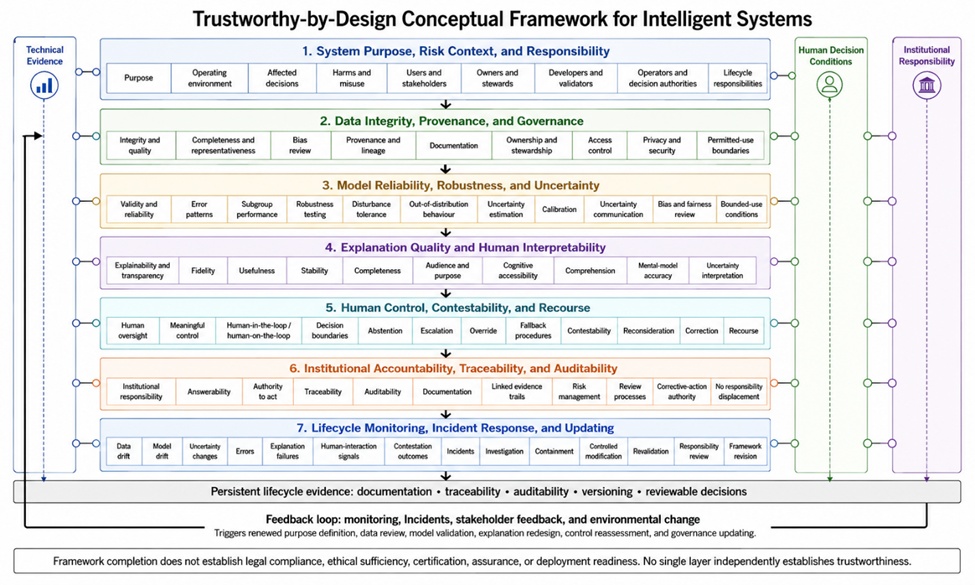
Figure 2. Trustworthy-by-Design Conceptual Framework for Intelligent Systems
A conceptual trustworthy-by-design framework showing intelligent system purpose, risk context, stakeholder mapping, data provenance, model reliability, uncertainty, explanation quality, human control, accountability, traceability, auditability, lifecycle monitoring, governance review, and framework updating.
For system designers, data stewards, model developers, and platform providers, the framework highlights the need to preserve connections among purpose, evidence, responsibility, and change. Data documentation should remain linked to provenance, lineage, access, representation, and downstream use rather than exist as a static record. Reliability assessment should combine validity, errors, uncertainty, robustness, bias, and drift instead of optimizing an isolated metric. Platform-level research should examine how shared infrastructure affects evidence portability, logging, versioning, access, and responsibility handoffs across organizations [10].
Decision-support operators and end users require information that supports appropriate reliance, error recognition, escalation, and contestation. Explanation evaluation should therefore examine decision usefulness and misunderstanding rather than only technical properties. Human-control research should test whether people possess effective authority, sufficient time, appropriate competence, and usable intervention mechanisms under realistic workload and uncertainty. Affected stakeholders should be involved where their knowledge or exposure is relevant, but participation should not be represented as universal approval or as a substitute for institutional responsibility [23].
Institutional governance bodies and auditors should treat documentation, traceability, and auditability as components of an evidence process rather than proof of compliance or ethical adequacy. Research is needed on audit scope, evidence quality, reviewer independence, corrective-action follow-through, organizational incentives, and the consequences of unresolved findings. Accountability mapping should identify who can obtain evidence, demand explanations, authorize restrictions, remedy affected decisions, and revise system arrangements. Assurance-oriented evaluation may structure qualified trustworthiness arguments, but it must preserve residual uncertainty and opportunities for challenge [26].
Future research should investigate cross-layer interactions through longitudinal and socio-technical evaluation. Priorities include maintainable provenance records, joint reliability and fairness assessment, usable uncertainty communication, explanation fidelity and comprehension, meaningful-control evaluation, drift and incident governance, and methods for updating responsibilities as systems change. These are proposed conceptual implications and research directions rather than legal advice, compliance guidance, certification guidance, procurement advice, model-selection advice, platform-selection advice, engineering instructions, institutional-governance advice, or deployment instructions. Their relevance and implementation require contextual empirical assessment [30].
Trustworthiness should be designed and evaluated across the complete lifecycle of intelligent systems rather than inferred from isolated model performance, explanation availability, human presence, or governance language. The proposed trustworthy-by-design framework connects system purpose and risk context with stakeholder responsibility, data integrity and provenance, model reliability, robustness and uncertainty, explanation quality and human interpretability, human control, contestability, institutional accountability, traceability, auditability, monitoring, incident response, and framework updating. Its central contribution is to clarify the dependencies and boundaries among these dimensions: provenance cannot establish data appropriateness, robustness cannot prove safety, explanations cannot guarantee understanding, human involvement cannot automatically create meaningful control, and institutional procedures cannot independently guarantee accountability. The framework may support conceptual analysis and assurance-oriented planning, but trustworthiness remains a context-dependent claim requiring empirical validation, human-centered evaluation, domain knowledge, institutional authority, continuing monitoring, and the capacity to revise or restrict system use when evidence changes.
None
None
None
None
Open Access The author(s) retain copyright. This article is licensed under the Creative Commons Attribution-NonCommercial-ShareAlike 4.0 International License. It may be shared and adapted for non-commercial purposes with appropriate attribution, an indication of changes, and distribution of adaptations under the same license. Third-party material may be subject to separate terms identified in its credit line. View the license at https://creativecommons.org/licenses/by-nc-sa/4.0/.
 Transparent Intelligence Publishing