Trustworthy artificial intelligence is frequently discussed through principles, performance measures, governance commitments, or general descriptors such as safe, fair, explainable, and responsible. These expressions are important but insufficient for determining whether a particular intelligent system is adequately justified for a defined use, environment, population, and decision context. This article proposes a conceptual AI assurance-case methodology for organizing trustworthiness reasoning through explicit assurance claims, decomposed subclaims, bounded acceptance criteria, evidence requirements, evidence-quality assessment, provenance, traceability, structured argumentation, defeater analysis, uncertainty, and residual-risk reasoning. The methodology responds to distinctive assurance challenges created by model opacity, distributional change, context dependency, conflicting trustworthiness objectives, incomplete evidence, human-oversight limitations, and lifecycle evolution. It distinguishes the existence of evidence from its relevance, validity, credibility, completeness, and sufficiency, while treating traceability as an aid to inspection rather than a guarantee of evidential quality. Structured arguments connect claims to evidence through warrants, assumptions, contextual conditions, and inference links, while counterevidence, argument gaps, evidence gaps, and unknown risks remain visible. Assurance cases may consequently support accountable deployment deliberation by clarifying decision gates, deployment boundaries, monitoring obligations, and conditions requiring reassessment. The principal contribution is an integrated methodology for constructing and maintaining bounded trustworthiness cases without treating assurance reasoning as proof of safety, fairness, legality, ethical sufficiency, compliance, certification, operational readiness, or deployment acceptability. The methodology supports transparent and challengeable reasoning, but requires domain-specific evaluation, governance review, stakeholder participation, and continuing lifecycle monitoring.
Trustworthy AI scholarship has produced broad agreement around values such as transparency, fairness, accountability, safety, human agency, and social benefit, but these principles remain heterogeneous in interpretation and implementation. Trustworthiness is therefore better understood as a multidimensional and context-sensitive object of justification than as a general attribute that can be assigned to an intelligent system without qualification [1-3]. An assurance case responds to this problem by asking what is claimed, for which use, under which assumptions, with what evidence, and within which decision boundary.
Human-centered AI further shows that reliable intelligent systems cannot be assessed solely through model performance. Human authority, competence, intervention capacity, organizational responsibility, and the consequences of use remain part of the system being assured [4]. A technically accurate model may still be unsuitable when users cannot contest its output, operators cannot recognize failure, affected stakeholders are excluded, or responsibility is dispersed across development and deployment actors. Assurance reasoning must therefore address socio-technical arrangements rather than isolate the algorithm from its operational environment.
An AI assurance case is not synonymous with a safety case, audit report, compliance assessment, model card, risk register, or governance framework. It is a structured and reviewable argument that connects bounded claims to relevant evidence through explicit warrants, assumptions, contextual statements, and inference links. Its purpose is not to declare that an AI system is trustworthy, but to clarify why specified claims may be considered sufficiently supported for a particular deliberative purpose and where the reasoning remains incomplete, uncertain, contested, or conditional.
This article develops a conceptual methodology for constructing such cases. It integrates assurance-context definition, system and use-case boundaries, stakeholder and responsibility mapping, trustworthiness claims, acceptance criteria, evidence-quality appraisal, provenance, traceability, structured argumentation, defeaters, residual risks, decision boundaries, monitoring, and assurance updating. The contribution is methodological rather than prescriptive: it offers a disciplined architecture for assurance reasoning while maintaining explicit boundaries against trustworthiness proof, automated deployment approval, legal sufficiency, certification, and universal applicability.
Intelligent systems create lifecycle assurance problems because the relationship between past evidence and future behavior may change. Concept drift, data drift, evolving environments, altered user populations, and modified data-generation processes can reduce the relevance of earlier evaluations [5]. Model drift may also arise from retraining, updated dependencies, feedback loops, or operational adaptation. Consequently, assurance cannot be treated as a fixed predeployment judgment; it requires conditions for detecting material change and reopening affected claims, evidence, assumptions, and arguments.
Context dependency creates a second challenge. Strong internal performance does not necessarily establish external validity, workflow compatibility, appropriate human oversight, or reliable behavior in the intended environment [6]. A system boundary must therefore include relevant interfaces, data pipelines, operators, organizational controls, and downstream decisions. Distribution shift, uncertain generalization, incomplete monitoring, and unanticipated interaction effects create residual risks that cannot be resolved by model validation alone. The assurance context must specify where evidence applies and where its inferential reach ends.
Explainability and fairness create distinct assurance challenges because both depend on purpose, stakeholder context, definitions, and evaluation choices [7, 8]. An explanation may be technically faithful but incomprehensible to a user, or understandable while failing to represent the model’s actual reasoning. Fairness claims likewise depend on selected groups, outcomes, metrics, data conditions, and normative judgments. Robustness, reliability, privacy, and security claims are similarly bounded by evaluated threats, scenarios, and assumptions rather than established as universal system properties.
Opacity, uncertainty, weak oversight, accountability gaps, evidence gaps, and argument gaps can interact. Missing evidence may be concealed by confident language, while a large evidence repository may still fail to support the stated claim. Unknown risks remain possible even after systematic analysis, especially when systems operate in changing socio-technical environments. The resulting methodology must therefore preserve a no-assurance-completeness boundary and a no-deployment-readiness boundary: organizing available reasoning cannot prove that every relevant failure, affected interest, or future operating condition has been identified.
Trustworthiness claims should identify a specific property, system configuration, use case, population, environment, timeframe, and decision purpose. Autonomous-system assurance research demonstrates that technical, ethical, legal, and organizational concerns may create gaps between what engineering evidence establishes and what broader claims appear to assert [9]. A top-level assurance claim must therefore be decomposed into narrower subclaims so that unsupported transitions, omitted dimensions, and incompatible assumptions can be examined rather than absorbed into an undifferentiated statement that an AI system is trustworthy.
Claim decomposition should follow the lifecycle and architecture of the system. Development evidence, validation evidence, operational controls, human oversight, monitoring arrangements, and change-management processes may support different subclaims at different stages [10]. Decomposition should also distinguish properties such as explainability, fairness, robustness, reliability, accountability, and human control. These subclaims may interact, but they should not be merged merely because they are commonly grouped under trustworthy AI. Each requires its own scope, evidence needs, limitations, and relevant defeaters.
Acceptance criteria translate claims into observable conditions that can be evaluated. AI assurance encompasses multiple evidence classes and cannot be reduced to predictive accuracy or one technical validation activity [11]. Criteria may therefore concern test performance, external validity, documentation, human-review capability, monitoring coverage, escalation procedures, or the adequacy of governance controls. Acceptance thresholds may be used where they are defensible and contextually validated, but the methodology does not prescribe universal numerical limits. Criteria should instead state what evidence would count for, against, or as insufficient to support the relevant claim.
Responsibility must also be attached to claims and criteria. Safety and accountability remain institutional and human obligations even when decisions are heavily mediated by AI [12]. Claim owners should specify who formulates the claim, who supplies and reviews evidence, who can challenge assumptions, and who decides whether remaining uncertainty is acceptable. Stakeholder mapping should identify developers, operators, decision makers, users, reviewers, and affected groups whose knowledge or interests may reveal omitted risks or inappropriate acceptance criteria.
Every claim should include explicit limitations, assumptions, and generalization boundaries. Meeting a set of criteria may support a subclaim without establishing overall acceptability, and evidence collected for one model version, population, or decision cannot automatically justify another. Table 1 summarises how trustworthiness claims and acceptance criteria can be scoped, decomposed, bounded, and connected to evidence requirements in an AI assurance case.
Table 1. Trustworthiness Claims and Acceptance Criteria for AI Assurance Cases: Assurance Claims, Claim Decomposition, Subclaims, Scope Definition, Context Definition, System Boundaries, Use-Case Boundaries, Risk Context, Decision Context, Stakeholder Mapping, Acceptance Criteria, Acceptance Thresholds, Claim Assumptions, and Claim-Generalization Boundaries
Claim or criterion requirement | Core claim question | Required scope or context | Acceptance criterion function | Potential evidence type | Failure or overclaiming risk | Validation or governance need | Methodology role |
Assurance claim | What proposition is the case intended to support? | Named system, use and decision | Defines the case objective | Integrated technical and governance evidence | Treating support as proof | Independent challenge | Anchors the case |
Trustworthiness claim | Which trustworthiness property is asserted? | Property, population, environment and time | Converts a general value into an assessable claim | Property-specific evidence | Global “trustworthy AI” label | Stakeholder review | Replaces unbounded labels |
Claim decomposition | Which lower-level propositions support the parent claim? | Explicit reasoning strategy | Makes complex claims reviewable | Evidence mapped to subclaims | Omitted dimensions or circularity | Structural review | Creates the claim hierarchy |
Subclaim | What narrower assertion can be independently examined? | Component, actor, lifecycle stage or risk | Localizes evidence and uncertainty | Tests, evaluations or records | Fragmentation without integration | Dependency review | Connects evidence to parent claims |
Scope definition | What is included and excluded? | Technical and socio-technical coverage | Limits interpretation | Architecture and process documentation | Hidden exclusions | Multidisciplinary review | Defines assurance coverage |
Context definition | Under which conditions does the claim apply? | Environment, users, workflow and timeframe | Conditions claim applicability | Context records and external evaluation | Context-free generalization | Domain validation | Bounds inference |
System boundary | Which components and interfaces are included? | Model, data, software, hardware and humans | Identifies evidence and responsibility coverage | System documentation | Model-only assurance | Systems review | Defines the assured system |
Use-case boundary | Which purpose and decisions are supported? | Intended, restricted and prohibited uses | Prevents transfer to unevaluated uses | Use-case documentation | Purpose expansion | Governance approval | Restricts claim use |
Risk context | Which harms and affected interests matter? | Credible hazards, impacts and stakeholders | Links criteria to consequences | Risk and impact analyses | Narrow technical framing | Stakeholder challenge | Frames risk-sensitive claims |
Decision context | Which decision will the case inform? | Decision maker, alternatives and consequences | Aligns evidence with decision needs | Decision documentation | Treating evidence as decision-neutral | Decision-owner review | Establishes the decision boundary |
Stakeholder mapping | Whose knowledge and interests are relevant? | Developers, users, operators and affected groups | Informs claims and challenge | Participation and role evidence | Tokenistic inclusion | Transparent participation process | Identifies challengers and owners |
Acceptance criterion | What observable condition counts for or against the claim? | Claim-specific context | Makes evaluation explicit | Test, evaluation or process evidence | Vague or circular criteria | Domain review | Operationalizes subclaims |
Acceptance threshold | Where supported, what boundary distinguishes acceptable evidence? | Risk- and domain-specific conditions | Supports consistent assessment | Validated limits or expert judgment | Arbitrary universal threshold | Sensitivity and authority review | Optional bounded criterion |
Claim assumption | Which condition is provisionally accepted? | Source, owner, duration and status | Makes dependence visible | Assumption evidence | Treating assumptions as facts | Verification and expiry review | Creates challengeable assumptions |
Claim limitation | What does the claim not establish? | Evidential and inferential limits | Prevents overinterpretation | Limitation record | Caveats omitted or hidden | Mandatory review | Attaches boundaries to claims |
Claim-generalization boundary | Can the claim extend beyond its evaluated context? | New versions, populations, purposes or environments | Blocks unsupported transfer | External validation | Universalizing local results | Reassessment after change | Restricts reuse |
Acceptance-criteria sufficiency boundary | Does meeting listed criteria establish overall acceptability? | Whole system and decision context | Separates partial evidence from final judgment | Integrated review | Checklist-based approval | Governance deliberation | Prevents automatic acceptance |
Evidence traceability begins with identifying the origin, composition, intended use, processing history, and maintenance of relevant artefacts. Structured dataset documentation can expose collection choices, representation limits, recommended uses, and known exclusions [13]. Comparable records are needed for models, software versions, system configurations, evaluations, monitoring arrangements, and decisions. Documentation supports provenance and review, but its existence does not demonstrate that the recorded evidence is accurate, complete, unbiased, valid, or appropriate for the claim.
Evidence quality requires separate judgments about relevance, validity, credibility, completeness, uncertainty, and sufficiency. Auditing can organize the examination of criteria, processes, evidence, and institutional responsibilities, but its conclusions remain constrained by scope, access, competence, independence, and the assumptions built into the audit design [14]. An assurance case should therefore record why evidence is admitted, what it establishes, what it does not establish, and how much confidence is justified. Auditability is a review capability, not an ethical or technical guarantee.
Transparency and traceability can strengthen accountability when they reveal how data, models, evaluations, and decisions are connected. However, transparency contributes to accountability only when identifiable actors possess obligations and authority to interpret records, answer challenges, correct failures, and provide remedies [15]. Decision provenance should consequently record who reviewed which case version, what evidence and alternatives were considered, which residual risks were acknowledged, and what conditions were attached to the decision. A traceable process without accountable ownership may remain practically unactionable.
Visibility must not be confused with knowledge. Revealing model artefacts or producing extensive documentation does not necessarily explain the social relationships, organizational incentives, downstream effects, or hidden dependencies that shape algorithmic outcomes [16]. Evidence trails can be complete in a technical sense while remaining substantively weak, irrelevant, or misleading. The methodology therefore includes a no-evidence-sufficiency guarantee boundary: neither documentation volume, provenance completeness, audit access, nor bidirectional traceability can prove that all necessary evidence exists or that a claim is adequately supported.
Evidence should be organized by function. Evaluation and test evidence address defined behavioral claims; simulation and benchmark evidence are admissible only when their assumptions and contextual relevance are justified. Monitoring and incident evidence support lifecycle reassessment. Human-oversight, explainability, fairness, robustness, reliability, and accountability evidence address distinct socio-technical claims and require appropriate technical, organizational, and human evaluation. Table 2 maps evidence quality and traceability requirements for AI assurance cases, including evidence relevance, sufficiency, validity, provenance, documentation, auditability, and evidence uncertainty.
Table 2. Evidence Quality and Traceability Requirements for AI Assurance Cases: Evidence Relevance, Sufficiency, Validity, Credibility, Completeness, Uncertainty, Provenance, Data Provenance, Model Provenance, Decision Provenance, Documentation, Evaluation Evidence, Test Evidence, Monitoring Evidence, Auditability, Evidence Trails, and Evidence-Sufficiency Boundaries
Evidence requirement | Core evidence question | Required evidence or process | Evidence function | Potential output | Failure or weakness risk | Traceability or audit need | Methodology role |
Evidence relevance | Does the evidence directly address the scoped claim? | Claim–evidence fit assessment | Prevents irrelevant support | Relevance statement | Metric or evidence mismatch | Link to exact subclaim | Admissibility check |
Evidence sufficiency | Is available support adequate for the intended deliberation? | Coverage and triangulation review | Informs provisional confidence | Sufficiency judgment with limitations | Counting evidence instead of evaluating it | Decision-context record | Deliberative assessment |
Evidence validity | Does the method measure what the claim requires? | Construct, internal, external and ecological validity review | Limits invalid inference | Validity profile | Invalid proxy or poor transferability | Validation rationale | Evidence appraisal |
Evidence credibility | Is the source competent, independent and reproducible where relevant? | Source, conflict and reproducibility review | Calibrates evidential confidence | Credibility statement | Undisclosed conflicts or unverifiable evidence | Provenance record | Source assessment |
Evidence completeness | Are planned evidence categories represented? | Requirement–evidence coverage analysis | Exposes omissions | Evidence-gap register | False completeness | Versioned requirement links | Gap identification |
Evidence uncertainty | What uncertainty surrounds data, methods and conclusions? | Quantitative and qualitative characterization | Prevents certainty inflation | Uncertainty annotation | False precision | Link to residual-risk record | Mandatory metadata |
Evidence provenance | Where did the evidence originate and how was it transformed? | Source, custody, processing, ownership and version records | Establishes evidential history | Provenance record | Unknown origin or transformation | Versioned history | Credibility context |
Data provenance | How were training, validation, test and monitoring data produced? | Collection, labeling, cleaning and sampling records | Supports data-fitness reasoning | Dataset lineage | Leakage, bias or undocumented processing | Dataset-to-model links | Data assurance input |
Model provenance | Which model, code, dependencies and settings produced the result? | Version and configuration records | Prevents artefact mismatch | Model lineage | Evidence linked to the wrong model | Model change log | Version-control requirement |
Decision provenance | Who made the decision using which case and evidence? | Decision rationale, date, participants and conditions | Supports accountability | Decision record | Unowned or irreproducible decision | Link to case snapshot | Governance output |
Documentation | Are relevant activities and limitations recorded consistently? | Documentation protocol and ownership | Supports communication and inspection | Documentation set | Documentation theatre | Quality and currency review | Cross-cutting infrastructure |
Model documentation | Are purpose, architecture, training, limits and versions recorded? | Structured model record | Supports scope and replication | Model document | Generic or obsolete description | Model-version link | Model-context evidence |
Data documentation | Are motivation, composition, collection, use and maintenance recorded? | Structured dataset record | Supports provenance and fitness analysis | Data document | Documentation mistaken for validation | Dataset-version link | Data-context evidence |
System documentation | Are interfaces, dependencies, humans and operational controls described? | Architecture and workflow documentation | Supports system-boundary reasoning | System description | Model-only assessment | Configuration audit | Whole-system evidence |
Decision documentation | Are criteria, alternatives, dissent and conditions recorded? | Decision protocol | Supports accountable review | Decision memorandum | Unexplained approval | Decision audit trail | Decision-gate evidence |
Evaluation evidence | Does evaluated behavior support the specified claim? | Context-appropriate evaluation | Supports behavioral subclaims | Evaluation report | Inadequate population or comparator | Protocol-to-result trace | Claim-specific evidence |
Test evidence | Did specified tests execute under relevant conditions? | Test plan, environment, cases and results | Supports requirements assessment | Test report | Narrow coverage or leakage | Requirement-to-test trace | Technical evidence class |
Simulation evidence | Does a simulation represent credible conditions? | Assumption and simulator validation | Examines difficult scenarios | Simulation report | Unrealistic scenarios or models | Assumption provenance | Conditional evidence class |
Benchmark evidence | Is the benchmark relevant to the intended use? | Dataset, metric and protocol appraisal | Supports bounded comparison | Benchmark analysis | Overfitting or weak ecological validity | Benchmark-version trace | Conditional evidence class |
Monitoring evidence | What does operation show over time? | Performance, drift, event and control monitoring | Supports continuing assurance | Monitoring review | Incomplete telemetry or delayed detection | Time-stamped lineage | Lifecycle evidence |
Incident evidence | What do failures and near misses reveal? | Reporting, investigation and corrective-action process | Challenges previous claims | Incident record | Underreporting or defensive review | Link to affected claims | Defeater and update trigger |
Human oversight evidence | Can designated people understand, intervene and escalate? | Authority, competence, workload and override evaluation | Supports oversight claims | Oversight assessment | Nominal human involvement | Role and intervention records | Human-control evidence |
Human review evidence | Have qualified reviewers challenged evidence and arguments? | Independent or multidisciplinary review | Detects omissions and weak reasoning | Review report | Conflict or superficial review | Reviewer and disposition log | Governance safeguard |
Explainability evidence | Are explanations faithful, stable and useful for the intended audience? | Technical and human evaluation | Supports bounded explanation claims | Explanation assessment | Plausible but misleading explanations | Method and audience trace | Trustworthiness evidence |
Fairness evidence | Which groups, definitions, outcomes and trade-offs were examined? | Disaggregated and context-sensitive analysis | Supports bounded fairness claims | Fairness assessment | Metric cherry-picking | Data, metric and decision links | Trustworthiness evidence |
Robustness evidence | What credible variation or perturbation was tested? | Stress, adversarial and boundary testing | Supports conditional robustness claims | Robustness analysis | Unrepresentative testing | Scenario-to-test trace | Trustworthiness evidence |
Reliability evidence | How consistently does the system perform across relevant conditions? | Repeatability, failure and degradation evidence | Supports reliability claims | Reliability analysis | Short observation period | Operational history | Trustworthiness evidence |
Accountability evidence | Are explanation, correction, escalation and remedy mechanisms established? | Role, complaint and decision records | Supports accountability claims | Accountability map | Responsibility diffusion | Actor-to-obligation trace | Governance evidence |
Auditability | Can an authorized reviewer reconstruct relevant activities and judgments? | Accessible records, identifiers and procedures | Enables challenge | Audit-ready package | Records without interpretive context | Audit protocol | Review capability |
Evidence trail | Is the path from source evidence to claim visible? | Bidirectional artefact links | Supports inspection and change analysis | Evidence map | Orphan evidence or broken links | Link-integrity review | Case architecture |
Audit trail | Is the sequence of changes, reviews and decisions reconstructable? | Time-stamped versioned logs | Supports accountability | Audit log | Missing or mutable history | Access and integrity controls | Lifecycle record |
Evidence-sufficiency boundary | Can organized evidence prove that all necessary evidence exists? | Explicit limitations and gap analysis | Prevents overclaiming | Boundary statement | Traceability mistaken for sufficiency | Independent challenge | Mandatory methodological limit |
A structured assurance argument makes the inferential architecture of a trustworthiness case inspectable. A top-level claim is decomposed into subclaims, each connected to evidence through warrants, assumptions, contextual conditions, and traceable inference links. Model-based assurance research shows that explicit relationships among claims, arguments, evidence, and contextual artefacts can improve consistency and change analysis [17]. Defeaters and counterevidence should enter the same structure rather than remain outside it, while evidence gaps, argument gaps, uncertainty, and residual risks should remain visible wherever they qualify the conclusion. Figure 1 illustrates the structured AI assurance argument logic, showing how trustworthiness claims are decomposed into subclaims, connected to evidence, challenged by defeaters, and bounded by uncertainty and residual risk.
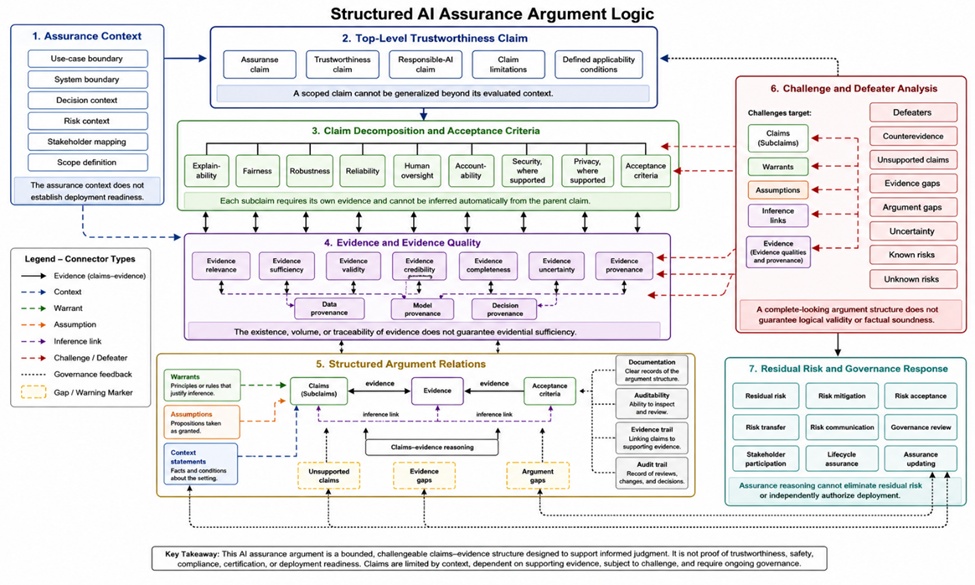
Figure 1. Structured AI Assurance Argument Logic
A conceptual structured argument diagram showing trustworthiness claims, subclaims, evidence, warrants, assumptions, context, defeaters, counterevidence, uncertainty, evidence gaps, argument gaps, and residual risk.
Confidence in an assurance argument should be distinguished from the factual truth of its top-level claim. Confidence may depend on evidence credibility, the plausibility of warrants, the stability of assumptions, and the extent to which uncertainty has been identified. Research on confidence cases shows that these sources of confidence can be represented explicitly rather than concealed within a binary conclusion [18]. Such representation may support calibrated review, but it cannot quantify every epistemic limitation or transform uncertainty into certainty.
Structured notation can clarify decomposition, inference, and evidence dependencies, particularly in complex autonomous systems [19]. Nevertheless, graphical completeness is not logical validity. A well-formed case may contain circular reasoning, unsupported warrants, context changes, weak evidence, or unacknowledged trade-offs. The proposed methodology therefore treats notation as a communication and review aid rather than as a preferred universal standard or a mechanism that proves the claim.
Defeater analysis asks what would undermine a claim, invalidate an assumption, weaken an inference, or reveal that evidence is incomplete. Assurance weakeners include unsupported claims, fallacious reasoning, inconsistent artefacts, ambiguous terminology, missing evidence, and failure to consider credible counterarguments [20]. Material counterevidence should be linked to the affected claim and resolved, mitigated, or retained as an explicit limitation. A case should not be closed merely because its supporting branch is well populated.
Independent assessment is necessary because case authors may normalize assumptions or overlook weaknesses that are apparent to reviewers with different expertise [21]. Review should address argument structure, domain validity, evidence quality, stakeholder concerns, and the treatment of known and unknown risk. Residual risk remains after available evidence and controls have been considered; documenting it does not mean that it has been accepted. Risk acceptance, transfer, or continued exposure requires a separate accountable decision.
An assurance case can inform a deployment decision by clarifying what is supported, what remains uncertain, and which conditions limit use. Continuing review is necessary because postdeployment evidence may reveal drift, emerging harms, or control failures that weaken earlier conclusions [22]. A decision gate should therefore examine the current case version, unresolved defeaters, residual risks, required mitigations, monitoring arrangements, and the consequences of proceeding, deferring, restricting, or discontinuing use.
Operational tools and governance methods can help translate responsible-AI principles into practical activities, but their functions and evidential strength vary substantially [23]. A checklist, assessment worksheet, documentation template, or audit process may contribute evidence without determining the decision. The methodology therefore avoids treating completion of a tool or satisfaction of isolated criteria as an automatic go/no-go mechanism.
Deployment reasoning must remain embedded in organizational governance. Governance practices determine who owns risks, who can challenge evidence, who authorizes exceptions, how conflicts are handled, and how changes are escalated [24]. Conditional deployment may be considered where supported by domain-specific governance, but only with explicit boundaries, verified controls, monitoring requirements, review dates, and rollback or suspension arrangements. The methodology does not recommend conditional deployment as a generally acceptable option.
Accountability requires a documented relationship between the assurance case and the people or institutions making the decision. Algorithmic accountability concerns obligations to explain, justify, review, correct, and accept responsibility for consequences rather than attributing responsibility to the algorithm [25]. Decision provenance should identify the case version reviewed, participants, dissent, alternatives, residual risks, imposed conditions, and the authority under which the decision was made.
Assurance boundaries should also recognize indirect, distributed, or development-stage harms that may be overlooked by narrowly technical evaluations [26]. Stakeholder participation may reveal affected interests, organizational incentives, or downstream dependencies that are not visible in model testing. Table 3 connects structured arguments, defeaters, counterevidence, residual risk, decision gates, deployment boundaries, monitoring requirements, and lifecycle assurance in assurance-based deployment reasoning.
Table 3. Structured Arguments, Residual Risk, and Assurance-Based Deployment Decision Requirements: Claims-Evidence Reasoning, Warrants, Assumptions, Context, Inference Links, Defeaters, Counterevidence, Argument Gaps, Evidence Gaps, Residual Risk, Risk Mitigation, Risk Acceptance, Decision Gates, Deployment Boundaries, Monitoring Requirements, and Assurance Boundaries
Argument, risk, or decision requirement | Core assurance or decision question | Required evidence or assumption | Assurance or decision function | Potential output | Failure or residual risk | Review or monitoring need | Methodology role |
Claims-evidence reasoning | Why does the evidence support the claim? | Evidence and explicit warrant | Connects observations to propositions | Justified inference | Evidence accumulation without relevance | Claim-level challenge | Core reasoning activity |
Warrant | What principle licenses the inference? | Scientific, engineering, normative, or contextual rationale | Explains support relation | Warrant statement | Hidden or invalid inference | Domain and logical review | Mandatory link |
Assumption | Which condition is provisionally accepted? | Source, owner, status, and expiry | Exposes dependency | Assumption register | Assumption treated as fact | Revalidation | Challengeable element |
Context | Where does the argument apply? | System, population, use, environment, and time | Bounds interpretation | Context statement | Unsupported generalization | Context review | Assurance boundary |
Inference link | Which evidence supports which claim? | Traceable relation | Enables inspection and change analysis | Link map | Broken or ambiguous relation | Link-integrity review | Structural traceability |
Defeater | What could undermine the claim or inference? | Counter-scenario or conflicting consideration | Tests argument resilience | Defeater register | Confirmation bias | Independent challenge | Mandatory challenge mechanism |
Counterevidence | What evidence contradicts or qualifies the claim? | Negative or conflicting result | Prevents selective evidence use | Counterevidence record | Suppression or dismissal | Evidence review | Evidential balance |
Argument gap | Where is reasoning absent or invalid? | Structural and logical assessment | Identifies unsupported inference | Gap register | Gap concealed by formal structure | Reviewer disposition | Prevents closure |
Evidence gap | Which required support is missing? | Requirement–evidence comparison | Directs further work | Evidence plan | Weak proxy substituted for evidence | Materiality review | Supports deferment or narrowing |
Unsupported claim | Which proposition lacks credible support? | Claim and evidence inventory | Prevents unjustified assertion | Flagged claim | Unsupported conclusion presented as established | Escalation or removal | Blocks claim closure |
Uncertainty | What remains uncertain in evidence, assumptions, and inference? | Quantitative or qualitative analysis | Calibrates interpretation | Uncertainty profile | False precision | Sensitivity review | Cross-cutting annotation |
Residual risk | What risk remains after evidence and controls? | Risk analysis, defeaters, uncertainty, and controls | Informs deliberation | Residual-risk record | Documented risk treated as acceptable | Authorized review | Decision input |
Risk mitigation | Which control reduces exposure? | Control rationale and verification evidence | Modifies risk | Mitigation plan | Ineffective control or new hazard | Control monitoring | Conditional requirement |
Risk acceptance | Who may accept the remaining risk? | Authority, alternatives, rationale, and conditions | Records accountable judgment | Acceptance or rejection record | Analyst implicitly accepting risk | Reauthorization | Governance decision |
Risk transfer | Is responsibility or consequence shifted? | Contractual and operational basis | Records allocation | Transfer arrangement | Risk displaced rather than reduced | Governance review | Optional decision consideration |
Risk communication | Are remaining risks understandable? | Audience-appropriate explanation | Supports informed judgment | Risk summary | Uncertainty minimized or obscured | Comprehension review | Decision interface |
Decision gate | Has sufficient information been assembled for deliberation? | Current case, gaps, risks, and alternatives | Creates a formal review point | Proceed, restrict, defer, or stop | Mechanical checklist approval | Named accountable authority | Separates case from authorization |
Deployment boundary | Under which conditions may use occur? | Scope, controls, versions, users, and environment | Restricts exposure | Bounded-use conditions | Boundary expansion | Configuration and access monitoring | Operationalizes claim limits |
Conditional deployment | Where supported, can restricted use proceed? | Mitigations, monitoring, expiry, and rollback | Enables constrained use | Conditional decision | Conditions ignored or ineffective | Intensive monitoring | Context-dependent option |
Go/no-go decision | Should use begin or continue? | Integrated case and organizational criteria | Requires explicit judgment | Go, no-go, or defer | Binary framing conceals alternatives | Human governance review | Possible decision output |
Monitoring requirement | Which indicators, triggers, owners, and responses are required? | Risk-to-monitor mapping | Tests continuing applicability | Monitoring plan | Incomplete telemetry or alert fatigue | Operational review | Lifecycle evidence source |
Assurance maintenance | Who maintains claims, evidence, and links? | Ownership and version-control process | Preserves case integrity | Maintained case | Obsolete assurance record | Case custodian | Lifecycle responsibility |
Assurance updating | What change requires reassessment? | Trigger conditions and impact analysis | Revises conclusions | Updated case version | Cosmetic update without re-evaluation | Change-control review | Feedback mechanism |
Governance review | Who challenges the case and decision? | Mandate, competence, independence, and access | Provides scrutiny | Review findings | Conflict or rubber-stamping | Independent oversight | Human governance layer |
Stakeholder participation | Whose knowledge and interests should be considered? | Stakeholder map and participation record | Broadens risk analysis | Challenge record | Tokenistic participation | Transparent response process | Socio-technical challenge |
Human oversight requirement | Which interventions remain under human authority? | Competence, workload, authority, and override evidence | Defines control responsibility | Oversight conditions | Nominal human involvement | Workflow monitoring | Deployment condition |
Postdeployment monitoring | Does operation remain within the assurance boundary? | Outcomes, drift, incidents, and control status | Tests continuing support | Monitoring review | Delayed detection | Escalation and suspension process | Continuing assurance |
Incident review | What must change after failure or near miss? | Incident evidence and affected-claim links | Challenges prior reasoning | Corrective action and case revision | Defensive or incomplete investigation | Independent review where appropriate | Update trigger |
No argument-validity guarantee boundary | Does structured form guarantee soundness? | Explicit limitation | Prevents formalism overclaim | Boundary statement | Structure treated as proof | Logical and empirical challenge | Mandatory limit |
No residual-risk elimination boundary | Can assurance remove all risk? | Known- and unknown-risk statement | Prevents zero-risk claims | Boundary statement | “Assured” interpreted as risk-free | Continuing review | Mandatory limit |
No deployment-decision automation boundary | Can case status automatically authorize deployment? | Explicit human authority | Prevents automated approval | Boundary statement | Governance displaced by scoring | Human sign-off | Mandatory limit |
No compliance claim boundary | Does the case establish compliance? | Separate qualified legal analysis | Prevents category error | Boundary statement | Case presented as legal proof | External legal review | Mandatory limit |
No deployment-readiness boundary | Does favorable reasoning certify readiness? | Separate operational and institutional review | Prevents certification implication | Boundary statement | Support interpreted as approval | Authorized governance decision | Mandatory limit |
The proposed methodology treats an AI assurance case as a lifecycle artefact that links explicit claims to development and operational evidence and must be revised when engineering artefacts, operating conditions, or system versions change [27, 28]. Its first stage defines the use case, assurance context, system boundary, decision boundary, risk context, relevant stakeholders, and accountable roles. These definitions determine which claims may be made and prevent evidence from being transferred silently across models, populations, environments, or decisions.
The second stage formulates trustworthiness claims, decomposes them into reviewable subclaims, and defines acceptance criteria. The third specifies evidence requirements before examining available results. Quality-assurance scholarship supports distinguishing data, model, evaluation, testing, monitoring, and process evidence rather than treating all artefacts as equivalent [29]. Each item is then assessed for relevance, validity, credibility, completeness, uncertainty, provenance, and traceability.
The fourth stage constructs the assurance argument by linking claims, evidence, warrants, assumptions, and context. The fifth challenges that argument through counterevidence, defeaters, evidence gaps, argument gaps, and unsupported claims. Safety-critical AI research reinforces the need to situate model evidence within the behavior of the larger system, including interfaces, human activity, and operational controls [30]. Material gaps should lead to new evidence, revised controls, narrowed claims, or a decision to defer judgment.
The sixth stage characterizes residual risks and distinguishes mitigation from acceptance. It then defines how the case may inform a decision gate, which deployment boundaries would be necessary, and what monitoring or reassessment conditions would apply. Automation may assist with artefact linking or pattern-based case construction, but generated structures can contain malformed relations or context-sensitive errors and therefore require expert review [31]. The methodology prohibits automatic deployment decisions based on case completion, scores, or generated argument structures.
The final stage maintains the case through monitoring, incident review, system change, stakeholder challenge, and governance reassessment. Interacting intelligent systems may require connected cases because one system’s boundary, evidence, or failure can affect another system operating in a shared environment [32]. Table 4 presents the proposed AI assurance-case methodology linking assurance context, claims, acceptance criteria, evidence quality, traceability, structured argumentation, residual risk, deployment boundaries, monitoring, and assurance updating.
Table 4. Proposed AI Assurance-Case Methodology for Trustworthy Intelligent Systems: Assurance Context, System Boundaries, Stakeholder Mapping, Trustworthiness Claims, Claim Decomposition, Acceptance Criteria, Evidence Requirements, Evidence Quality, Evidence Traceability, Structured Arguments, Assumptions, Defeaters, Evidence Gaps, Residual Risk, Deployment Boundaries, Monitoring, Governance Review, Assurance Updating, and Deployment-Readiness Boundaries
Methodology stage | Core purpose | Required input | Assurance function | Potential output | Validation or governance need | Failure risk | Feedback mechanism | Decision boundary |
Use-case and assurance-context definition | Establish intended purpose and operating conditions | Use description, population, environment, workflow | Bounds all later reasoning | Context statement | Domain and stakeholder review | Idealized or incomplete context | Revise after contextual change | No inference outside scope |
System and decision-boundary definition | Identify included components and decision purpose | Architecture, interfaces, human roles, decision mandate | Prevents model-only assurance | System and decision map | Systems and governance review | Hidden dependencies | Change-impact review | Case informs only named decision |
Stakeholder and responsibility mapping | Identify affected interests and accountable actors | Stakeholder and role analysis | Assigns ownership and challenge rights | Responsibility map | Participation and conflict review | Responsibility diffusion | Update after role change | AI is not an accountable actor |
Trustworthiness claim formulation | Convert general principles into propositions | Risk context and stakeholder requirements | Creates assessable claims | Scoped claim set | Claim-owner review | Vague global claim | Reformulation after challenge | No general trustworthiness claim |
Claim decomposition | Break complex claims into evaluable subclaims | Top-level claim and reasoning strategy | Localizes evidence and uncertainty | Claim hierarchy | Dependency review | Omission or circularity | Revise claim structure | Parent claim remains conditional |
Acceptance criteria definition | State what counts for or against each claim | Claim, context, risk and evidence feasibility | Makes evaluation explicit | Criterion register | Domain validation | Arbitrary or circular criteria | Revise after evaluation | Criteria do not authorize deployment |
Evidence requirement specification | Identify evidence classes in advance | Claims, criteria and lifecycle phase | Reduces post hoc selection | Evidence plan | Multidisciplinary review | Cherry-picking | Gap-driven collection | Missing evidence remains visible |
Evidence quality assessment | Evaluate relevance, validity, credibility and uncertainty | Evidence artefacts and appraisal process | Calibrates evidential weight | Quality profile | Qualified review | False precision | Reappraisal after new evidence | Quality does not prove the claim |
Evidence provenance and traceability review | Establish origin, version, transformation and links | Data, model, test, monitoring and decision records | Supports inspection and change analysis | Provenance and traceability map | Audit review | Broken lineage or wrong version | Link-integrity monitoring | Traceability does not guarantee quality |
Structured argument construction | Connect claims, evidence, warrants and assumptions | Claim hierarchy and assessed evidence | Makes inference reviewable | Structured argument | Logical and domain review | Formal appearance masking weakness | Iterative revision | Structure is not proof |
Assumption and context documentation | Expose conditional dependencies | Assumption source, owner, status and expiry | Prevents hidden premises | Assumption register | Verification review | Assumptions treated as facts | Revalidate after trigger | Invalid assumption reopens claim |
Defeater and counterevidence review | Seek reasons the case may fail | Negative evidence, incidents and alternative explanations | Counteracts confirmation bias | Defeater register | Selective evidence use | Independent challenge | Resolve, mitigate or retain | Material defeater blocks closure |
Evidence- and argument-gap identification | Locate missing support and invalid inference | Evidence plan, traceability map and argument | Prevents false completeness | Gap register | Gap minimized or hidden | Materiality review | New evidence or claim narrowing | Material gap requires deferment or conditions |
Residual-risk assessment | Characterize remaining known and unknown risks | Uncertainty, defeaters and control evidence | Informs decision deliberation | Residual-risk profile | Risk record treated as acceptance | Risk-owner review | Monitoring and incident feedback | Methodology does not accept risk |
Risk-mitigation and acceptance review | Separate technical controls from accountable judgment | Residual-risk profile and control evidence | Records reduced and remaining exposure | Mitigation and decision inputs | Analyst implicitly accepts risk | Authorized decision authority | Verify control effectiveness | Acceptance occurs outside case construction |
Deployment-decision boundary definition | State how the case may inform a decision | Governance mandate and decision context | Prevents certification overreach | Decision-use statement | Governance approval | Case treated as authorization | Review after mandate change | No automated deployment decision |
Monitoring requirement definition | Link risks and assumptions to observable indicators | Risk register and change scenarios | Supports continuing assurance | Monitoring and escalation plan | Unobservable or ownerless indicators | Operational review | Monitoring feeds affected claims | Continued use remains conditional |
Assurance maintenance and updating | Keep the case synchronized with change | Versioning, monitoring, incidents and triggers | Prevents obsolescence | Updated case version | Change-control review | Cosmetic updating | Scheduled and event-driven reassessment | Material change reopens decision |
Governance review and stakeholder challenge | Subject reasoning to accountable scrutiny | Case, limitations, dissent and access arrangements | Tests adequacy and legitimacy | Review findings | Conflict or tokenistic participation | Independence safeguards | Responses alter claims or evidence | Review does not certify acceptability |
No evidence-sufficiency guarantee boundary | Preserve limits of available evidence | Quality and gap assessment | Prevents sufficiency overclaim | Boundary statement | Evidence volume treated as proof | Independent review | Reassessment | No evidential-completeness claim |
No argument-validity guarantee boundary | Preserve logical and factual uncertainty | Structured argument and challenge record | Limits formalism | Boundary statement | Well-formed but unsound case | External challenge | Defeater review | No truth guarantee |
No residual-risk elimination boundary | Preserve known and unknown risk | Residual-risk statement | Prevents zero-risk language | Boundary statement | Assurance interpreted as risk-free | Lifecycle review | Incident feedback | Risk remains a governance matter |
No assurance-completeness boundary | Acknowledge incomplete system and harm knowledge | Scope, exclusions and unknowns | Prevents comprehensive coverage claims | Boundary statement | Unrecognized harm | Stakeholder challenge | Scope revision | No claim that all risks are known |
No compliance claim boundary | Separate assurance from legal determination | Qualified analysis outside the method | Prevents legal overreach | Boundary statement | Case represented as compliance proof | External legal review | Update after legal analysis | No independent compliance conclusion |
No deployment-readiness boundary | Separate justification from authorization | Operational, legal, ethical and institutional review | Prevents certification implication | Boundary statement | Case treated as readiness certificate | Authorized human decision | Reassessment at decision gates | No deployment-readiness claim |
Figure 2 presents the proposed AI assurance-case methodology, integrating assurance context, trustworthiness claims, acceptance criteria, evidence quality, evidence traceability, structured arguments, residual-risk reasoning, deployment boundaries, monitoring, and assurance updating.
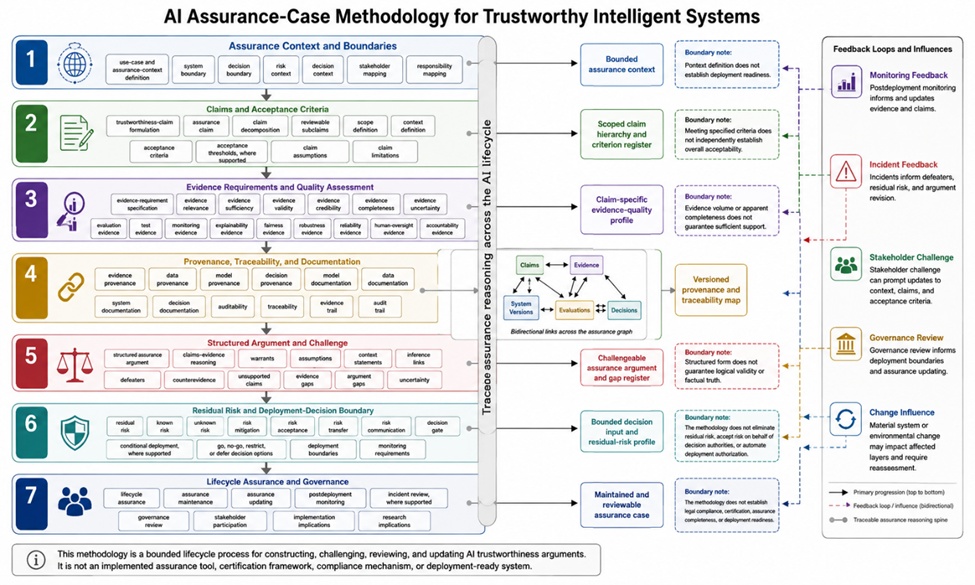
Figure 2. AI Assurance-Case Methodology for Trustworthy Intelligent Systems
A conceptual AI assurance-case methodology showing assurance context, system boundaries, stakeholders, claims, acceptance criteria, evidence, traceability, structured arguments, defeaters, residual risks, deployment boundaries, monitoring, governance review, and assurance updating.
Implementation research should first examine whether assurance claims and acceptance criteria are understandable, appropriately scoped, and sensitive to context. Lifecycle assurance research indicates that evidence requirements vary across development and operation [10]. Future work should therefore evaluate claim templates, decomposition strategies, threshold rationales, and methods for identifying omitted dimensions without converting the methodology into a fixed checklist.
Evidence research should compare approaches for appraising relevance, validity, credibility, completeness, and uncertainty. Dataset documentation provides a basis for provenance but does not establish fitness [13]. Further studies should test whether traceability links are semantically correct, whether change-impact mechanisms identify all affected claims, and whether evidence-quality judgments remain consistent across reviewers and domains.
Argument review requires methods for eliciting defeaters, evaluating warrants, communicating uncertainty, and identifying weaknesses without creating misleading assurance scores. Mapped assurance weakeners provide a starting point for systematic challenge [20]. Human-oversight, explainability, fairness, robustness, reliability, and accountability evidence also require distinct evaluation methods because technical indicators cannot alone demonstrate meaningful control, understandable explanation, equitable outcomes, or institutional responsibility.
Lifecycle research should investigate how drift, incidents, stakeholder challenges, and organizational change trigger assurance updates. Assurance-centred engineering demonstrates the value of connecting evolving cases to changing artefacts [28]. These implications remain conceptual research directions rather than legal advice, compliance guidance, audit instruction, certification instruction, procurement guidance, model- or platform-selection advice, safety certification, or deployment-decision instruction. Domain-specific institutions must determine how, whether, and by whom the methodology may be evaluated or adapted.
This article has proposed an AI assurance-case methodology for constructing bounded trustworthiness cases through explicit claims, acceptance criteria, evidence-quality assessment, provenance, traceability, structured arguments, assumptions, defeaters, uncertainty, residual-risk reasoning, deployment boundaries, monitoring, and assurance updating. The methodology replaces unsupported labels and isolated metrics with transparent relationships among what is claimed, why it may be supported, where the support is limited, what could defeat the reasoning, and which risks remain. It may improve the clarity, reviewability, and accountability of trustworthiness deliberation, but it does not prove safety, fairness, legality, ethical sufficiency, compliance, operational readiness, or deployment acceptability. Its contribution is a conceptual architecture for methodology development that requires domain-specific evidence, stakeholder challenge, governance review, and continuing lifecycle evaluation.
None
None
None
None
Open Access The author(s) retain copyright. This article is licensed under the Creative Commons Attribution-NonCommercial-ShareAlike 4.0 International License. It may be shared and adapted for non-commercial purposes with appropriate attribution, an indication of changes, and distribution of adaptations under the same license. Third-party material may be subject to separate terms identified in its credit line. View the license at https://creativecommons.org/licenses/by-nc-sa/4.0/.
 Transparent Intelligence Publishing