Artificial intelligence increasingly informs consequential decisions, yet high predictive performance alone does not establish that an intelligent system is worthy of trust. This systematic review examines trustworthy AI as a multidimensional, socio-technical, and lifecycle-dependent research domain. It synthesises selected peer-reviewed journal evidence addressing transparency, interpretability, explainability, robustness, safety, privacy, security, fairness, accountability, governance, and meaningful human oversight. The review applies predefined questions, eligibility principles, trustworthiness-dimension mapping, claim-level evidence extraction, and cross-dimensional synthesis without undertaking meta-analysis or inventing quantitative screening results. The evidence indicates that transparency and explanation must be assessed in relation to fidelity, stability, completeness, usefulness, stakeholder needs, contestability, recourse, and the practical authority of human overseers. Robustness and safety require evaluation under adversarial conditions, uncertainty, context shift, system failure, and residual risk, while privacy-preserving approaches must still be examined for leakage, cybersecurity vulnerabilities, and governance limitations. Fairness depends on context-sensitive definitions, bias identification, distributional consequences, documentation, responsibility allocation, auditability, and institutional mechanisms for correction. Cross-dimensional analysis reveals persistent tensions between transparency and privacy, explainability and security, automation and human control, and performance and fairness. Important gaps remain in multidimensional evaluation, realistic human-oversight studies, explanation-usefulness validation, lifecycle monitoring, accountability operationalisation, stakeholder participation, and foundation-model assurance. The review contributes an integrated evidence synthesis showing that AI worthiness of trust should be supported through coordinated technical validation, human-centred assessment, institutional governance, and continuing monitoring rather than inferred from any isolated property.
Trustworthy artificial intelligence has become a central concern because intelligent systems increasingly influence access to information, services, employment, healthcare, finance, public administration, and other consequential activities. The literature nevertheless describes trustworthiness through partially overlapping ethical principles, technical properties, institutional duties, and human-centred requirements. These accounts collectively indicate that trustworthy AI is a multidimensional socio-technical construct rather than a synonym for accuracy, explainability, or rule compliance [1-3].
Trust must also be distinguished from trustworthiness. Trust concerns a person’s willingness to accept vulnerability or rely on an intelligent system, whereas trustworthiness concerns whether that reliance is justified by relevant evidence. Empirical research shows that human trust can be shaped by performance, appearance, transparency, task characteristics, and interaction context, but favourable attitudes do not prove that a system is robust, fair, private, accountable, or safe [4]. Excessive trust may therefore be as problematic as unjustified distrust.
The need for systematic synthesis arises because major trustworthiness dimensions are commonly examined in separate research traditions. Explainable-AI studies investigate how model behaviour can be communicated, adversarial-machine-learning research examines vulnerability to strategic manipulation, privacy research studies information exposure, fairness research analyses distributional harms, and governance scholarship considers responsibility and institutional control. Evaluating these dimensions independently can obscure their dependencies, conflicts, and shared lifecycle requirements.
This review asks how trustworthy AI is defined; how transparency, explainability, and human oversight are conceptualised; how robustness, safety, privacy, and security are operationalised; how fairness, accountability, and governance are connected; which tensions occur among dimensions; and which research gaps remain. Its contribution is a structured systematic synthesis that links technical evidence, human-centred evaluation, and institutional governance while maintaining clear boundaries against certification, legal-compliance, universal-metric, and deployment-readiness claims.
Trustworthiness is broader than perceived trust and more demanding than satisfactory model performance. Reliability may provide reasons for calibrated reliance, but it does not independently establish ethical acceptability, institutional accountability, privacy protection, or safety across changing contexts [5]. Trustworthy AI should therefore be treated as an evidence-based assessment of whether a system possesses appropriate properties, operates within justified limits, and remains subject to effective human and organisational control.
Human-centred AI adds an important design perspective by rejecting the assumption that increasing automation necessarily requires diminishing human authority. High levels of computational capability can coexist with strong human control when systems support inspection, correction, escalation, override, and responsibility rather than merely inserting a nominal person into an automated workflow [6]. Human-in-the-loop, human-on-the-loop, and human-control arrangements must consequently be distinguished according to when intervention occurs, what information is available, and whether the person has practical authority.
Responsible AI and ethical AI concern the principles, practices, and institutional arrangements through which AI-related values and risks are addressed. Explainable, interpretable, robust, safe, secure, privacy-preserving, fair, accountable, and auditable AI describe more specific properties or governance functions. Evidence connecting principles, technical requirements, organisational processes, and regulation shows that these concepts overlap but are not interchangeable [7]. Governance determines who sets objectives, approves risk, monitors performance, records changes, investigates incidents, and provides remedy.
A multidimensional perspective also prevents single-property sufficiency claims. Explainability does not eliminate bias, robustness does not prove ethical acceptability, privacy protection does not establish security, fairness metrics do not create accountability, and human oversight does not guarantee effective intervention. Technical surveys of trustworthy AI similarly demonstrate that distinct dimensions require different methods, assumptions, stakeholders, and evaluation criteria [8]. Trustworthiness is therefore better represented as a structured portfolio of bounded evidence maintained across the AI lifecycle.
The review was organised around six questions: how trustworthy AI is defined; how transparency, explainability, and human oversight are conceptualised; how robustness, safety, privacy, and security are evaluated; how fairness, accountability, and governance are connected; which dependencies and trade-offs occur across dimensions; and which research gaps remain. These questions guided search-concept design, eligibility assessment, evidence extraction, synthesis, and citation planning.
Search concepts combined trustworthy AI, responsible AI, ethical AI, explainable AI, interpretability, transparency, human oversight, robustness, safety, uncertainty, privacy, security, fairness, accountability, auditability, governance, assurance, and intelligent systems. Earlier XAI surveys were used to identify broad method families, while later conceptual reviews helped distinguish explanation types, responsible-AI connections, and evaluation approaches [9-11]. Search terms were expanded iteratively when synonymous or adjacent concepts were identified.
Eligibility required a peer-reviewed journal article with a verified DOI, relevant journal standing, and substantive evidence for at least one review question. Records were excluded when they were non-peer-reviewed, conference-only, preprint-only, outside the defined scholarly scope, focused exclusively on predictive performance, or unable to support a planned claim. Explanation evaluation was extracted separately from explanation generation because quantitative XAI research distinguishes properties such as fidelity, stability, completeness, consistency, and human usefulness [12].
Evidence extraction recorded each article’s aim, intelligent-system context, trustworthiness dimensions, technical or socio-technical functions, evaluation approach, principal limitation, synthesis role, and first-use citation position. Selection was based on relevance and evidentiary fit rather than invented search totals, screening counts, quality scores, or meta-analytic outcomes. Table 1 summarises the systematic review logic used to identify, screen, select, and extract evidence on trustworthy and explainable intelligent systems. Figure 1 illustrates the systematic review workflow used to move from review questions and search concepts to study screening, evidence extraction, trustworthiness-dimension mapping, synthesis, and research-gap identification.
Table 1. Systematic Review Logic for Trustworthy and Explainable Intelligent Systems: Review Questions, Search Concepts, Inclusion Criteria, Exclusion Criteria, Screening Logic, Evidence Extraction Categories, Trustworthiness Dimension Mapping, Citation Planning, and Review Boundaries
Review component | Core review question or purpose | Inclusion logic | Exclusion logic | Evidence extracted | Trustworthiness dimension addressed | Bias or limitation risk | Review role |
Review questions | Define the concepts, operationalisations, relationships, and gaps examined | Direct relevance to at least one review question | No identifiable contribution to a question | Definitions, mechanisms, evaluations, tensions, gaps | Cross-cutting | Questions may privilege established terminology | Structures the synthesis |
Search concepts | Capture technical, human-centred, ethical, and governance scholarship | Trustworthy AI, XAI, robustness, privacy, fairness, accountability, oversight, or related terms | Performance-only or unrelated AI research | Keywords, concepts, intelligent-system context | All dimensions | Terminology and database bias | Supports multidisciplinary retrieval |
Source eligibility | Restrict evidence to appropriate scholarly publications | Peer-reviewed journal article, DOI, relevant journal standing | Preprint, conference paper, book, website, report, standard, or policy document | Publication type, journal, DOI | Cross-cutting | Ranking categories may vary | Protects evidence quality |
Relevance screening | Confirm substantive trustworthiness content | Supports a definition, method, evaluation, limitation, trade-off, or research gap | Superficial mention without usable evidence | Abstract and full-text relevance | Dimension-specific | Reviewer interpretation | Removes weak-fit records |
Evidence extraction | Capture comparable article-level information | Clearly reported aim, feature, evaluation, limitation, or implication | Insufficient detail for a planned claim | Context, dimension, function, evaluation, limitation | Technical and socio-technical | Selective extraction | Enables structured comparison |
Dimension mapping | Connect each source to one or more review domains | Clear relationship to transparency, oversight, robustness, privacy, fairness, governance, or synthesis | Cannot be mapped reliably | Primary and secondary dimensions | All dimensions | Overrepresentation of mature fields | Balances the evidence base |
Citation planning | Preserve claim-level support and first-appearance order | Precise claim–source fit and approved citation position | Decorative, random, or redundant citation | First-use section, paragraph, claim, citation form | Cross-cutting | Citation convenience | Protects Vancouver sequencing |
Review boundaries | Prevent overclaiming | Evidence supports synthesis and future research design | Claims of certification, legal compliance, universal scoring, or deployment readiness | Assumptions and residual limitations | No-guarantee boundaries | Readers may overgeneralise | Defines interpretive limits |
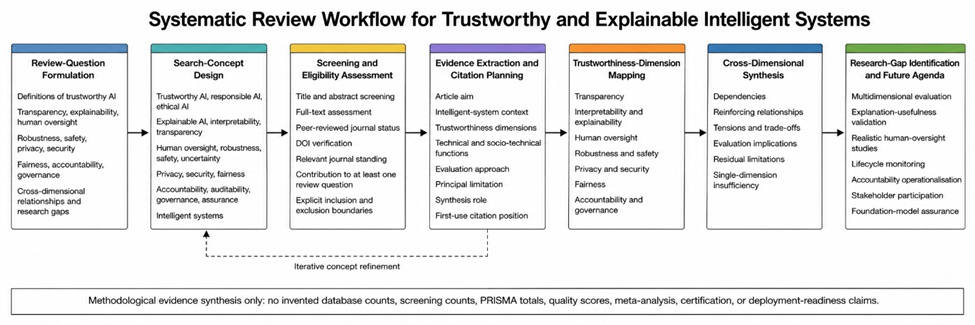
Figure 1. Systematic Review Workflow for Trustworthy and Explainable Intelligent Systems
Alt-text description. A systematic review workflow diagram showing review questions, search concepts, peer-reviewed journal screening, eligibility checks, evidence extraction, trustworthiness-dimension mapping, cross-dimensional synthesis, and research-gap identification.
Transparency concerns the availability of relevant information about system purpose, data, modelling choices, limitations, deployment context, and responsible actors. Interpretability concerns whether model logic can be understood directly, while explainability concerns representations intended to clarify outputs or behaviour. Black-box explanation methods include feature-attribution, example-based, counterfactual, rule-based, local, and global approaches, each of which differs in model access, scope, format, and fidelity assumptions [13].
Explanation quality cannot be reduced to visual clarity or user satisfaction. Explanations may need to be faithful to model behaviour, stable under immaterial changes, sufficiently complete for their stated purpose, and useful to a particular stakeholder. Social-science evidence indicates that effective explanations are often selective, contrastive, audience-dependent, and situated within dialogue rather than delivered as exhaustive technical accounts [14]. Causal wording should therefore be reserved for explanations supported by defensible causal assumptions.
The distinction between intrinsic interpretability and post-hoc explanation is especially important in consequential settings. A persuasive explanation of an opaque model may create an impression of understanding without accurately representing the mechanism that produced the decision. Where comparably effective interpretable models are feasible, post-hoc explanation should not automatically be treated as an adequate substitute [15]. Explainability must also be evaluated against privacy, security, fairness, and safety requirements rather than presented as an independent trust mechanism.
Human-centred explanation requires alignment among stakeholder knowledge, decision responsibilities, explanation purpose, and evaluation method. Developers may need diagnostic explanations, auditors may require traceable evidence, decision makers may need uncertainty and limitation information, and affected individuals may need understandable reasons, contestability, and feasible recourse. Stakeholder-oriented XAI frameworks consequently support evaluation designs that connect explanation form to real tasks rather than assuming that one interface can satisfy all users [16].
Human-in-the-loop oversight involves direct participation in selected decisions or learning stages, whereas human-on-the-loop oversight involves supervision of substantially automated processes with authority to intervene. Both can fail through automation bias, excessive workload, inadequate information, delayed intervention, or nominal authority. User-study evidence therefore supports measuring error detection, decision quality, calibrated reliance, intervention success, and practical understanding instead of perceived clarity alone [17]. Table 2 maps transparency, explainability, interpretability, explanation quality, and human oversight requirements across trustworthy intelligent systems.
Table 2. Transparency, Explainability, Interpretability, Explanation Quality, and Human Oversight in Trustworthy Intelligent Systems: Explanation Usefulness, Fidelity, Stability, Completeness, Counterfactuals, Feature Attribution, Human-in-the-Loop Oversight, Human-on-the-Loop Oversight, Contestability, Recourse, and Explainability Boundaries
Dimension or requirement | Core trustworthiness question | Technical or socio-technical function | Potential evaluation approach | Primary stakeholder | Failure or misuse risk | Human oversight need | Systematic review role |
Transparency | Is relevant information about purpose, data, limits, and responsibility available? | Supports scrutiny and informed use | Documentation and comprehension review | Users, auditors, deployers | Information dumping or strategic opacity | Confirm that disclosure enables action | Distinguishes disclosure from understanding |
Interpretability | Can operative logic be understood directly? | Enables inspection without a surrogate | Simulatability, complexity, rule inspection | Experts and decision makers | Apparent simplicity may conceal system complexity | Verify that the inspected representation is operative | Separates intrinsic and post-hoc understanding |
Explainability | Can a system provide intelligible reasons for an output or behaviour? | Communicates selected aspects of model operation | Fidelity, usefulness, stability, and user testing | Users, experts, affected people | Plausible but misleading explanations | Match explanation to task and audience | Central explanation dimension |
Explanation usefulness | Does explanation improve appropriate understanding or action? | Connects explanation to human outcomes | Decision quality, error detection, calibrated reliance | Decision makers and affected users | Confidence may increase without accuracy | Observe downstream human performance | Human-centred outcome criterion |
Explanation fidelity | Does explanation reflect relevant model behaviour? | Limits divergence from the operative model | Perturbation tests and surrogate agreement | Auditors and developers | Rationalisation of opaque behaviour | Restrict reliance when fidelity is unknown | Core no-theatre safeguard |
Explanation stability and completeness | Is explanation consistent and sufficiently comprehensive for its purpose? | Supports reproducibility and scope awareness | Sensitivity, consistency, coverage, residual analysis | Evaluators and users | Arbitrary changes or partial accounts | Investigate unstable or incomplete outputs | Links explanation quality to robustness |
Feature attribution | Which inputs appear to influence the output? | Provides local or global contribution estimates | Sensitivity, baseline, and sanity checks | Experts and users | Association may be presented as causation | Domain review of actionability | Technical explanation family |
Counterfactual explanation and recourse | What feasible changes could produce another outcome? | Supports decision-boundary understanding and action | Validity, proximity, feasibility, diversity, stability | Affected individuals | Impossible, inequitable, or privacy-invasive advice | Review feasibility and downstream consequences | Links explanation to recourse |
Example- and rule-based explanation | Can representative cases or understandable rules clarify behaviour? | Provides prototypes, influential examples, or decision structures | Representativeness, privacy, rule fidelity, and coverage | Experts, users, auditors | Stereotyping, leakage, or oversimplification | Validate examples and rule scope | Covers complementary explanation forms |
Causal explanation | Are claimed causes supported rather than inferred from association? | Supports intervention-oriented reasoning | Assumption review and intervention testing | Domain experts | Unsupported causal claims may cause harm | Require domain and causal validation | Defines a high-evidence explanation category |
Human-in-the-loop oversight | Does a person participate meaningfully in a decision stage? | Enables review, correction, escalation, or approval | Override quality, workload, and disagreement analysis | Operators and professionals | Rubber-stamping and automation bias | Provide authority, competence, time, and evidence | Tests meaningful participation |
Human-on-the-loop oversight and control | Can a supervisor observe and intervene effectively? | Supports monitoring, exception handling, and shutdown | Detection latency and intervention success | Supervisors and safety operators | Poor awareness or intervention too late | Ensure observability and reliable control paths | Distinguishes supervision from direct participation |
Contestability | Can an affected decision be challenged effectively? | Supports correction and answerability | Appeal accessibility and resolution quality | Affected individuals | Symbolic or inaccessible appeal | Human reviewer must have corrective authority | Connects explanation to accountability |
No explainability-sufficiency boundary | What does explanation fail to establish independently? | Prevents explanation from becoming a trust certificate | Cross-check with safety, fairness, privacy, and governance evidence | All stakeholders | Explainability theatre and unjustified reliance | Require multidimensional assessment | Establishes the limit of standalone XAI |
Robustness concerns whether an intelligent system maintains acceptable behaviour under plausible variation, perturbation, and stress. It is distinct from reliability, which concerns consistency under intended conditions, and resilience, which includes detection, recovery, and adaptation after disruption. Adversarial-machine-learning research demonstrates that satisfactory ordinary test performance does not establish resistance to deliberately manipulated inputs, poisoned training data, model extraction, or adaptive attacks [18].
Safety requires a broader analysis of hazards, consequences, operating assumptions, foreseeable misuse, and residual risk. Verification may examine whether specified properties hold, while validation asks whether the system is appropriate for its intended context. Testing, adversarial assessment, interpretability analysis, fault injection, and scenario evaluation can provide complementary evidence, but none independently proves that a deep-learning system will remain harmless under all real-world conditions [19].
Uncertainty is also central to dependable decision support. Aleatoric uncertainty reflects variability that may persist even with additional data, whereas epistemic uncertainty concerns limitations in knowledge or model representation that may sometimes be reduced. These forms should not be treated interchangeably because they can justify different actions, including collecting evidence, abstaining, escalating to a human reviewer, or communicating irreducible uncertainty [20]. Calibration must additionally be assessed under relevant populations and changing conditions.
Privacy-preserving learning aims to reduce unnecessary exposure of personal or sensitive information, but architectural labels should not be interpreted as privacy guarantees. Federated learning can reduce centralised movement of raw data while introducing challenges involving heterogeneous participants, communication, reliability, and distributed control [21]. It can also remain vulnerable to inference, poisoning, backdoor, reconstruction, and communication attacks, meaning that decentralised training does not eliminate cybersecurity or privacy-leakage risks [22].
Security extends beyond model robustness to infrastructure, interfaces, credentials, data pipelines, software dependencies, logs, and organisational access practices. Domain-specific reviews show that technical defences must be interpreted in relation to the consequences of error, available expertise, data constraints, and continuing human oversight [23]. Trustworthiness assessment should therefore document threat models, protection assumptions, failure responses, monitoring arrangements, and residual risks without presenting finite testing as a safety or privacy certificate.
Fairness concerns how benefits, burdens, errors, opportunities, and representations are distributed across affected populations. Bias may arise through data collection, sampling, measurement, labels, feature construction, model objectives, evaluation procedures, or deployment practices. It may produce allocation harms, such as unjustified denial of opportunities, or representational harms, such as stereotyping, exclusion, and systematic misrepresentation [24].
Formal fairness measures operationalise different normative ideas and may yield incompatible assessments of the same system. Equality of error rates, calibration, demographic parity, individual similarity, and other criteria rely on different assumptions about groups, outcomes, and acceptable trade-offs. Selecting a metric is therefore not a neutral technical step, and satisfying one criterion does not demonstrate that a decision process is substantively fair [25].
Accountability asks who must explain, justify, correct, and answer for decisions involving AI. Responsibility can be distributed among data creators, developers, vendors, procurers, deployers, operators, managers, and public institutions, but distribution must not become diffusion. Algorithmic systems embed choices concerning objectives, categories, thresholds, evidence, and acceptable error, making those organisational decisions relevant to accountability even when model outputs are technically reproducible [26].
Governance provides the institutional structures through which objectives, authority, risk acceptance, monitoring, escalation, and remedy are organised. General principles can orient action but cannot ensure ethical practice when incentives, responsibilities, implementation mechanisms, and enforcement remain unspecified [27]. Operational tools—including impact assessments, documentation processes, audit procedures, risk registers, review gates, and stakeholder engagement—may translate principles into practice, although their effectiveness requires empirical evaluation [28].
Traceability and auditability depend on accurate, current, and accessible records of data provenance, model development, intended use, limitations, changes, incidents, and responsible actors. Dataset documentation can support deliberation about composition, collection, processing, appropriate use, distribution, and maintenance, but completed documentation does not itself validate fairness, privacy, or safety [29]. Table 3 synthesises robustness, safety, privacy, security, fairness, accountability, and governance requirements for trustworthy AI systems.
Table 3. Robustness, Safety, Privacy, Security, Fairness, Accountability, and Governance Requirements for Trustworthy AI: Reliability, Resilience, Adversarial Robustness, Uncertainty, Calibration, Privacy Protection, Cybersecurity, Bias, Discrimination, Traceability, Auditability, Documentation, Lifecycle Governance, and Compliance Boundaries
Trustworthiness dimension | Core evaluation or governance question | Technical or institutional function | Potential evaluation approach | Failure, harm, or attack risk | Residual limitation | Monitoring or governance need | Review synthesis role |
Robustness | Does behaviour remain acceptable under plausible variation? | Tests sensitivity beyond nominal conditions | Perturbation, stress, subgroup, and context-shift testing | Failure under changed inputs or environments | Tests cannot cover every future condition | Drift monitoring and revalidation | Separates average performance from dependable behaviour |
Reliability and resilience | Is operation consistent, recoverable, and maintainable? | Supports continuity and recovery | Repeated testing, fault injection, recovery analysis | Intermittent failure or cascading disruption | Recovery mechanisms may fail under correlated events | Maintenance, fallback, and incident review | Adds temporal recovery to robustness |
Safety | Are unacceptable harms identified and controlled? | Links hazards to safeguards and operating limits | Hazard analysis, scenario testing, assurance arguments | Physical, social, economic, or institutional harm | Unknown hazards and misuse remain | Lifecycle review and escalation | Establishes the no-safety-guarantee boundary |
Adversarial robustness | Can adaptive manipulation be resisted? | Protects model integrity | Evasion, poisoning, extraction, and red-team testing | Backdoors, adversarial inputs, and model theft | Threat models become outdated | Repeated adversarial assessment | Distinguishes security testing from ordinary accuracy |
Uncertainty and calibration | Are confidence and knowledge limits represented appropriately? | Supports abstention and risk-sensitive decisions | Calibration, coverage, subgroup, and shift analysis | False certainty or unusable uncertainty | Estimates may themselves be misspecified | Recalibration and escalation thresholds | Links model uncertainty to human decisions |
Privacy protection | Are sensitive data protected throughout the lifecycle? | Limits unauthorised exposure and secondary use | Privacy-impact review, leakage attacks, access audit | Re-identification, inference, and misuse | Composition and auxiliary data may weaken protection | Data minimisation and incident response | Establishes the no-privacy-guarantee boundary |
Security and cybersecurity | Are models, infrastructure, interfaces, and dependencies protected? | Preserves confidentiality, integrity, and availability | Penetration testing, dependency audit, red teaming | Tampering, theft, disruption, and compromised pipelines | New vulnerabilities remain possible | Continuous vulnerability management | Extends evaluation beyond the model |
Fairness and bias | Are errors, opportunities, and harms distributed justifiably? | Shapes data, objectives, metrics, and remedies | Subgroup, intersectional, process, and impact analysis | Discrimination, exclusion, and unequal burden | Formal metrics cannot resolve every normative dispute | Stakeholder review and documented rationale | Establishes the no-fairness-sufficiency boundary |
Accountability and responsibility | Who must justify, correct, and answer for outcomes? | Assigns duties and corrective authority | Responsibility mapping, decision logs, remedy review | Responsibility gaps and blame shifting | Complex supply chains obscure control | Named owners and escalation routes | Connects technical choices to answerability |
Traceability and auditability | Can evidence and decisions be reconstructed and inspected? | Supports investigation and independent review | Provenance, version, access, and audit checks | Missing lineage or performative audits | Records may be incomplete or inaccessible | Independent access and remediation authority | Converts claims into reviewable evidence |
Documentation | Are data, models, intended uses, limits, and changes recorded? | Preserves context across the lifecycle | Completeness, accuracy, and update assessment | Stale records and inappropriate reuse | Documentation depends on truthful maintenance | Ownership and change triggers | Necessary but insufficient assurance infrastructure |
Lifecycle governance | Are controls maintained from formulation to retirement? | Coordinates technical and institutional risk management | Stage gates, change control, monitoring, incident review | Drift, repurposing, and control decay | Governance maturity varies by organisation | Continuing reassessment | Prevents one-time approval from becoming permanent assurance |
Compliance boundary | What cannot be established by technical review alone? | Separates evidence synthesis from legal determination | Jurisdiction-specific assessment by qualified actors | False claims of regulatory approval | Legal requirements vary by context and time | Documented legal and institutional review | Prevents compliance overclaiming |
The evidence supports a view of trustworthy AI as an interdependent portfolio of technical, human-centred, and institutional evidence. Multidimensional reviews identify distinct requirements, lifecycle-assurance research connects claims to evidence across development and operation, and ethics-based auditing provides an institutional mechanism for examining whether principles are reflected in practice [30-32]. These approaches are complementary, but they do not create a universal trust score or automatic certification.
Governance and technical validation address different questions. Technical evaluation examines system behaviour under specified assumptions, whereas governance determines who defines acceptable performance, approves residual risk, oversees changes, investigates incidents, and provides remedy. Governance frameworks can connect these responsibilities across organisations and institutions, but their use cannot by itself establish jurisdiction-specific legal compliance [33].
Human trust adds another layer because confidence, acceptance, and reliance emerge from interactions among system performance, explanations, institutional signals, user experience, and context. The literature remains fragmented across technical, psychological, ethical, and governance perspectives, limiting direct comparison among trust measures and trustworthiness evidence [34]. High reported trust may therefore reflect persuasive design or limited understanding rather than justified reliance.
Several relationships are reinforcing. Robustness evidence can support safety arguments when tests correspond to meaningful hazards; uncertainty communication can improve oversight when humans understand and can act upon it; documentation can enable traceability and auditability; and fairness analysis can inform accountability when responsibility for metric selection and remediation is explicit. Stakeholder participation may similarly improve contextual understanding when participants possess genuine influence rather than symbolic involvement.
Other relationships create tensions. Detailed transparency may expose confidential data, explanation interfaces may reveal attackable information, privacy-preserving records may reduce audit detail, and extensive automation may weaken situational awareness. Predictive-performance improvements may also distribute errors unequally. Table 4 presents the cross-dimensional synthesis of trustworthy AI evidence, including tensions, trade-offs, design implications, evidence gaps, and future research needs. Figure 2 presents the cross-dimensional synthesis model of trustworthy AI, linking transparency, explainability, robustness, safety, privacy, security, fairness, accountability, governance, and human oversight as interdependent requirements rather than isolated system properties.
Table 4. Cross-Dimensional Evidence Synthesis for Trustworthy and Explainable Intelligent Systems: Transparency–Privacy Tensions, Explainability–Fairness Links, Robustness–Safety Dependencies, Privacy–Accountability Trade-Offs, Human Oversight Limits, Governance Requirements, Evidence Gaps, and Future Research Priorities
Cross-dimensional relationship | Dimensions involved | Core synthesis question | Evidence pattern | Tension or trade-off | Design or evaluation implication | Remaining gap | Future research need |
Transparency–privacy | Transparency, documentation, privacy | How much disclosure supports scrutiny without exposing protected information? | Disclosure aids review but may reveal sensitive data or model details | Inspectability versus confidentiality | Use role-based, layered, purpose-limited disclosure | Limited end-to-end evaluation | Test scrutiny benefits against leakage risks |
Explainability–security | Explainability, model vulnerability, security | Can explanations reveal attackable information? | Explanations support diagnosis but may expose boundaries or influential features | Fidelity and detail versus attack surface | Threat-model explanation interfaces | Security effects of XAI remain unevenly studied | Jointly evaluate explanation utility and attack resistance |
Explainability–fairness | Explainability, bias, fairness, recourse | Do explanations reveal unfairness or rationalise it? | XAI may support detection and contestability but can faithfully explain an unfair model | Clarity may legitimise harmful logic | Evaluate model and explanation fairness together | Limited affected-user evidence | Study whether explanations improve detection and remedy |
Fairness–accountability | Fairness, responsibility, auditability | Who selects fairness definitions and owns trade-offs? | Metric choice embeds normative and organisational decisions | Technical optimisation versus social responsibility | Record metric rationale, authority, and corrective duties | Responsibility is often diffuse | Evaluate governance of metric selection |
Robustness–safety | Robustness, reliability, resilience, safety | When does robustness support a safety claim? | Stress testing can reduce known failure risk | Benchmark strength versus operational relevance | Connect tests to hazards and consequences | Weak benchmark-to-harm linkage | Develop safety-relevant stress testing |
Privacy–accountability | Privacy, traceability, auditability | How can reviewable evidence be retained without excessive personal data? | Accountability needs records; privacy favours minimisation | Investigative detail versus data protection | Use secure provenance and controlled access | Limited privacy-preserving audit evidence | Evaluate selective-disclosure audit mechanisms |
Human oversight–automation | Oversight, control, automation | When is human participation effective? | Human review can identify errors but may fail under overload or bias | Efficiency versus meaningful intervention | Match oversight mode to risk and response time | Few realistic comparative studies | Evaluate intervention success longitudinally |
Governance–technical validation | Governance, assurance, verification | How should bounded technical evidence inform institutional decisions? | Tests support claims; governance sets thresholds and responsibility | Narrow metrics may be overinterpreted | Use claim–evidence traceability | Integrated processes lack validation | Study combined governance and technical assurance |
Uncertainty–human decisions | Uncertainty, calibration, explanation, oversight | Does uncertainty communication improve reliance? | It may support escalation but can increase cognitive burden | Information value versus complexity | Test representations through decision outcomes | Limited domain-realistic evidence | Compare uncertainty interfaces and protocols |
Documentation–auditability | Documentation, traceability, accountability | Can auditors use the recorded evidence effectively? | Documentation supports review but may become stale or performative | Reporting burden versus evidentiary quality | Link records to audit questions and update triggers | Limited evidence of downstream use | Evaluate accuracy, maintenance, and audit impact |
Stakeholder participation–trustworthiness | Participation, fairness, governance | Does participation materially change design and risk decisions? | Contextual knowledge may improve fit and legitimacy | Inclusion versus tokenism | Specify representation and decision influence | Participation outcomes are under-evaluated | Study power, conflict, and resulting system changes |
Performance–trustworthiness | Accuracy, fairness, robustness, safety | How should predictive performance relate to broader trustworthiness? | High performance can coexist with opacity, bias, or insecurity | Metric improvement may harm another dimension | Use multidimensional evidence profiles | No validated universal integration rule | Develop context-sensitive, non-compensatory assessment |
Single-dimension sufficiency boundary | All dimensions | Can one property establish worthiness of trust? | Evidence consistently shows contextual interdependence | Strength in one dimension may conceal severe weakness elsewhere | Preserve veto-level risks and explicit assumptions | No universal trustworthiness metric | Develop transparent assurance arguments without universal scoring |
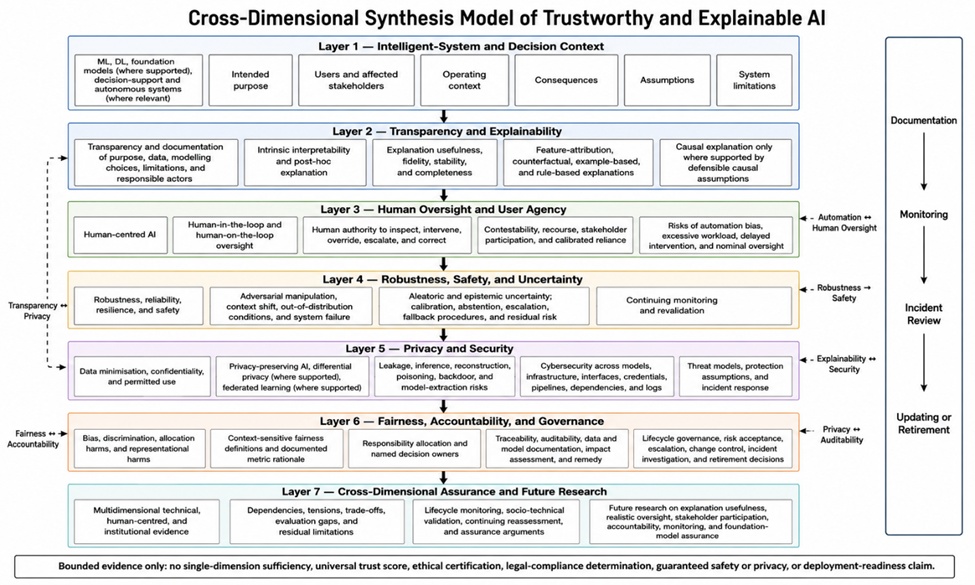
Figure 2. Cross-Dimensional Synthesis Model of Trustworthy and Explainable AI
Alt-text description. A conceptual synthesis model showing trustworthy AI as a multidimensional system connecting transparency, explainability, human oversight, robustness, safety, privacy, security, fairness, accountability, governance, monitoring, documentation, and lifecycle assurance.
Conceptual fragmentation remains a foundational limitation. Trust, trustworthiness, responsible AI, ethical AI, explainability, assurance, compliance, and safety are frequently used at different analytical levels, complicating comparison. Future research should report explicit construct definitions and distinguish system properties from human attitudes and institutional judgements. It should also avoid universal trustworthiness metrics, because aggregation may conceal assumptions, incompatible criteria, and severe weaknesses that should not be compensated by strengths elsewhere.
Evaluation research should move beyond isolated dimensions. Explanation studies need stronger validation of usefulness, fidelity, stability, recourse, and effects on human decisions rather than reliance on satisfaction alone [12]. Fairness research requires transparent justification of selected metrics and closer examination of intersecting harms [25]. Robustness, privacy, security, and fairness should increasingly be evaluated together because interventions designed for one property may alter performance or risk across others.
Human oversight and socio-technical validation require more realistic evidence. Future studies should compare human-in-the-loop and human-on-the-loop arrangements under representative workload, time pressure, uncertainty, and organisational authority. Outcomes should include error detection, disagreement resolution, intervention quality, calibrated reliance, and recovery from automation failure [17]. Participatory research should additionally examine whose knowledge is included, whether participation changes design decisions, and how conflicts among stakeholder values are resolved.
Lifecycle evidence remains limited for monitoring, accountability, changing contexts, and foundation-model use. Prospective research should examine distribution shift, incident reporting, documentation maintenance, audit effectiveness, update governance, and retirement decisions. Lifecycle assurance can structure these investigations, but its claims must remain context-specific [31]. Foundation-model research should address open-ended behaviour, data provenance, tool use, security exposure, uncertainty, and oversight without presuming that evaluation methods developed for narrower models transfer unchanged [34].
This systematic review synthesises trustworthy and explainable AI as an interdependent, socio-technical, and lifecycle-aware domain linking transparency, interpretability, explanation quality, meaningful human oversight, robustness, safety, privacy, security, fairness, accountability, documentation, auditability, governance, and monitoring. The evidence shows that no isolated model property can establish worthiness of trust: explanations may be unfaithful, robust systems may remain unfair, privacy-oriented designs may remain insecure, and human participation may be merely nominal. Appropriate assessment therefore requires bounded technical validation, stakeholder-sensitive human evaluation, explicit responsibility, institutional governance, and continuing reassessment under changing conditions. This synthesis supports future research and assessment design but does not establish universal measurement, legal compliance, ethical certification, guaranteed safety, or deployment readiness.
None
None
None
None
Open Access The author(s) retain copyright. This article is licensed under the Creative Commons Attribution-NonCommercial-ShareAlike 4.0 International License. It may be shared and adapted for non-commercial purposes with appropriate attribution, an indication of changes, and distribution of adaptations under the same license. Third-party material may be subject to separate terms identified in its credit line. View the license at https://creativecommons.org/licenses/by-nc-sa/4.0/.
 Transparent Intelligence Publishing