Explainability has become central to discussions of trustworthy and responsible intelligent systems, yet it is frequently reduced to the technical production of information about model structure, features, rules, or predictions. This critical review examines why opening a computational black box is not equivalent to producing an explanation that people can understand or use responsibly. The review synthesises conceptual, technical, human-centred, decisional, and accountability-oriented scholarship to evaluate the shift from model interpretability toward meaningful explanation. It distinguishes technical properties such as transparency, fidelity, plausibility, completeness, stability, and local or global scope from human outcomes such as comprehension, cognitive accessibility, mental-model development, decision usefulness, calibrated trust, and appropriate reliance. It further examines how explanations may produce overreliance, underreliance, automation bias, false reassurance, cognitive overload, or explanation mismatch when their content and presentation are not aligned with users, tasks, uncertainty, and decision consequences. From an accountability perspective, explanations may contribute to auditability, traceability, contestability, and recourse, but they cannot independently assign responsibility, provide institutional authority, or guarantee effective remedies. The main contribution is a human-centred critical synthesis that treats explainability as a socio-technical achievement rather than a model output. Meaningful explanation requires technical credibility, cognitive accessibility, contextual relevance, decision-sensitive evaluation, uncertainty communication, opportunities for challenge, and governance mechanisms capable of acting on explanatory evidence. The review therefore rejects universal explanation-sufficiency claims and identifies conditions under which explanations may assist understanding and responsible decision use without being treated as proof of trustworthiness, accountability, fairness, safety, or deployment readiness.
Explainability is commonly presented as a response to the opacity of machine-learning and intelligent decision systems. However, an explanation is not merely a technical description extracted from a model. Human explanations are selective, contrastive, socially situated, and shaped by the questions, expectations, and knowledge of their recipients [1]. This insight challenges the assumption that disclosing internal variables, feature rankings, rules, or visualisations is sufficient to explain a decision. In human-centred intelligent systems, explanation quality must therefore be assessed not only by what information is produced, but also by whether that information supports accurate understanding for a specified person and purpose.
The explainable-AI literature encompasses intrinsic interpretability, post-hoc methods, local and global explanations, feature attribution, counterfactuals, examples, rules, and model-agnostic surrogates. It also connects explanation to responsible-AI concerns involving fairness, accountability, transparency, trust, and human oversight [2]. These dimensions are related but not interchangeable. A system may expose technically informative model behaviour while remaining inaccessible to a lay user, irrelevant to a professional decision, misleading about causation, or disconnected from institutional responsibility. Explainability should therefore be treated as a multidimensional property whose adequacy varies across stakeholders, risks, and intended uses.
The metaphor of opening the black box has helped motivate research into methods that reveal or approximate model behaviour. Nevertheless, the metaphor can imply that opacity is a single barrier and that exposing internal content resolves the problem. Existing surveys instead show a heterogeneous field with competing definitions, purposes, methods, and evaluation practices [3]. Some explanations describe global model patterns, whereas others address a single prediction. Some expose learned associations, while others provide examples, simplified rules, or hypothetical changes. These outputs answer different questions and should not be interpreted as interchangeable evidence of understanding.
Explanation problems differ according to the model being examined, the type of output required, the scope of the explanation, and the practical question faced by the user [4]. A technically faithful local attribution may be valuable for debugging but inadequate for contesting an institutional decision. A concise rule may be readable but omit important interactions. A counterfactual may identify a mathematical route to another prediction while offering no feasible route to a different real-world outcome. This article critically reviews explainability beyond technical disclosure by linking model interpretability to human understanding, cognitive accessibility, decision usefulness, trust calibration, appropriate reliance, accountability, contestability, and explanation failure.
The distinction between intrinsic interpretability and post-hoc explainability is especially important in consequential applications. Intrinsically interpretable models expose decision logic through representations intended to remain directly inspectable, whereas post-hoc methods approximate or describe the behaviour of an already trained model. In high-stakes settings, post-hoc explanations should not automatically substitute for interpretable modelling when an adequately performing interpretable alternative is available [5]. The concern is not that every black-box explanation is useless, but that an approximate explanatory layer may conceal errors, unstable relationships, or decision rules that the explanation does not faithfully reproduce.
Meaningful explanation is consequently a pragmatic rather than purely structural achievement. Its value depends on what a stakeholder needs to understand, why that understanding matters, and what the stakeholder can do with the resulting information [6]. Developers may seek debugging evidence, domain experts may need uncertainty and causal relevance, operators may require error indicators, and affected individuals may need reasons that support correction or challenge. The same technical output can therefore be informative in one context and inadequate in another. Explanation purpose must precede method selection rather than being inferred after an explanation has been generated.
Interpretability itself has multiple meanings, including simplicity, decomposability, predictability, inspectability, intelligibility, and the possibility of constructing a usable account of system behaviour [7]. These meanings should not be collapsed. A model may be transparent at the level of mathematical structure but incomprehensible to its intended user. Conversely, a non-technical explanation may be understandable while providing only a partial or potentially inaccurate representation of the model. Comprehensibility concerns whether information can be processed, while human understanding additionally concerns whether a person forms an accurate and practically relevant mental model.
Interpretability is best treated as an instrumental property whose importance depends on the epistemic, practical, or normative objective being pursued [8]. It does not independently establish accuracy, fairness, accountability, safety, or trustworthiness. Meaningful explanation requires a defined audience, a decision context, an explanation purpose, an acceptable level of detail, and evidence that the presentation supports the intended form of understanding. The critical boundary is therefore clear: model interpretability may contribute to meaningful explanation, but it cannot be treated as equivalent to human understanding or as proof that an intelligent system is responsibly designed or used.
Technical explainability includes intrinsic models and post-hoc approaches such as feature attribution, saliency visualisation, counterfactuals, examples, extracted rules, surrogate models, and local or global summaries. In safety-sensitive fields, these approaches differ substantially in what they reveal, how they are generated, and what users may reasonably infer from them [9]. Feature attribution describes sensitivity or contribution under particular assumptions, while saliency highlights influential input regions. Neither output necessarily identifies a causal mechanism, a complete decision process, or an intervention that will remain valid under changed conditions.
Methods for explaining deep neural networks include gradient-based analysis, relevance propagation, perturbation techniques, representation analysis, and surrogate approximation. These techniques can reveal selected aspects of learned behaviour, identify correlations, and assist model inspection, but they do not reproduce an exhaustive account of internal reasoning [10]. A visually coherent heat map may be unstable, and a concise surrogate may fit only a narrow neighbourhood. Natural-language explanations may improve accessibility, yet fluent wording can create an impression of certainty or causal insight that exceeds the evidence available from the model.
Explanation quality is multidimensional. Fidelity concerns whether an explanation corresponds to the behaviour of the target model; plausibility concerns whether it appears reasonable to a person; stability concerns whether materially similar inputs receive consistent explanations; and completeness concerns how much relevant model behaviour is represented [11]. These properties can conflict. A highly faithful account may be too complex for practical use, while a simple and plausible explanation may omit interactions or exceptions. Technical evaluation must therefore avoid treating any single property as a universal indicator of explanation quality.
Evaluation also requires attention to compactness, consistency, sensitivity, representativeness, robustness, and the relationship between explanation scope and the claim being made. Reviews of XAI evaluation show that many explanations are assessed through limited demonstrations or isolated metrics rather than comprehensive tests of their technical and human-relevant properties [12]. Local explanations should not be generalised to global behaviour without evidence, and global summaries should state what is compressed or omitted. Counterfactuals require feasibility and causal scrutiny, while example-based explanations require valid similarity measures and privacy-sensitive presentation.
The principal conceptual limitation is that technical explanations remain representations produced for particular purposes under particular assumptions. They can assist inspection, debugging, communication, or decision support, but their existence does not prove that a user understands the system, relies on it appropriately, or can hold an institution accountable. Technical evaluation should establish scope, fidelity, stability, completeness, uncertainty, and relevant failure conditions before human usefulness is inferred. Table 1 summarises technical explainability approaches and their conceptual limitations when interpreted as meaningful human explanation.
Table 1. Technical Explainability Approaches and Conceptual Limitations: Model Transparency, Intrinsic Interpretability, Post-Hoc Explanation, Feature Attribution, Saliency, Counterfactuals, Example-Based Explanations, Rule-Based Explanations, Surrogate Models, Local and Global Explanations, Fidelity, Plausibility, Stability, Completeness, and Technical-Sufficiency Boundaries
Explainability approach or concept | Core technical question | Explanation function | Conceptual limitation | Potential misinterpretation | Evaluation need | Critical boundary | Review role |
Model transparency | Can relevant model structures or operations be inspected? | Exposes internal components or logic | Visibility may remain cognitively inaccessible | Visible operation is assumed to be understood | Inspectability and user-comprehension assessment | Transparency does not guarantee understanding | Separates technical access from human meaning |
Intrinsic interpretability | Can prediction logic be represented directly? | Reduces reliance on post-hoc approximation | Simplicity is domain- and user-dependent | Interpretable form is treated as valid or trustworthy | Domain validity, error and usability testing | Interpretability does not establish correctness | Supports cautious preference in consequential settings |
Post-hoc explanation | Can black-box behaviour be described after prediction? | Produces an explanatory approximation | May diverge from actual model behaviour | Approximation is presented as internal reasoning | Faithfulness, robustness and scope testing | The explanation is not the model | Defines a central fidelity risk |
Feature attribution | Which features influenced an output? | Ranks or scores input contribution | Depends on baselines, perturbations and correlation | Association is interpreted as causation | Sensitivity, baseline and correlation analysis | Attribution is not causal proof | Illustrates local technical limitation |
Saliency explanation | Which input regions appear influential? | Provides visual localisation | May be unstable or visually persuasive | Highlighted regions are treated as causal evidence | Sanity checks and perturbation testing | Visual plausibility is not fidelity | Supports false-reassurance analysis |
Counterfactual explanation | What change would alter the prediction? | Provides contrastive information | Minimal change may be infeasible or non-causal | Prediction change is treated as guaranteed recourse | Feasibility, causality and fairness testing | Counterfactual difference is not effective recourse | Links explanation with actionability |
Example-based explanation | Which cases resemble the current case? | Supports reasoning through comparison | Similarity may be technically but not semantically valid | Similar examples are treated as equivalent cases | Similarity, representativeness and privacy review | Resemblance does not establish justification | Connects accessibility with privacy risk |
Rule-based explanation | Can behaviour be represented as conditions and rules? | Produces symbolic decision logic | Extracted rules may be approximate or complex | Rule form is assumed to be understandable | Fidelity, coverage and complexity testing | Symbolic form does not guarantee comprehension | Distinguishes readability from usability |
Surrogate model | Can a simpler model approximate the black box? | Provides local or global approximation | Approximation error may be hidden | Surrogate logic is treated as original logic | Local and global fidelity assessment | Surrogates require explicit scope limits | Clarifies approximation boundaries |
Local explanation | Why was this output produced? | Explains behaviour near one instance | May not generalise beyond the selected neighbourhood | Local behaviour is treated as global behaviour | Neighbourhood and stability testing | Local validity is not global validity | Prevents scope overextension |
Global explanation | How does the model behave overall? | Summarises general relationships | Compression omits exceptions and interactions | Summary is treated as complete logic | Coverage and subgroup analysis | Global explanations remain selective | Grounds simplicity–completeness tension |
Causal explanation | What mechanism produced or could change an outcome? | Supports intervention-oriented understanding | Predictive data may not identify causation | Correlation is labelled causal | Causal assumptions and intervention validation | Predictive explanation is not causal explanation | Supports recourse and actionability boundaries |
Natural-language explanation | Can reasons be expressed conversationally? | Improves linguistic accessibility | Fluency may conceal incompleteness or inaccuracy | Persuasive language is treated as faithful reasoning | Factuality, fidelity and uncertainty testing | Fluency is not model access | Extends failure analysis to generated rationales |
Explanation fidelity | Does the explanation represent model behaviour accurately? | Measures correspondence with the target model | High fidelity may remain unusable | Fidelity is treated as sufficient quality | Method-specific validity testing | Technical correctness is not human usefulness | Establishes one necessary evaluation dimension |
Explanation plausibility | Does the explanation appear reasonable to users? | Supports cognitive fit | May diverge from actual model behaviour | Convincing content is treated as true | Joint plausibility–fidelity assessment | Plausibility cannot replace fidelity | Defines a central synthesis tension |
Explanation stability | Does the explanation persist under non-material change? | Identifies sensitivity | Stable explanations may still be wrong | A single display is treated as dependable | Repeated and perturbation-based testing | One explanation cannot establish stability | Supports failure detection |
Explanation completeness | How much relevant behaviour is represented? | Assesses omissions and coverage | Completeness can conflict with accessibility | Concision is treated as comprehensiveness | Coverage and omission analysis | Simplicity requires declared limits | Grounds layered explanation design |
Technical-sufficiency boundary | Can technical output establish meaningful explanation by itself? | Defines the critical limit | Human, contextual and governance conditions remain untested | Method availability is equated with responsible use | Cross-dimensional evaluation | No technical method guarantees understanding or readiness | Governing boundary of the review |
Human-centred explanation begins by identifying who must understand what, for which task, and under what constraints. Explanation design and evaluation should be aligned with distinct user groups and system objectives rather than assuming a generic recipient [13]. A developer investigating model errors, a clinician reviewing a recommendation, an auditor examining traceability, and an individual challenging an adverse outcome require different evidence. Lay users may need plain language and concrete consequences, whereas expert users may require technical detail, uncertainty, provenance, and access to alternative explanations.
Stakeholders differ not only in expertise but also in authority, vulnerability, time, incentives, and access to supporting evidence. Their explanatory needs may conflict: concise information for an affected person may be insufficient for an auditor, while extensive technical documentation may be unusable during a time-sensitive decision [14]. Cognitive accessibility therefore includes vocabulary, modality, sequencing, information density, disability access, and the opportunity to ask follow-up questions. Explanation personalisation may improve fit, but it should not conceal relevant information or become a means of persuasion.
Domain expertise is particularly important because explanation usefulness depends on whether technical information maps to legitimate concepts and workflows. Human-centred clinical-design research illustrates the value of eliciting explanation requirements from intended professional users before designing explanation interfaces [15]. Similar reasoning applies in other consequential domains. Feature importance alone may not answer whether evidence is clinically plausible, financially actionable, operationally safe, or institutionally contestable. Domain-specific explanation must clarify assumptions, uncertainty, scope, and the relationship between model output and professional judgment.
Technical explanation outputs become meaningful only after passing through user expertise, cognitive accessibility, mental-model formation, task context, uncertainty interpretation, and decision need. Human-centred studies remain heterogeneous in their measures of understanding, usability, trust, and task performance, which limits universal conclusions about explanation effectiveness [16]. Direct evaluation should therefore examine whether users can identify system capabilities, limitations, errors, relevant alternatives, and appropriate actions rather than relying only on satisfaction or perceived clarity. Figure 1 illustrates the pathway from technical explanation output to meaningful human explanation, showing how user expertise, cognitive accessibility, context, uncertainty, and decision needs shape understanding and usefulness.
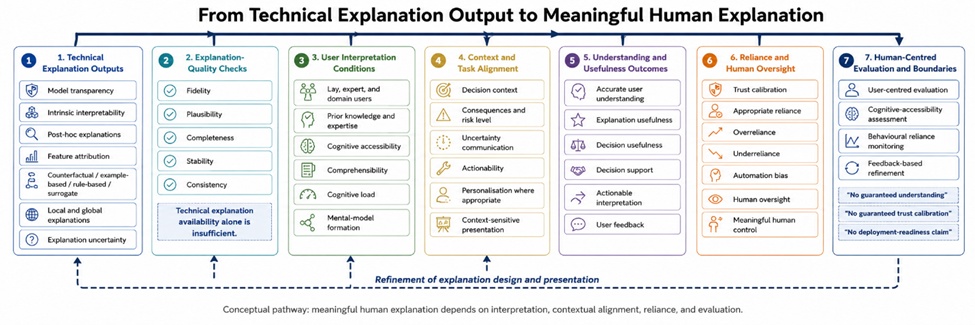
Figure 1. From Technical Explanation Output to Meaningful Human Explanation
A conceptual pathway diagram showing technical explanation outputs moving through user expertise, cognitive accessibility, mental models, task context, uncertainty interpretation, decision usefulness, feedback, and human-centred evaluation.
Cognitive accessibility and comprehensibility are necessary but remain insufficient indicators of understanding. A user may understand the literal content of an explanation while forming an inaccurate mental model of system capability, uncertainty, or causation. Conversely, an explanation can be technically complex yet useful to a qualified expert when it supports error detection or comparison with domain evidence. Human-centred evaluation should therefore combine comprehension, cognitive-load, mental-model, task, accessibility, and behavioural measures. The governing boundary is that providing an explanation does not guarantee understanding; meaningful explanation must be demonstrated for intended users under defined decision conditions.
Trust in artificial intelligence is not a single attitude produced by explanation availability. It includes cognitive judgments about competence, predictability, and reliability as well as affective responses shaped by task, interface, prior experience, and perceived risk [17]. An explanation may increase confidence because it appears coherent, but increased confidence is not necessarily calibrated confidence. Trustworthiness concerns properties of the system and its operation, whereas trust concerns a user’s perception. Explainable systems should therefore be evaluated by whether perceptions and behaviour correspond appropriately to demonstrated capability.
The more defensible objective is appropriate reliance rather than trust maximisation [18]. Appropriate reliance occurs when users accept useful recommendations under conditions in which the system is sufficiently capable and reject, verify, or escalate outputs when limitations or warning signs are present. Overreliance involves unwarranted acceptance, while underreliance involves rejecting beneficial assistance without adequate reason. Explanations may support calibration by communicating limitations, uncertainty, alternatives, and relevant evidence, but they can also legitimise an output merely by making it appear reasoned.
Perceived explainability and causability may influence trust, acceptance, and users’ sense that a system is understandable [19]. Such effects should be interpreted cautiously because perceived clarity does not independently establish explanation fidelity, causal validity, or improved decision quality. A user can understand the literal content of an explanation yet misunderstand the model’s competence, the source of uncertainty, or the consequences of acting on its recommendation. Confidence communication should therefore distinguish prediction confidence, explanation uncertainty, data limitations, and the possibility that the system is operating outside conditions represented in its validation.
Evidence from high-risk decision tasks indicates that explanations do not produce uniform improvements in trust or behaviour [20]. Their effects depend on explanation design, user preparation, error visibility, time pressure, and the decision consequences involved. In some settings, explanations may encourage verification; in others, they may intensify automation bias by supplying a plausible justification for an incorrect recommendation. Human oversight is meaningful only when reviewers possess sufficient expertise, time, authority, alternative evidence, and an operational capacity to reject or escalate the automated output.
Interactive explanation design can support feedback and clarification, yet interaction may also produce overload, selective attention, or calibration errors when users receive information that does not match their needs [21]. Reliance should therefore be monitored behaviourally and longitudinally rather than inferred from satisfaction or trust ratings alone. Evaluation should examine acceptance of correct and incorrect advice, independent error detection, override behaviour, uncertainty interpretation, and changes in reliance after system failures. Providing an explanation does not guarantee calibrated trust, and understanding an explanation does not guarantee a better decision.
Accountability requires more than visibility into a model. Transparency can reveal selected components while leaving users unable to understand organisational relationships, data practices, temporal dependencies, or the distribution of authority surrounding a decision [22]. The black-box metaphor can consequently transfer opacity from the predictive model to the explanation method, interface, documentation system, or deploying institution. An explanation becomes relevant to accountability only when it forms part of a process capable of identifying responsibility, reviewing evidence, correcting errors, and responding to harm.
Technical disclosure alone cannot restore accountability without institutional mechanisms such as audit access, traceability, documented responsibilities, review authority, corrective procedures, and consequences for failure [23]. Auditability requires qualified reviewers to inspect evidence beyond a simplified user explanation. Traceability requires outputs to be connected to data sources, model versions, explanation methods, operators, and interventions. Documentation must remain current, accessible, and purpose-specific. Otherwise, explanation can become ceremonial disclosure that creates an appearance of oversight without enabling effective scrutiny.
Responsibility attribution is also relational. Explanations may clarify how an output was generated or used, but they cannot independently determine who had the duty, authority, knowledge, or capacity to prevent harm [24]. Developers, data providers, deployers, managers, professional users, and institutional decision-makers may each control different parts of the system. Accountability-oriented explanation must therefore be connected to explicit role allocation, escalation channels, and human control rather than allowing responsibility to be displaced onto either the model or the person receiving its recommendation.
Transparency requirements must be sensitive to audience, purpose, context, and competing concerns [25]. Information that supports technical auditing may be inaccessible to an affected person, while unrestricted disclosure can create privacy or security risks. Example-based explanations may reveal sensitive records; detailed system information may facilitate manipulation; and generic disclosure can obscure differential effects across groups. Fairness implications therefore concern not only model outcomes but also whether explanation quality, challenge burdens, and access to recourse are distributed equitably.
Contestability requires an affected person to question inputs, inferences, procedures, or outcomes through an accessible review process. Counterfactual information may clarify what model input would change a prediction, but it does not automatically provide feasible, causal, affordable, safe, or fair recourse [26]. Explanation failure includes misleading content, false reassurance, overload, mismatch, omitted uncertainty, inaccessible presentation, and non-actionable recommendations. Table 2 maps human understanding, cognitive accessibility, decision usefulness, trust calibration, reliance, accountability, contestability, and explanation failure in human-centered explainable systems.
Table 2. Human-Centered Explainability Requirements and Failure Risks: Cognitive Accessibility, Mental Models, User Expertise, Decision Usefulness, Trust Calibration, Appropriate Reliance, Overreliance, Underreliance, Automation Bias, Accountability, Contestability, Recourse, Misleading Explanations, Explanation Overload, and Explanation Mismatch
Human-centered requirement or failure component | Core review question | User, decision, or governance context | Explanation role | Potential benefit or accountability output | Failure or misuse risk | Evaluation or oversight need | Critical boundary |
Human understanding | Does the user form an accurate and usable account? | Expertise, task and stakes vary | Connects technical information to a user question | Informed scrutiny | Persuasive but inaccurate mental model | Comprehension and transfer testing | Explanation presence does not prove understanding |
Cognitive accessibility | Can the user perceive and process the explanation? | Language, disability, workload and literacy matter | Adapts format, vocabulary and sequencing | More equitable access | Exclusion through jargon or inaccessible presentation | Accessibility and usability testing | Availability is not accessibility |
Mental-model support | Does the explanation clarify capabilities and limits? | Prior beliefs influence interpretation | Supports capability learning | Improved error anticipation | Entrenched misconceptions | Pre/post mental-model assessment | Surface clarity is not accurate understanding |
User expertise | What knowledge does the explanation assume? | Lay, technical and domain experts differ | Adjusts abstraction and evidence depth | Better stakeholder fit | Oversimplification or overload | Stratified evaluation | One explanation cannot serve every user |
Decision usefulness | Does the explanation assist the defined task? | Decision purpose and consequence differ | Provides relevant evidence and alternatives | Better scrutiny or option comparison | Distraction or irrelevant information | Task and consequence evaluation | Explanation quality is not decision quality |
Trust calibration | Does confidence track demonstrated capability? | Reliance changes across tasks and failures | Communicates limitations and uncertainty | Better aligned use | Persuasion without calibration | Behavioural calibration assessment | Trust increase is not calibration |
Appropriate reliance | Do users accept and reject outputs appropriately? | Requires alternatives and authority | Supports verification and override | Safer human-AI collaboration | Deference or unjustified rejection | Correct- and incorrect-advice testing | Explanation cannot guarantee appropriate reliance |
Overreliance | Are incorrect outputs accepted despite warning signs? | Time pressure and authority cues matter | May reveal limitations | Potential reduction in blind acceptance | Automation bias and false reassurance | Error-injection and override monitoring | Plausibility can intensify overreliance |
Underreliance | Are useful outputs rejected without adequate reason? | Prior distrust or poor explanation may contribute | Clarifies validated strengths | Appropriate beneficial use | Disuse and missed benefit | Reliance and missed-opportunity measures | Caution should not become automatic rejection |
Automation bias | Does explanation suppress independent checking? | Recommendation and decision-support systems | Can prompt or displace verification | More structured review | Rubber-stamping | Independent-reasoning tasks | Explanation may legitimise automation |
Accountability | Can reasons be connected to responsible actors and action? | Organisational authority is required | Supplies reviewable evidence | Correction and responsibility attribution | Explanation substitutes for responsibility | Role, authority and remedy review | Explanation alone is not accountability |
Contestability | Can an affected person challenge a decision? | Rights, time, access and review channels matter | Provides understandable grounds | Review, correction or reversal | Inaccessible or non-disputable reasons | Procedural and outcome evaluation | Information alone is not contestability |
Recourse | Is there a feasible route to another outcome? | Resources and causal constraints matter | Connects reasons to possible action | Consequential remedy | Infeasible or burdensome recommendation | Feasibility, fairness and causality testing | Counterfactuals do not guarantee recourse |
Misleading explanation | Does content imply unsupported causation or certainty? | Any user may be affected | Should qualify scope and evidence | Corrected interpretation | Plausible but inaccurate narrative | Fidelity and communication checks | Persuasiveness is not validity |
False reassurance | Does explanation make a deficient system appear safe? | Especially serious in high-risk use | Communicates limits and warning signs | More cautious use | Unwarranted confidence | Independent validation and reliance testing | Explanation is not safety evidence |
Explanation overload | Does information exceed cognitive or temporal capacity? | Time-sensitive and complex decisions | Prioritises and layers information | More manageable access | Skimming, avoidance or deference | Workload and recall testing | More information is not necessarily more transparency |
Explanation mismatch | Does the output answer the user’s actual question? | Debugging, deciding and contesting differ | Aligns content with purpose | Relevant information | Technically correct but practically useless output | Requirements elicitation and task testing | Technical correctness is not contextual relevance |
Opacity transfer | Has opacity moved to the explanation or institution? | Explanation pipelines and organisations | Exposes transformations and provenance | End-to-end scrutiny | New explanatory black box | Traceability and audit access | Explanation layers can reproduce opacity |
Uncertainty omission | Are predictive and explanatory uncertainties absent? | High-risk or shifted contexts | Qualifies confidence and scope | Better risk interpretation | False certainty | Calibration and comprehension testing | Point explanations do not establish certainty |
Fairness implication | Are explanation access and burdens equitable? | Effects differ across stakeholders and groups | Supports identification of differential treatment | Corrective review | Unequal explanation quality or recourse burden | Subgroup and burden analysis | Explainability does not establish fairness |
Privacy implication | Does explanation disclose sensitive information? | Examples, features and provenance can reveal data | Limits disclosure to relevant information | Proportionate transparency | Data leakage or attribute exposure | Privacy threat assessment | Transparency must be purpose-limited |
Security implication | Can explanatory detail facilitate attacks or gaming? | Public and role-based access differ | Supports controlled scrutiny | Secure accountability | Manipulation, extraction or gaming | Adversarial and misuse testing | Universal disclosure can undermine security |
Governance | Can the institution act on explanation evidence? | Policies, roles and remedies are required | Embeds explanation in oversight | Correction, learning and sanctions | Ceremonial compliance | Governance-effectiveness review | Explanation requires institutional support |
A proportionate approach should avoid demanding perfect introspective access from algorithms when comparable human decisions are themselves partly opaque, intuitive, or institutionally distributed [27]. This does not remove the need for algorithmic scrutiny. Rather, it redirects evaluation from an unattainable ideal of complete transparency toward evidence appropriate to risk, purpose, and decision authority. The central distinction is between interpretability as access to selected system properties and meaningful explanation as information that supports a legitimate human or institutional objective.
Technical fidelity and human plausibility represent separate but interacting dimensions. The distinction between machine explainability and human causability shows why an output can accurately reflect model behaviour yet fail to support a user’s causal understanding [28]. Conversely, a plausible account may align with human expectations while misrepresenting the model. Similar tensions arise between simplicity and completeness: concise explanations can reduce cognitive load but omit interactions, uncertainty, or exceptions, while comprehensive accounts may become unusable. Layered presentation may help, but its effectiveness requires evaluation rather than assumption.
The risks are especially clear where plausible post-hoc explanations are used to reassure professionals or affected persons about systems whose external validity, causal relevance, or distributional performance remains uncertain [29]. Explanation availability can obscure rather than resolve deficiencies when it implies that a prediction is clinically, socially, or institutionally justified. Understanding may then become confidence in a persuasive representation rather than an accurate appreciation of system capability. Explanation failure should therefore include false reassurance and contextual invalidity, not only low technical fidelity.
Across the literature, explainability challenges remain fragmented among model development, evaluation, human interaction, organisational deployment, and governance [30]. Standardisation can improve reporting of fidelity, stability, uncertainty, scope, and evaluation conditions, but a universal presentation format would ignore differences among users and purposes. Transparency can also conflict with privacy and security, while contestability may require disclosure that is understandable and sufficiently detailed to support challenge. These tensions require explicit trade-off analysis rather than a single composite explanation score.
Explainability is only one component of trustworthy artificial intelligence and cannot replace fairness, robustness, privacy, security, accountability, or effective governance [31]. The purpose for which an explanation is requested should determine its design properties, evidentiary standard, intended user, and evaluation method [32]. The synthesis therefore rejects a universal explanation-sufficiency boundary: explanation availability is not equivalent to explanation usefulness, and no single method or metric can establish responsible use. Table 3 presents the critical synthesis of explainability research, including tensions, failure modes, implications, remaining gaps, and research priorities.
Table 3. Critical Synthesis of Explainability Research Beyond Black-Box Opening: Interpretability Versus Meaningful Explanation, Technical Fidelity Versus Human Plausibility, Simplicity Versus Completeness, Understanding Versus Cognitive Load, Trust Calibration Versus Persuasion, Decision Usefulness Versus Automation Bias, Accountability Versus Opacity, Contestability Versus Inaccessibility, and Research Priorities
Critical synthesis theme | Dimensions involved | Core critical question | Evidence pattern | Tension or failure mode | Implication for explainable systems | Remaining gap | Research priority |
Interpretability versus meaningful explanation | Transparency, intelligibility, purpose | Does inspectable logic answer the user’s question? | Technical access and stakeholder understanding are repeatedly distinguished | Interpretable output may be irrelevant or inaccessible | Specify audience, purpose and consequence first | Limited cross-stakeholder comparison | Purpose-grounded evaluation |
Technical fidelity versus human plausibility | Fidelity, plausibility, trust | Can an explanation be faithful and cognitively acceptable? | The properties are distinct and can diverge | Persuasive but unfaithful explanation | Test both dimensions and disclose trade-offs | Few validated joint measures | Multi-criteria explanation testing |
Simplicity versus completeness | Cognitive load, coverage, local/global scope | What may be omitted without distortion? | Compactness and completeness are separately valued | Simplicity conceals exceptions; completeness overwhelms | Use layered explanations with scope statements | No general compression threshold | Layered explanation evaluation |
Understanding versus cognitive load | Accessibility, mental models, expertise | Does more information improve understanding? | Needs vary by user and workflow | Overload, shallow processing or misunderstanding | Evaluate comprehension and workload together | Sparse inclusive and longitudinal evidence | Cognitive-accessibility studies |
Trust calibration versus persuasion | Trust, reliance, uncertainty | Does explanation align confidence with capability? | Explanation effects are mixed and context-dependent | Coherence raises trust without accuracy | Target appropriate reliance, not maximum trust | Limited behavioural calibration measures | Trust-calibration measurement |
Decision usefulness versus automation bias | Decision support, oversight, consequence | Does explanation assist judgment or legitimise automation? | Behavioural benefits are not automatic | Reduced independent verification | Test correct and incorrect advice use | Few operational studies | Decision-usefulness validation |
Accountability versus explanation opacity | Accountability, auditability, traceability | Can explanatory evidence support institutional action? | Transparency alone is insufficient | Opacity shifts to tools or organisations | Connect explanations to roles, audits and remedies | Limited workflow evaluation | Accountability-oriented design |
Contestability versus inaccessible explanation | Contestability, recourse, accessibility | Can affected people use reasons to challenge outcomes? | Informational and consequential explanations differ | Technical reasons lack feasible challenge pathways | Co-design explanation and review mechanisms | Sparse studies with affected persons | Contestability and recourse evaluation |
Transparency versus privacy | Disclosure, examples, provenance | What information can be revealed proportionately? | Explainability and privacy can conflict | Sensitive information is exposed | Use role-based and purpose-limited access | Few integrated assessments | Privacy-preserving explainability |
Standardisation versus context sensitivity | Metrics, stakeholder needs, governance | What should be standardised? | Recurring technical properties coexist with contextual usefulness | Universal format becomes irrelevant | Standardise reporting categories, not one explanation | Weak evidence on adaptation rules | Context-sensitive design protocols |
Availability versus usefulness | Method output, comprehension, actionability | Does an available explanation fulfil its purpose? | Production is evaluated more often than practical value | Explanation is present but unusable | Treat availability as an input, not an outcome | Limited task and field validation | Longitudinal usefulness studies |
No universal sufficiency boundary | All dimensions | Can one method or metric prove responsible explanation? | Evidence shows user, purpose, risk and governance dependence | Composite scoring conceals missing evidence | Use purpose-specific evidence profiles | No agreed minimum evidence by context | No-universal-metric boundary |
Figure 2 presents the critical synthesis model of explainability research, linking technical explanation properties, human understanding, decision usefulness, trust calibration, accountability, contestability, explanation failure, and research priorities.
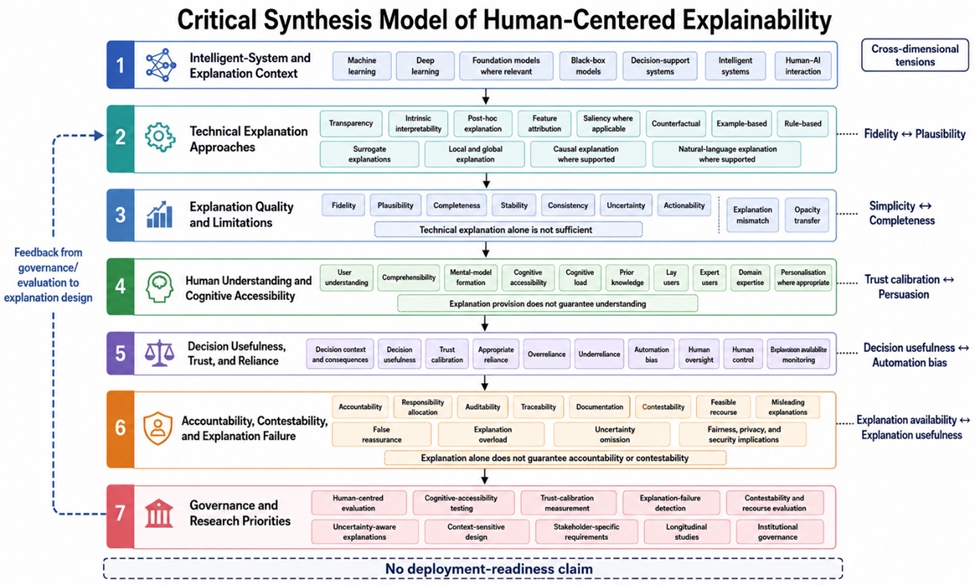
Figure 2. Critical Synthesis Model of Human-Centered Explainability
A conceptual synthesis model showing explainability as a system connecting technical explanation properties, user understanding, cognitive accessibility, decision usefulness, reliance, trust calibration, accountability, contestability, explanation failure, governance, and future research priorities.
Future research should begin with human-centred explanation evaluation that defines the intended user, task, decision consequence, and expected form of understanding before selecting an explanation method. Cognitive-accessibility studies should examine language, disability access, cognitive load, expertise, mental-model formation, and retention rather than relying only on satisfaction or self-reported clarity [16]. Decision-usefulness validation should assess whether explanations improve error detection, evidence comparison, uncertainty interpretation, and appropriate action under both correct and incorrect system outputs.
Trust-calibration research should measure behaviour as well as attitudes. Studies should vary system competence, explanation accuracy, uncertainty, and failure visibility to determine whether users rely appropriately rather than simply reporting greater trust [18]. Reliance and automation-bias assessment should include override behaviour, independent verification, underuse, repeated interaction, and adaptation after observed errors [20]. Longitudinal studies are particularly important because initial novelty, explanation fatigue, habituation, and strategic system use may change outcomes over time.
Accountability-oriented explanation design should investigate how explanatory evidence moves through documentation, audit, review, correction, and remedy processes. Contestability and recourse evaluation should include affected persons and examine whether reasons are accessible, whether challenges receive independent consideration, and whether proposed actions are feasible and causally relevant [26]. Explanation-failure detection should monitor instability, mismatch, overload, false reassurance, omitted uncertainty, privacy leakage, security exposure, and opacity transfer rather than treating technical fidelity as the only failure criterion.
Uncertainty-aware and context-sensitive explanations require methods that distinguish predictive uncertainty, data limitations, explanatory uncertainty, and out-of-distribution conditions. Stakeholder-specific designs should make necessary differences in depth and access auditable rather than allowing personalisation to hide relevant information. Foundation-model explanations require particular caution because fluent natural-language rationales may be plausible without being faithful accounts of internal computation. The broader research boundary is that no universal metric can establish meaningful explanation across users, purposes, risks, and institutions [32]. Evaluation should instead use purpose-specific evidence profiles while recognising that explainability remains only one component of trustworthy and responsible system governance [31].
This critical review moves beyond the metaphor of opening the black box by treating explainability as a human-centred and socio-technical achievement. Model transparency, intrinsic interpretability, post-hoc explanation, fidelity, plausibility, stability, and completeness provide important technical evidence, but they do not independently establish human understanding or responsible use. Meaningful explanation depends on cognitive accessibility, user expertise, mental-model support, task relevance, uncertainty communication, decision consequences, and empirical evaluation with intended users. It must also be assessed by whether it supports appropriate reliance rather than trust maximisation, preserves meaningful human oversight and control, and avoids overreliance, underreliance, automation bias, overload, mismatch, and false reassurance. In consequential systems, explanation becomes accountability-relevant only when it is connected to traceability, auditability, responsibility allocation, contestability, feasible recourse, and institutions capable of review and correction. The resulting synthesis rejects universal explanation-sufficiency claims and positions explanation as one conditional contribution to trustworthy intelligent systems. Future progress requires evaluation that links technical properties with human understanding, decision usefulness, calibrated reliance, explanation-failure detection, accountability, and contestability under clearly defined contexts.
None
None
None
None
Open Access The author(s) retain copyright. This article is licensed under the Creative Commons Attribution-NonCommercial-ShareAlike 4.0 International License. It may be shared and adapted for non-commercial purposes with appropriate attribution, an indication of changes, and distribution of adaptations under the same license. Third-party material may be subject to separate terms identified in its credit line. View the license at https://creativecommons.org/licenses/by-nc-sa/4.0/.
 Transparent Intelligence Publishing