Foundation models have expanded the scope of artificial intelligence by supporting language generation, multimodal reasoning, knowledge-intensive assistance, decision support, and adaptable downstream applications. Their broad capabilities, however, do not establish that their outputs, explanations, internal processes, or deployment arrangements are trustworthy. This scoping review maps the research landscape concerning foundation-model trustworthiness across interpretability, explanation capabilities, hallucination, uncertainty, reliability, alignment, evaluation, and human oversight. The review uses structured search concepts, eligibility principles, evidence extraction, and dimension-based mapping to examine how peer-reviewed scholarship characterizes foundation models as general-purpose intelligent systems and how trustworthiness evidence is distributed across technical, human-centered, organizational, and governance domains. The synthesis indicates that interpretability methods can expose selected behavioral or representational features but do not independently demonstrate explanation fidelity, usefulness, or safety. Hallucination and factuality research identifies persistent risks involving fabrication, unsupported claims, weak grounding, and persuasive misinformation, while uncertainty methods remain constrained by calibration, context shift, and user-communication challenges. Alignment and post-training techniques may shape preferred behaviors but retain risks associated with proxy objectives, preference representation, and residual failure. Benchmarking, human evaluation, stress testing, and oversight provide partial evidence, yet their value depends on construct validity, domain relevance, intervention capacity, accountability, and lifecycle monitoring. The research landscape is therefore fragmented across disciplines and frequently model-centred rather than socio-technical. Key priorities include stronger foundation-model interpretability validation, consistent hallucination measurement, usable uncertainty communication, externally valid evaluation, meaningful oversight testing, multimodal analysis, and lifecycle governance. The review contributes an integrated evidence map while emphasizing that no single trustworthiness dimension certifies safety, reliability, accountability, or deployment readiness.
Foundation-model trustworthiness has become a central problem for trustworthy and explainable intelligent systems because broad capability, linguistic fluency, and adaptable task performance can coexist with opacity, factual error, uncertainty, behavioral instability, and weak accountability. Trustworthiness is consequently better understood as a multidimensional lifecycle property requiring coordinated technical, human, ethical, and governance evidence rather than capability or benchmark performance alone [1-3]. This distinction is especially important for models that can be reused across domains, combined with external tools, embedded in decision-support workflows, or adapted for consequential applications without being redesigned from first principles.
Trust must also be distinguished from trustworthiness. Human users may develop confidence in an artificial intelligence system because its responses are fluent, responsive, personalized, or presented with apparent authority, even when its actual reliability has not been established. Empirical research on human–AI interaction shows that trust is affected by observable performance, transparency cues, system appearance, task characteristics, and user expectations [4]. A trustworthy foundation model therefore cannot be defined by whether users believe it, prefer it, or find it understandable. The relevant question is whether reliance is justified by evidence concerning the model, the surrounding system, the intended context, and the consequences of failure.
Existing scholarship addresses parts of this problem through partially separated literatures. Explainable-AI research examines interpretability, post-hoc explanations, fidelity, and human understanding; natural-language-generation research studies hallucination and factuality; machine-learning research develops uncertainty and calibration methods; alignment research examines preference learning and human feedback; evaluation research focuses on benchmarks and human judgments; and human-factors scholarship investigates supervision, intervention, and automation bias. Governance and accountability research adds further requirements concerning responsibility, documentation, auditability, monitoring, and redress. Studying these areas independently can obscure interactions among them, such as when an apparently useful explanation increases reliance on an unreliable output or when strong benchmark performance conceals poor behavior under context shift.
This article therefore provides an original scoping review of whether and under what evidential conditions foundation models may be considered trustworthy. Its objective is not to produce a universal trust score, certify particular models, or prescribe a deployment-ready assurance framework. Instead, it maps how the selected peer-reviewed literature conceptualizes foundation models as general-purpose intelligent systems; charts evidence concerning interpretability, hallucination, uncertainty, reliability, alignment, evaluation, and human oversight; identifies cross-dimensional patterns and tensions; and clarifies areas in which evidence remains limited. The resulting contribution is an integrated research-landscape synthesis designed to support cautious evaluation and future inquiry rather than categorical judgments that foundation models can or cannot be trusted.
Foundation models are distinguished by their capacity to support multiple downstream tasks through large-scale pretraining, adaptation, prompting, fine-tuning, or integration with specialized components. Their general-purpose character allows one model family to contribute to text production, classification, question answering, summarization, image interpretation, multimodal reasoning, and domain-specific assistance. Research on generalist medical artificial intelligence illustrates both the potential breadth of foundation-model adaptation and the continuing need for task-specific, population-specific, and workflow-specific validation [5]. Generality should therefore be treated as a capability characteristic, not as evidence that performance, safety, or reliability transfers automatically across contexts.
Generative AI broadens this challenge by producing new linguistic, visual, auditory, or structured content rather than merely selecting among predefined outputs. Such systems may enhance creativity, information access, workflow support, and interaction flexibility, but they also introduce risks involving fabricated content, hidden dependencies, intellectual-property concerns, privacy, misuse, and uncertain organizational responsibility [6]. “Generative AI” is consequently not synonymous with “foundation model,” although the categories overlap substantially. A foundation model describes a broadly reusable pretrained model, whereas generative AI emphasizes the production of content; large language models and large multimodal models represent important, but not exhaustive, technical forms within this wider landscape.
Foundation models must additionally be understood as components of socio-technical systems. Their behavior is influenced not only by architecture and training data but also by computing infrastructure, provider policies, interfaces, access arrangements, organizational incentives, deployment choices, and the distribution of expertise and decision authority. Analyses of the political economy of large language models show that computational concentration, platform control, and infrastructure ownership shape who can develop, inspect, modify, and govern these systems [7]. Trustworthiness evidence must therefore extend beyond isolated model outputs to the institutions and technical arrangements through which foundation models are created and used.
Large language models themselves comprise heterogeneous architectures, training procedures, adaptation strategies, retrieval mechanisms, safety layers, and evaluation practices. Technical surveys describe substantial variation in model development and application while identifying persistent challenges concerning efficiency, factuality, robustness, reasoning, privacy, evaluation, and responsible deployment [8]. Capability scale can increase the range of tasks a system performs, but it also expands the surface on which failures can occur. Similarly, fluency can make outputs more accessible while making unsupported claims more persuasive. Foundation models should therefore be evaluated as general-purpose but bounded intelligent systems whose trustworthiness remains dependent on intended use, evidence quality, human interaction, organizational controls, and continuing monitoring.
The review was organized around six scoping review questions: how foundation models are characterized as general-purpose intelligent systems; what evidence exists on interpretability and explanation capabilities; how hallucination, uncertainty, reliability, robustness, and factuality are conceptualized and evaluated; how alignment, benchmarking, human evaluation, and oversight are connected to trustworthiness; what landscape patterns emerge across these dimensions; and what evidence gaps remain. Reporting was guided by established scoping-review principles emphasizing transparent questions, eligibility decisions, evidence charting, and synthesis, while avoiding unsupported claims of exhaustive systematic coverage or quantitative aggregation [9].
A scoping approach was selected because the relevant evidence is conceptually broad, methodologically heterogeneous, and distributed across technical, behavioral, human-factors, organizational, and governance research. Scoping reviews are suited to clarifying key concepts, identifying the types and distribution of available evidence, mapping research approaches, and locating underdeveloped areas rather than estimating a pooled intervention effect [10]. The unit of synthesis was therefore not a standardized outcome measure. Instead, articles were mapped according to the foundation-model context addressed, the trustworthiness dimensions examined, the type of evidence supplied, the limitations reported, and the precise manuscript claim that the evidence could support.
Search concepts combined terms for foundation models, large language models, large multimodal models, generative AI, general-purpose AI, trustworthy AI, explainable AI, interpretability, hallucination, factuality, uncertainty, calibration, reliability, robustness, alignment, reinforcement learning from human feedback, evaluation, benchmarking, human oversight, accountability, and lifecycle governance. Eligibility required a peer-reviewed journal article, verifiable DOI, suitable journal quality, substantive relevance to one or more review questions, and sufficient information for evidence extraction. Methodological guidance for scoping reviews informed the use of explicit eligibility principles, source-selection logic, charting categories, and a transparent relationship between the questions and synthesis structure [11].
Evidence was charted across model context, interpretability or explanation features, hallucination and uncertainty risks, alignment and evaluation functions, human-oversight arrangements, governance implications, study limitations, and research-gap relevance. Where an article did not clearly address a category, the category was treated as unreported rather than inferred. Extraction and presentation were aligned with the review questions so that the synthesis would represent evidence distribution and conceptual relationships rather than numerical prevalence or comparative effectiveness [12]. Table 1 summarises the scoping review logic used to identify, screen, map, and synthesize evidence on foundation model trustworthiness. Figure 1 illustrates the scoping review evidence-mapping workflow used to move from review questions and search concepts to foundation-model relevance screening, trustworthiness-dimension mapping, synthesis, and gap identification.
Table 1. Scoping Review Logic for Foundation Model Trustworthiness: Review Questions, Search Concepts, Inclusion Criteria, Exclusion Criteria, Screening Logic, Evidence-Mapping Categories, Foundation Model Relevance, Trustworthiness-Dimension Mapping, Citation Planning, and Review Boundaries
Review component | Core review question or purpose | Inclusion logic | Exclusion logic | Evidence mapped | Trustworthiness dimension addressed | Bias or limitation risk | Review role |
Review questions | Define the scope of the evidence map | Addresses at least one stated scoping question | No connection to the review objectives | Concepts, methods, findings, limitations | Cross-cutting | Questions may privilege established dimensions | Structures the synthesis |
Search concepts | Capture interdisciplinary terminology | Uses direct or closely related foundation-model and trustworthiness concepts | Narrow performance-only terminology | Model classes, trust concepts, risks, controls | All dimensions | Terminological variation | Broadens retrieval logic |
Journal eligibility | Establish peer-reviewed evidence quality | Peer-reviewed journal article with verifiable DOI and suitable journal standing | Preprints, conferences, websites, reports, or missing DOI | Bibliographic and publication status | Documentation | Quartiles vary by year and category | Supports source verification |
Foundation-model relevance | Connect evidence to the review object | Direct FM, LLM, multimodal, generative-AI evidence or justified transferable evidence | No defensible general-purpose-AI relevance | Model context and transferability | Foundation model; general-purpose AI | Generic AI evidence may be overextended | Distinguishes direct from adjacent evidence |
Trustworthiness mapping | Classify evidence by substantive dimension | Supports one or more predefined trustworthiness categories | Superficial mention without usable evidence | Interpretability, reliability, alignment, oversight, governance | Dimension-specific and cross-cutting | Better-developed topics may dominate | Enables landscape comparison |
Title and abstract screening | Remove clearly irrelevant records | Plausible conceptual or empirical fit | Narrow application with no transferable trust relevance | Stated aim and scope | Initial dimension relevance | Abstracts may omit useful evidence | Maintains broad early inclusion |
Full-text assessment | Confirm exact claim support | Full text supports an extractable claim or identified gap | Weak or indirect fit that cannot support planned wording | Methods, findings, limitations | Claim-specific | Confirmation bias | Protects citation accuracy |
Evidence extraction | Chart comparable information | Reports sufficient contextual and substantive detail | Evidence cannot be reliably extracted | Study aim, context, features, limitations | All dimensions | Heterogeneous reporting | Produces structured evidence map |
Citation planning | Fix first appearance and sentence-level fit | Supports a specific planned manuscript sentence | Topic-only or random citation placement | Claim–source relationship | Citation integrity | Citation clustering | Preserves Vancouver sequencing |
Synthesis boundaries | Prevent overclaiming | Supports cautious mapping and gap identification | Claims of certification, universal metrics, or guaranteed readiness | Evidence patterns, tensions, gaps | No-sufficiency boundaries | Scoping evidence cannot prove effectiveness | Defines interpretive limits |
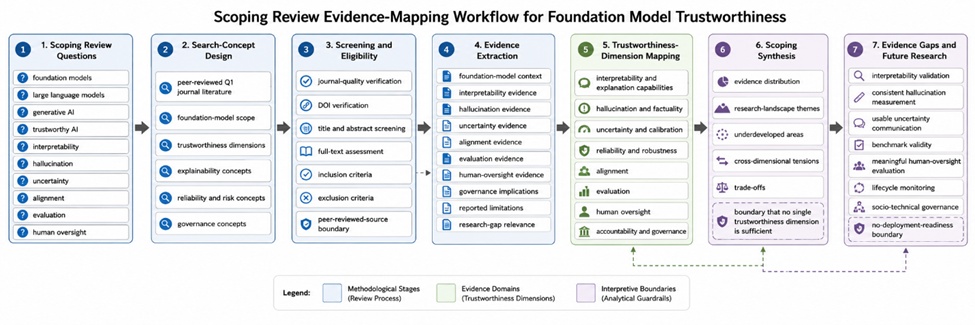
Figure 1. Scoping Review Evidence-Mapping Workflow for Foundation Model Trustworthiness
Alt-text description. A scoping review workflow diagram showing review questions, search concepts, peer-reviewed journal screening, eligibility checks, foundation-model relevance mapping, trustworthiness-dimension mapping, evidence extraction, scoping synthesis, and evidence-gap identification.
Interpretability and explanation are related but non-identical concepts. Interpretability generally concerns the extent to which relevant model behavior, internal representations, or input–output relationships can be understood, whereas explanations are representations communicated for a particular purpose and audience. Interpretability and explanation comprise heterogeneous technical methods and human-facing practices whose value depends on context, purpose, and responsible-AI requirements [13-15]. For foundation models, these practices may include internal probing, representation analysis, feature attribution, concept-based analysis, counterfactual reasoning, prompt-based diagnostics, output rationales, source-linked explanations, and natural-language accounts. No single method reveals the model in its entirety.
Post-hoc explanations are particularly important because many foundation models are too large, distributed, or proprietary for complete inspection. However, an explanation generated after an output may describe an associated pattern without faithfully representing the process that produced the output. Explanation quality must therefore be separated into dimensions such as fidelity, stability, relevance, completeness, uncertainty, and usefulness. Reviews of explainable AI show that methods, datasets, evaluation metrics, and intended users remain heterogeneous, and that explanation availability alone does not establish trustworthy behavior [16]. A fluent rationale may be plausible yet unfaithful, while a technically faithful representation may remain unusable to a non-specialist.
Mechanistic interpretability seeks stronger causal understanding by examining internal components, activations, representations, or computational pathways associated with model behavior. Where supported, causal interventions may provide more informative evidence than observational correlations. Nevertheless, journal evidence specific to large-scale foundation models remains uneven, particularly across proprietary systems, model versions, modalities, and deployment contexts. Recent research on vision foundation models demonstrates expanding interest in attribution, prompting, concept-based analysis, and visual explanation, while also identifying substantial evaluation gaps [17]. Multimodal models create additional challenges because explanations may need to account for relationships among text, images, audio, sensor inputs, and generated outputs.
Human-centred explanation evaluation asks whether explanations improve comprehension, support error detection, enable contestation, or calibrate reliance. These outcomes cannot be inferred from technical metrics alone. Natural-language explanations may improve cognitive accessibility but can also conceal uncertainty through persuasive presentation. Feature-attribution methods may identify influential inputs without demonstrating causality, while counterfactual explanations may be invalid, infeasible, or unstable. Evaluation should therefore be matched to the stakeholder: developers may require debugging evidence, auditors may need traceability and reproducibility, domain professionals may need source grounding and uncertainty qualification, and affected users may need understandable reasons, alternatives, and avenues for challenge.
Interpretability should ultimately be treated as one contributor to a broader trustworthiness assessment. An interpretable system may still generate harmful, biased, insecure, or factually incorrect outputs, and an apparently understandable explanation may not establish alignment, accountability, or safe deployment. Foundation-model explanations require explicit scope statements, fidelity assessment, stability testing, uncertainty communication, and human-centred validation. The no-interpretability-sufficiency boundary therefore prevents explanation evidence from being used as a substitute for reliability, alignment, oversight, or governance evidence. Table 2 maps interpretability and explanation capabilities relevant to trustworthy foundation models, including technical functions, stakeholder needs, failure risks, and evidence gaps.
Table 2. Interpretability and Explanation Capabilities in Foundation Models: Mechanistic Interpretability, Model Transparency, Post-Hoc Explanation, Explanation Quality, Usefulness, Fidelity, Stability, Uncertainty, Feature Attribution, Counterfactuals, Natural-Language Explanations, Human Understanding, Cognitive Accessibility, and Explanation Boundaries
Interpretability or explanation capability | Core trustworthiness question | Technical or human-centered function | Potential evaluation approach | Primary stakeholder | Failure or misuse risk | Evidence gap | Scoping review role |
Interpretability | Can relevant behavior be understood beyond output plausibility? | Exposes model patterns or decision relationships | Behavioral probes, expert inspection, causal testing | Researchers, developers, auditors | Partial understanding may be presented as complete | Limited validation at foundation-model scale | Maps internal-understanding evidence |
Mechanistic interpretability | Do identified internal components causally influence behavior? | Connects representations or circuits to outputs | Intervention, ablation, activation patching, replication | Safety researchers and evaluators | Correlation may be mistaken for mechanism | Sparse cross-model journal evidence | Emerging causal evidence category |
Model transparency | Are development, data, architecture, limitations, and changes documented? | Supports scrutiny and traceability | Documentation and disclosure audit | Auditors, deployers, researchers | Selective disclosure may create false confidence | Restricted access to proprietary systems | Governance bridge |
Post-hoc explanation | Can a comprehensible account be produced after an output? | Provides local or global explanation | Fidelity, perturbation, sensitivity, and user testing | Users, reviewers, developers | Rationalization may not reflect actual processing | Limited FM-specific validation | Maps explanation availability |
Explanation quality | Is the explanation relevant, accurate, appropriately scoped, and complete enough? | Evaluates multiple explanation properties | Multi-criteria rubric and expert review | All stakeholders | Polished language may mask weak evidence | No universal quality standard | Separates presence from quality |
Explanation usefulness | Does the explanation improve decisions or error detection? | Supports practical action and comprehension | Task performance, error recognition, reliance calibration | End users and domain experts | Explanations may increase workload or overreliance | Few longitudinal high-stakes studies | Human-centred outcome category |
Explanation fidelity | Does the explanation correspond to actual model behavior? | Tests faithfulness | Causal intervention, perturbation, deletion, consistency | Researchers and auditors | Fluent but unfaithful rationales | Difficult validation for natural-language explanations | Core explanation boundary |
Explanation stability | Are explanations consistent under immaterial changes? | Tests explanatory robustness | Paraphrase, seed, prompt, and version sensitivity | Developers and auditors | Unstable accounts weaken accountability | Limited longitudinal and cross-version evidence | Reliability linkage |
Explanation uncertainty | Does the system qualify uncertainty in its explanation? | Communicates evidential limits | Alternative explanations, confidence validation, abstention | Domain professionals and users | Definitive wording may hide ambiguity | Rarely measured directly | Connects explanation and uncertainty |
Feature attribution | Which inputs are associated with the output? | Produces importance scores or maps | Sanity checks, perturbation, robustness analysis | Developers and auditors | Attribution may be method-dependent or non-causal | Weak semantic validation for generative outputs | Technical explanation family |
Counterfactual explanation | What change could alter the model output? | Supports contrastive understanding and recourse | Validity, feasibility, sparsity, stability | Affected users and developers | Counterfactuals may be unrealistic or manipulable | Limited evidence for open-ended generation | Contrastive evidence category |
Natural-language explanation | Can reasons and limitations be communicated accessibly? | Provides user-facing accounts | Fact verification, grounding, fidelity, comprehension tests | General users and professionals | Eloquence may be confused with truth | No reliable self-explanation guarantee | Foundation-model-specific boundary |
Human understanding | Does explanation support a correct mental model? | Improves comprehension and error recognition | Mental-model and prediction-of-behavior tests | Users and supervisors | Users may misunderstand technical qualifiers | Limited stakeholder diversity | Human evaluation outcome |
Cognitive accessibility | Is the explanation usable across expertise and cognitive needs? | Adapts format, terminology, and detail | Accessibility, comprehension, and workload evaluation | Diverse user groups | Oversimplification may conceal uncertainty | Sparse accessibility-centred evidence | Equity and usability gap |
No interpretability-sufficiency boundary | Does interpretability independently prove trustworthiness? | Prevents substitution for other evidence | Cross-dimensional assessment | Evaluators and deployers | Visibility may be mistaken for safety | Few integrated assurance studies | Explicit synthesis boundary |
No explanation-guarantee boundary | Does an explanation prove correctness, fidelity, or usefulness? | Separates communication from validated evidence | Fidelity, usefulness, stability, and uncertainty testing | All stakeholders | Explanation presence may imply unjustified accountability | No universal certification method | Explicit review boundary |
Hallucination is a central foundation-model reliability problem because generated content may be syntactically coherent and contextually plausible while unsupported by available evidence. The literature uses the term to cover several related but distinguishable failures, including fabrication, contradiction, unsupported inference, incorrect attribution, and divergence from source material. These failures vary across open-ended generation, summarization, dialogue, translation, and knowledge-intensive tasks, making hallucination a family of context-dependent errors rather than a single measurable phenomenon [18].
Large language model research further distinguishes factuality, groundedness, and truthfulness. Factuality concerns whether individual claims are correct, groundedness concerns whether outputs are supported by specified evidence, and truthfulness includes whether the system avoids misleading presentation and communicates relevant limitations. Current evidence remains fragmented across definitions, benchmarks, annotation protocols, detection methods, and mitigation strategies, limiting direct comparison across models and tasks [19]. Fluency may worsen this risk by making false content easier to accept, repeat, or incorporate into downstream decisions.
Uncertainty estimation offers one route for identifying unreliable outputs, but it does not automatically verify factual correctness. Semantic entropy, for example, evaluates variation in meaning across sampled generations and may help distinguish stable responses from outputs reflecting unresolved knowledge uncertainty [20]. Such methods are promising for selective prediction, abstention, or escalation, yet their effectiveness depends on task design, sampling assumptions, model access, and the relationship between semantic variation and the relevant error type. A confident or semantically stable response may still be wrong because the model consistently reproduces an incorrect representation.
Uncertainty must also be interpreted according to its source. Epistemic uncertainty concerns incomplete knowledge and may sometimes be reduced through additional evidence, improved training, retrieval, or expert review. Aleatoric uncertainty concerns ambiguity or variability that cannot necessarily be removed by obtaining more data. Deep-learning research offers diverse approaches to quantification, confidence estimation, calibration, and out-of-distribution detection, but their assumptions and validity differ across architectures and use contexts [21-23]. A numerical confidence score is therefore not inherently meaningful unless it is calibrated, validated under relevant conditions, and communicated in a form users can interpret appropriately.
Reliability and robustness extend beyond isolated hallucinations. Reliability concerns whether performance remains acceptably consistent for an intended use, whereas robustness concerns resistance to ordinary variation, adversarial manipulation, changing prompts, context shift, and unfamiliar inputs. Safety additionally requires attention to the severity and distribution of consequences, not merely average error. No hallucination-elimination, uncertainty-guarantee, or reliability-guarantee claim is justified by one mitigation or benchmark. Trustworthy use requires layered grounding, verification, uncertainty communication, domain validation, abstention, escalation, and lifecycle monitoring.
Alignment concerns whether model behaviour corresponds to specified objectives, instructions, preferences, or values. Reinforcement learning from human feedback can shape outputs by learning proxy reward functions from comparative judgments, but its evidential limits include sparse or inconsistent feedback, reward misspecification, unrepresentative preferences, and incorrect generalization beyond evaluated conditions [24]. Improved instruction following or reduced harmful output on selected tests should therefore be interpreted as evidence of behavioural adaptation rather than proof that the underlying model is comprehensively aligned.
Human and value alignment also raise normative questions about whose goals are represented. Alignment may refer to following immediate instructions, satisfying user preferences, supporting longer-term interests, respecting institutional requirements, or reflecting wider moral values. These targets can conflict, and their selection requires justification rather than purely technical optimization [25]. Instruction tuning, preference learning, safety tuning, and reinforcement learning from human feedback should consequently be evaluated for stakeholder representation, objective transparency, conflict handling, and residual risks.
Evaluation provides evidence about capabilities and failures, but foundation-model evaluation is heterogeneous. Relevant approaches include task benchmarks, factuality testing, calibration assessment, human evaluation, stress testing, adversarial evaluation, red-teaming, out-of-distribution testing, and domain-specific validation. Surveys of large language model evaluation show that methods differ in what they measure, how judgments are obtained, and whether they address capability, robustness, safety, social risk, or user experience [26]. No single evaluation score captures the full trustworthiness profile of a general-purpose model.
Benchmark validity is particularly important because standardized evaluations can become saturated, contaminated, narrowly optimized, or disconnected from real-world requirements. Empirical mapping of artificial-intelligence benchmark ecosystems indicates that benchmark creation and use are concentrated and that performance improvements do not necessarily correspond to durable practical progress [27]. Evaluation should therefore include a clear construct-validity argument, transparent task scope, independent testing, changing-context analysis, and evidence that the evaluated conditions resemble the intended deployment setting.
Human oversight must be designed as an operational control rather than added as a symbolic safeguard. Human-centred AI research emphasizes that high automation can coexist with strong human control when users retain meaningful authority, information, and intervention mechanisms [28]. Human–automation research also shows that supervisors may lose situation awareness, become overloaded, over-rely on system recommendations, or be unable to intervene rapidly enough [29]. Human-in-the-loop approval, human-on-the-loop monitoring, escalation pathways, rollback, and stop controls therefore require direct evaluation of competence, workload, timing, authority, and intervention success. Table 3 synthesises hallucination, uncertainty, reliability, alignment, evaluation, and human oversight dimensions in foundation model trustworthiness research.
Table 3. Hallucination, Uncertainty, Reliability, Alignment, Evaluation, and Human Oversight in Foundation Model Trustworthiness: Factuality, Groundedness, Truthfulness, Calibration, Confidence, Robustness, Benchmark Validity, Human Evaluation, Red-Teaming, Human Control, Meaningful Oversight, and Sufficiency Boundaries
Trustworthiness dimension | Core risk or evaluation question | Technical or governance function | Potential evidence or evaluation approach | Affected stakeholder or use context | Failure or overclaiming risk | Oversight or governance need | Scoping review role |
Hallucination and fabrication | Does the system generate unsupported or invented content? | Detects generative error | Claim verification, source comparison, expert review | Information-dependent users | Fluent misinformation | Grounding, abstention, escalation | Core reliability risk |
Factuality and groundedness | Are claims correct and supported by relevant evidence? | Tests correctness and source entailment | Claim-level annotation and evidence tracing | Professional and public users | Unsupported claims presented as sourced | Provenance and independent review | Separates fluency from evidence |
Truthfulness and misinformation | Does the system avoid materially misleading communication? | Evaluates behaviour and dissemination risk | Adversarial prompts and scenario-based assessment | Public-facing deployments | Scalable persuasive error | Monitoring and use restrictions | Socio-technical risk layer |
Uncertainty estimation | Can uncertainty relevant to an output be identified? | Produces uncertainty signals | Semantic entropy, ensemble disagreement, predictive analysis | Developers and experts | Scores mistaken for factual guarantees | Task-specific validation | Technical uncertainty stream |
Calibration and confidence | Does expressed confidence correspond to observed correctness? | Assesses confidence reliability | Reliability diagrams and selective prediction | Evaluators and users | Overconfident incorrect output | Recalibration and qualified display | Links uncertainty to use |
Epistemic and aleatoric uncertainty | Is uncertainty reducible through further evidence or intrinsic to the task? | Distinguishes uncertainty sources | Model comparison and ambiguity analysis | Novel or ambiguous contexts | False precision | Retrieval, deferral, alternative presentation | Conceptual clarification |
Reliability and robustness | Does behaviour remain stable under variation and shift? | Tests repeatability and resilience | Perturbation, stress, adversarial, and OOD testing | Deployers and affected users | Nominal performance overgeneralized | Revalidation and monitoring | Operational evidence domain |
Alignment and RLHF | Do post-training objectives produce robust desired behaviour? | Shapes preference-sensitive outputs | Reward-model audits and shift testing | Developers and users | Proxy alignment presented as comprehensive alignment | Objective disclosure and independent assessment | Alignment-sufficiency boundary |
Benchmark validity | Do evaluation tasks measure relevant constructs and contexts? | Supports comparison | Contamination, saturation, construct and external validity checks | Researchers and deployers | High scores treated as readiness | Benchmark governance | Evaluation-sufficiency boundary |
Human evaluation | Are human judgments reliable and representative? | Assesses nuanced output quality | Rater training, agreement and subgroup analysis | Evaluators and affected groups | Bias, fatigue, hidden criteria | Rater documentation | Human evidence category |
Red-teaming and stress testing | Can plausible failures and misuse pathways be exposed? | Searches system boundaries | Adaptive adversarial scenarios | Safety and security teams | One test cycle treated as complete | Recurrent testing and transparent scope | Residual-risk mapping |
Human control | Can authorised people constrain, stop, or reverse actions? | Maintains decision authority | Override, rollback and intervention tests | Operators and accountable leaders | Controls may be inaccessible or delayed | Tested authority and fallback mechanisms | Control evidence |
Meaningful human oversight | Is review informed, timely, competent, and empowered? | Converts nominal review into effective supervision | Workload, comprehension and intervention assessment | Supervisors and organisations | Human presence treated as a guarantee | Defined roles and escalation | Oversight-sufficiency boundary |
The mapped evidence depicts foundation-model trustworthiness as a socio-technical research landscape rather than a model attribute that can be measured once and generalized across uses. Organizational research describes an automation–augmentation paradox in which AI can substitute for selected human tasks while simultaneously increasing the need for human interpretation, coordination, and judgment [30]. For foundation models, this tension appears in the contrast between expanding general-purpose capability and the growing burden of validation, supervision, and exception handling.
Interpretability research is developing more slowly than capability scale, while explanation availability is advancing faster than validated explanation usefulness. Hallucination research similarly reveals a tension between linguistic fluency and evidential reliability, and uncertainty research shows a gap between technical estimation and user-facing communication. Accountability remains an organizational responsibility even when model processes are opaque, distributed, or difficult to reconstruct [31]. Opacity may complicate investigation, but it does not remove responsibility from providers, integrators, deployers, or decision makers.
Governance research also identifies a persistent gap between principles and operational practice. Reviews of ethics tools find a growing range of assessment methods, documentation templates, checklists, and governance processes, but their maturity, specificity, adoption, and effectiveness vary considerably [32]. Technical evaluation and governance are therefore complementary: model testing cannot determine whether responsibilities are clearly allocated, incidents are reported, affected users can contest decisions, or model changes trigger renewed review.
Deployment readiness requires evidence about the full system lifecycle rather than the model alone. Readiness-level approaches for machine-learning systems emphasize data quality, software integration, human roles, documentation, validation, monitoring, feedback, and change management [33]. Foundation-model trustworthiness should similarly be assessed across development, adaptation, integration, operation, updating, and retirement. Performance may change through new prompts, retrieval sources, tools, user populations, model versions, or environmental conditions even when the underlying model name remains unchanged.
The broader synthesis supports three related conclusions. Ethical principles alone cannot guarantee responsible implementation without institutions, professional practices, and accountability mechanisms [34]. International ethics guidance demonstrates convergence around terms such as transparency, fairness, responsibility, privacy, and non-maleficence while retaining substantial differences in meaning and implementation [35]. Foundation-model-specific scholarship consequently treats trustworthiness as an integrated set of technical, human, organizational, and governance requirements rather than one property or metric [36]. Table 4 presents the scoping synthesis of foundation model trustworthiness research, including evidence patterns, underdeveloped areas, tensions, trade-offs, and future research needs.
Table 4. Scoping Synthesis and Research Landscape for Trustworthy Foundation Models: Interpretability Versus Scale, Explanation Usefulness, Hallucination and Fluency, Uncertainty Communication, Reliability Under Context Shift, Alignment and Residual Risk, Benchmark Validity, Human Oversight, Accountability, Lifecycle Monitoring, and Future Research Priorities
Research landscape theme | Dimensions involved | Evidence pattern | Dominant research focus | Underdeveloped area | Tension or trade-off | Future research need | Scoping contribution |
Interpretability versus scale | Interpretability, capability | Capability growth exceeds validated internal understanding | Probing and post-hoc methods | Replicated causal analysis | Generality expands opacity | Cross-model mechanistic validation | Maps capability–understanding imbalance |
Explanation availability versus usefulness | Explanation, human understanding | Many methods, limited outcome validation | Explanation generation | Decision usefulness and accessibility | More explanation may increase overreliance | Longitudinal stakeholder studies | Establishes usefulness boundary |
Hallucination versus fluency | Factuality, groundedness | Persuasive language can conceal unsupported claims | Detection and mitigation | Consequence-sensitive validation | Fluency improves usability and misinformation risk | Claim-level verification research | Separates presentation from evidence |
Uncertainty estimation versus communication | Calibration, confidence, human factors | Technical methods exceed communication evidence | Uncertainty quantification | User interpretation | Simplification may mislead | Joint technical–human studies | Identifies communication gap |
Reliability versus flexibility | Robustness, generalization | More use contexts create more failure conditions | Standard evaluations | Context and temporal shift | Flexibility increases validation burden | Prospective OOD evaluation | Reframes generality as risk surface |
Alignment versus residual risk | RLHF, values, safety tuning | Behaviour improves on selected objectives | Post-training methods | Objective and stakeholder transparency | Preference fit may not equal safety or truth | Independent alignment audits | Establishes residual-risk boundary |
Benchmarks versus real-world validity | Evaluation, benchmarking | Standardization supports comparison but invites saturation | Leaderboards | External and construct validity | Comparable scores may lack operational meaning | Deployment-linked validation | Establishes evaluation boundary |
Oversight versus automation scale | Human control, HITL, HOTL | Oversight is frequently required but rarely stress-tested | Review interfaces | Workload and intervention performance | Scale can exceed human attention | Incident simulation | Distinguishes nominal from meaningful oversight |
Accountability versus opacity | Governance, auditability | Opacity complicates but does not remove responsibility | Principles and documentation | Role-specific redress | Responsibility can diffuse across actors | Operational accountability studies | Locates responsibility institutionally |
Lifecycle monitoring | Reliability, governance | Predeployment evidence dominates | Initial testing | Drift, updates, incident learning | Static assurance becomes obsolete | Prospective monitoring studies | Extends trustworthiness across time |
No single-dimension sufficiency | All dimensions | Each evidence stream remains partial | Dimension-specific metrics | Integrated socio-technical evidence | Improvement in one area may conceal another weakness | Non-compensatory evidence profiles | Principal synthesis conclusion |
Figure 2 presents the foundation model trustworthiness landscape, linking interpretability, hallucination, uncertainty, reliability, alignment, evaluation, human oversight, accountability, governance, and future research gaps.
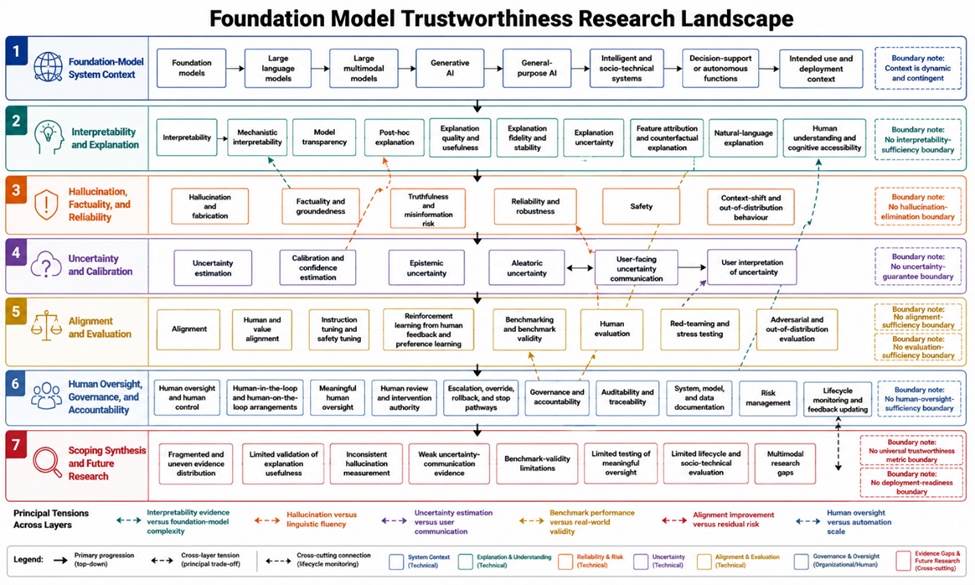
Figure 2. Foundation Model Trustworthiness Research Landscape
A conceptual research landscape showing foundation model trustworthiness across interpretability, hallucination, uncertainty, reliability, alignment, evaluation, human oversight, accountability, governance, lifecycle monitoring, and evidence gaps.
Interpretability evidence remains limited at the scale, opacity, and multimodality of contemporary foundation models. Future research should test whether proposed mechanisms or explanations remain stable across model families, versions, prompts, languages, and domains. Explanation research also requires stronger stakeholder-centred validation. Technical fidelity should be examined alongside usefulness, cognitive accessibility, decision quality, error detection, and reliance calibration rather than treating comprehensible output as sufficient evidence [16].
Hallucination research would benefit from more consistent definitions, claim-level annotation, source-grounding protocols, and evaluation across changing contexts. Uncertainty estimation should be connected to factual verification, abstention, escalation, and user communication. Future studies should examine whether uncertainty displays improve decisions across expertise levels and whether calibration persists under temporal, domain, population, and modality shift. Multimodal systems require particular attention because errors may arise within or between textual, visual, auditory, and sensor representations [19].
Alignment and evaluation research requires greater transparency concerning training objectives, preference sources, annotator populations, reward models, safety trade-offs, and residual failures. Benchmark research should move beyond static leaderboards toward construct validation, contamination assessment, external validation, and longitudinal testing. Red-teaming and adversarial evaluation should report their threat assumptions and limitations because findings may not generalize across model updates, interfaces, tools, or user populations. Human oversight should be tested through realistic workload, intervention, escalation, and incident scenarios rather than assumed from the presence of a reviewer [29].
The most important cross-cutting gap is limited socio-technical and lifecycle evidence. Research should examine complete systems that include models, retrieval components, tools, interfaces, organizations, users, affected populations, monitoring arrangements, and accountability structures. Prospective studies are needed on drift, model updates, incident learning, feedback incorporation, contestability, and responsibility allocation. Because trustworthiness dimensions are non-substitutable, future evaluation should use transparent evidence profiles and minimum domain-specific requirements rather than universal aggregate scores. These directions are proposed as a research agenda, not as a validated assurance or deployment-readiness framework.
This scoping review maps foundation-model trustworthiness across interpretability, explanation capabilities, hallucination, factuality, uncertainty, reliability, robustness, alignment, evaluation, human oversight, accountability, governance, and lifecycle monitoring. The evidence landscape shows that each dimension provides necessary but partial information: explanations may be unfaithful or unusable, fluent outputs may be false, uncertainty estimates may be miscalibrated or misunderstood, alignment methods may retain proxy and value conflicts, benchmarks may lack real-world validity, and human oversight may be ineffective without authority, information, competence, and time. Foundation models should therefore be evaluated through multidimensional, socio-technical, context-specific, and lifecycle-aware evidence rather than scale, fluency, benchmark performance, alignment claims, explanation availability, or nominal supervision alone. The review contributes an integrated evidence map and identifies priorities for more rigorous interpretability validation, hallucination measurement, uncertainty communication, evaluation validity, oversight testing, multimodal analysis, accountability, and continuous monitoring, while preserving a clear boundary between research synthesis and certification or deployment readiness.
None
None
None
None
Open Access The author(s) retain copyright. This article is licensed under the Creative Commons Attribution-NonCommercial-ShareAlike 4.0 International License. It may be shared and adapted for non-commercial purposes with appropriate attribution, an indication of changes, and distribution of adaptations under the same license. Third-party material may be subject to separate terms identified in its credit line. View the license at https://creativecommons.org/licenses/by-nc-sa/4.0/.
 Transparent Intelligence Publishing