Artificial intelligence decisions are often described as explainable when a system can produce reasons, feature contributions, counterfactuals, or other interpretive outputs. Such outputs, however, do not by themselves make an institutional decision answerable. This article develops a conceptual explainable AI governance framework that treats explainability as an organizational obligation connected to transparency duties, system documentation, evidence preservation, auditability, responsibility allocation, contestability, human review, and redress. The framework distinguishes technical explanation from the governance capacities required to identify who must justify a decision, what information must be recorded, how evidence can be examined, how affected stakeholders may challenge an outcome, and whether an organization can correct errors or remediate consequences. Transparency and documentation are organized around system, model, data, dataset, and decision records, together with data, model, and decision provenance. Auditability is connected to traceability, lifecycle records, risk documentation, monitoring, incident response, and clearly allocated organizational responsibility. Contestability is connected to decision justification, appeal and complaint pathways, competent and sufficiently independent human review, escalation, correction, recourse, and redress capacity. The framework also identifies governance gaps that arise when these functions are separated across the AI lifecycle, including documentation, evidence-trail, accountability, human-review, monitoring, and remediation gaps. Its principal contribution is an answerability-oriented governance architecture that links explanation to institutional evidence and response mechanisms while preserving explicit boundaries: transparency does not independently establish accountability, auditability does not prove responsibility, human involvement does not guarantee meaningful review, and a conceptual governance framework does not establish legal compliance, procedural fairness, ethical sufficiency, or deployment readiness.
Explainable artificial intelligence has become central to debates about responsible intelligent systems, yet explanation availability and institutional answerability remain distinct. Explanation can support responsible AI, but explanation is socially situated and transparency alone does not establish accountability [1-3]. An explanation may describe model behaviour while leaving unresolved who selected the model, authorized its use, interpreted its output, accepted its risks, or retained authority to correct the resulting decision.
Answerability therefore concerns relationships among reasons, evidence, responsibility, and institutional response. Algorithmic accountability requires actors to justify decisions and remain responsible for the consequences of designing, deploying, or relying on automated systems [4]. This conception extends beyond technical interpretability. It asks whether relevant actors can reconstruct a decision, identify its organizational owner, disclose appropriate information, respond to challenge, and modify either the decision or the underlying governance process.
AI decisions frequently pass through distributed arrangements involving data providers, developers, model owners, deployers, operators, reviewers, and organizational decision-makers. Fragmentation can separate explanation production from decision authority and separate audit evidence from corrective capacity. A technically accurate explanation may consequently have limited governance value when documentation is incomplete, responsibility is diffuse, review is ceremonial, or no pathway connects a successful challenge to correction or remediation.
This article proposes an original conceptual framework for making AI decisions answerable through connected governance functions. It addresses explainability as a governance obligation; transparency and documentation duties; auditable evidence and organizational accountability; contestability, appeals, human review, and redress; lifecycle governance gaps; and implementation risks. The framework is intended to clarify governance responsibilities and evidence requirements. It is not a legal standard, compliance model, audit protocol, certification scheme, or proof that a system is ethically sufficient or ready for deployment.
Explainability should first be distinguished from interpretability. Interpretability concerns the extent to which relevant actors can understand a model or its decision logic directly, whereas explainability may include post-hoc accounts of an otherwise opaque system. In consequential applications, substituting explanations for feasible interpretable models can obscure avoidable opacity and weaken scrutiny [5]. Governance should therefore require an explicit justification for the selected level and form of opacity rather than assuming that any explanatory output resolves the issue.
Explanation duties are also stakeholder-dependent. Developers may require diagnostic information, operators may need decision boundaries and uncertainty, reviewers may require traceable evidence, and affected persons may need accessible reasons and challenge-relevant information. Because explanation objectives vary across stakeholders, governance must specify who requires an explanation, why it is required, what decision it concerns, and what action the recipient can reasonably take after receiving it [6]. A single explanation format cannot satisfy all technical, organizational, and participatory purposes.
Human-centered evaluation remains necessary because explanation quality cannot be inferred solely from fidelity or technical sophistication. Perceived explainability and causability may influence trust and acceptance, but positive perception does not demonstrate that reliance is justified or that accountability mechanisms are effective [7]. Explanations should therefore be evaluated for accessibility, usefulness, completeness, uncertainty communication, and alignment with the recipient’s practical question, while avoiding the assumption that increased trust is inherently desirable.
Within the proposed framework, explainability becomes a governance obligation when an organization defines explanation duties, allocates responsibility for producing and maintaining them, links explanations to contemporaneous evidence, and preserves pathways for review and correction. Transparency requirements must remain contextual because disclosure needs differ across decision settings and stakeholder roles [8]. This obligation is bounded: transparency cannot independently establish accountability, explanation does not guarantee contestability, and governance terminology cannot establish legal compliance without domain-specific institutional and legal interpretation.
Transparency duties should specify what must be made visible, to whom, at what point, and for which governance purpose. Their evidentiary foundation begins with structured documentation. Dataset documentation can preserve information about motivation, composition, collection, intended use, limitations, and maintenance, thereby enabling later scrutiny of whether data were suitable for a particular system context [9]. Such records should be treated as evidence inputs rather than as standardized forms whose completion automatically demonstrates responsible practice.
Data documentation must also retain contextual information that affects interpretation. Data statements illustrate how records of populations, language varieties, collection conditions, annotation practices, and intended uses can expose assumptions that would otherwise remain hidden [10]. Comparable principles apply beyond language technologies: governance-relevant data records should identify origin, transformations, exclusions, quality limitations, and changes that may affect validity, representativeness, or the interpretation of downstream decisions.
System, model, and decision documentation must complement dataset records. System documentation describes actors, dependencies, workflows, interfaces, and intended decision functions. Model documentation records versions, purposes, validation conditions, limitations, and changes. Decision documentation links relevant inputs, model outputs, thresholds, human interventions, overrides, and institutional adoption of the final outcome. Moving from aspirational transparency to accountability requires these records to be connected to concrete organizational practices and reviewable evidence [11].
Documentation must remain accessible, current, and proportionate to its users. Public-facing explanations may need to address decision context and perceived legitimacy, whereas technical reviewers require more detailed evidence about provenance, limitations, and workflow [12]. Completeness should include uncertainty and relevant human contributions without disclosing material that is unnecessary or harmful. Table 1 summarises transparency duties, documentation requirements, evidence trails, explanation accessibility, and answerability boundaries for explainable AI governance.
Table 1. Transparency Duties and System Documentation Requirements for Explainable AI Governance: Explanation Duties, System Documentation, Model Documentation, Data Documentation, Dataset Documentation, Decision Records, Evidence Trails, Data Provenance, Model Provenance, Decision Provenance, Explanation Accessibility, Explanation Usefulness, and Transparency-Sufficiency Boundaries
Transparency or documentation requirement | Core answerability question | Responsible actor or function | Required evidence or practice | Governance function | Potential output | Failure or misuse risk | Framework role |
Transparency duty | What information is required, by whom, and for what purpose? | System deployer and governance function | Stakeholder-specific disclosure map | Enables informed scrutiny | Transparency statement | Symbolic or excessive disclosure | Initial visibility obligation |
Explanation duty | What decision-relevant reasons must be communicated? | Decision owner and explanation designer | Accessible rationale with limits and uncertainty | Supports understanding and challenge | Explanation notice | Generic or misleading reasons | Decision-facing obligation |
System documentation | How is the sociotechnical system organized? | System owner | Actors, architecture, dependencies, workflow, purpose | Defines governance scope | System dossier | Model-only documentation | System baseline |
Model documentation | Which model was used and under what constraints? | Model owner | Version, purpose, validation, limits, changes | Supports technical review | Model record | Selective performance reporting | Model evidence |
Data documentation | What data shaped system behaviour? | Data owner or steward | Sources, transformations, exclusions, quality limits | Supports data scrutiny | Data record | Missing collection context | Data evidence |
Dataset documentation | How was a dataset created, intended, and maintained? | Dataset creator or steward | Composition, collection, uses, limits, maintenance | Preserves dataset provenance | Dataset dossier | Template completion without substance | Dataset evidence |
Decision documentation | How was the specific outcome produced? | Decision owner and operator | Inputs, output, thresholds, human actions, overrides | Enables reconstruction | Decision file | Omitted workflow stages | Case-level evidence |
Decision record | Who adopted the outcome and when? | Organizational decision owner | Outcome, timestamp, actor, review status | Fixes chronology and responsibility | Decision record | Unclear institutional ownership | Answerability anchor |
Evidence trail | Can records be connected across stages? | Records and governance functions | Linked data, model, decision, review, and incident records | Enables audit and contestation | Evidence package | Fragmented repositories | Cross-lifecycle connector |
Data provenance | Where did data originate and how were they changed? | Data steward | Source and transformation lineage | Supports contextual assessment | Data lineage record | Unknown origin or alteration | Data traceability |
Model provenance | Which model configuration produced the output? | Model owner or MLOps function | Version, configuration, training state, dependencies | Supports reproducibility | Model lineage record | Version mismatch | Model traceability |
Decision provenance | How did model output become an institutional decision? | System deployer and decision owner | Workflow, thresholds, external inputs, human judgment | Connects computation to action | Decision-provenance map | Treating output as the complete decision | Institutional traceability |
Documentation quality | Are records accurate, current, complete, and usable? | Records-assurance function | Quality criteria and periodic review | Prevents documentation theatre | Quality assessment | Stale or inaccessible records | Evidence control |
Explanation accessibility | Can the intended recipient access and understand it? | Communication and accessibility functions | Plain language, suitable format, language support | Enables participation | Accessible explanation | Technical exclusion | Stakeholder interface |
Explanation usefulness | Does it answer the recipient’s practical question? | Explanation designer and domain owner | Human-centered usefulness evaluation | Reduces irrelevant disclosure | Usefulness assessment | Detailed but unusable output | Explanation-quality control |
Explanation completeness | Are relevant factors, human inputs, and limitations disclosed? | Decision owner | Completeness review | Prevents selective justification | Completeness statement | Cherry-picked reasons | Justification quality |
Explanation uncertainty | What uncertainty affects the output or explanation? | Model owner and decision owner | Calibrated uncertainty and limitation statement | Supports cautious interpretation | Uncertainty notice | False certainty | Reliability boundary |
No transparency-sufficiency boundary | What remains unproven after disclosure? | Governance function | Explicit limitation statement | Prevents transparency from being equated with accountability | Sufficiency disclaimer | Transparency washing | Mandatory framework boundary |
Auditable answerability requires system-oriented audit processes, explicit organizational responsibility, and governance practices that preserve reviewable evidence [13-15]. Auditability is the capacity for an authorized and competent reviewer to examine relevant records, assumptions, decisions, and controls. An audit trail contributes chronological evidence, but auditability also requires meaningful access, interpretable records, appropriate scope, and the ability to connect findings to actors who possess authority to respond.
Organizational AI governance remains fragmented across technical controls, ethical principles, risk functions, and managerial structures [16]. The proposed framework addresses this fragmentation through traceability across the lifecycle. Data provenance should connect to model provenance; model provenance should connect to deployment configurations; and decision provenance should connect model outputs to human judgments, institutional rules, and final outcomes. Lifecycle documentation must also record risk assessments, changes, monitoring findings, incidents, and corrective actions.
Responsibility mapping should identify the substantive authority of each actor. Model owners are responsible for technical stewardship, validation records, version control, and known limitations. System deployers are responsible for use context, workflow configuration, monitoring, and the consequences of integrating outputs into decisions. Operators require defined authority and decision boundaries. Auditors, where supported, require sufficient independence, competence, scope, and evidence access. A governance board or equivalent function may coordinate unresolved issues, but its existence does not prove organizational accountability [14].
Monitoring extends auditability beyond periodic examination. It should capture model and data drift, changes in use, recurring complaints, review outcomes, unusual overrides, and incidents rather than focusing only on predictive performance. Incident reporting should preserve evidence and trigger authorized investigation, containment, communication, and remediation. These mechanisms may support institutional accountability, yet explicit boundaries remain necessary: audit logs do not prove responsibility, auditability does not guarantee corrective action, and formal accountability maps do not demonstrate that an organization has the capacity or willingness to respond [13].
Contestability depends on lifecycle responsiveness, capable human oversight, and governance arrangements that prevent responsibility from being abdicated [17-19]. A contestable system allows an affected person, decision subject, end user, or authorized representative to question the decision, its evidence, its justification, or the process by which it was reached. This requires more than an explanation interface: it requires an accessible challenge channel, preserved records, review authority, and an institutional obligation to respond.
Appeal, complaint, recourse, and redress should remain conceptually separate. An appeal requests reconsideration of a decision; a complaint may address broader procedural or institutional conduct; recourse concerns feasible actions that may alter a future outcome; and redress concerns correction or remediation of adverse consequences. Algorithmic recourse is meaningful only when recommended actions are feasible, consequential, and sufficiently stable rather than merely contrastive descriptions of how an output might differ [20].
An answerable decision pathway begins with an identifiable AI-supported outcome and its institutional context. Transparency duties and documentation create the basis for an evidence trail; decision justification connects reasons to that evidence; contestability initiates challenge; and meaningful human review examines the challenged decision with appropriate competence, independence, time, and authority. Escalation should connect unresolved disputes to correction, remediation, and governance updating. Figure 1 illustrates the answerability pathway through which AI decisions can move from explanation and evidence trails to contestability, human review, escalation, correction, and meaningful redress.
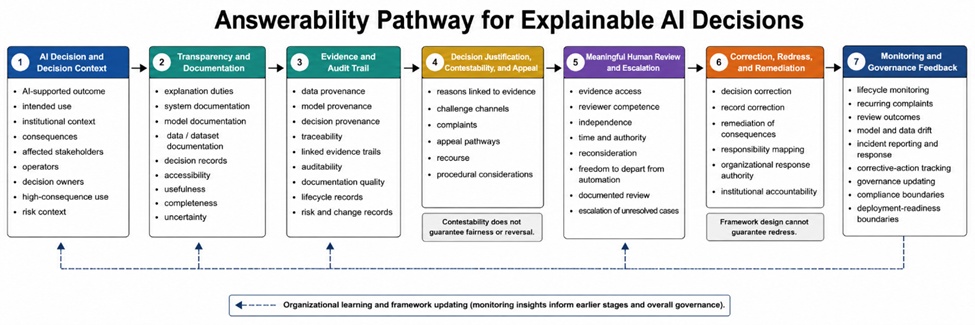
Figure 1. Answerability Pathway for Explainable AI Decisions
A conceptual pathway diagram showing AI decision output connected to transparency duties, documentation, evidence trails, decision justification, contestability, appeal, human review, escalation, correction, redress, monitoring, and governance feedback.
Human review should not be treated as meaningful merely because a person appears in the workflow. Review quality depends on access to relevant evidence, freedom to depart from the automated recommendation, competence to evaluate technical and domain considerations, and authority to trigger correction or escalation. Contestability likewise does not guarantee procedural fairness, appeal does not guarantee reversal, and redress cannot be claimed where an organization lacks practical correction or remediation capacity.
Governance gaps often emerge because organizations adopt broad principles without establishing the mechanisms required to apply them. Ethical principles can orient decision-making, but they do not independently allocate responsibility, generate evidence, create review authority, or ensure corrective action [21]. A principle-to-practice gap therefore arises when responsible-AI language is not connected to lifecycle duties and institutional capacity.
Documentation, assessment, auditing, stakeholder engagement, and monitoring tools operate at different lifecycle stages and serve different purposes [22]. A documentation gap may originate during data collection, whereas an evidence-trail gap may become visible only when an individual decision is challenged. Auditability gaps appear when records exist but cannot be accessed or interpreted, and decision-justification gaps arise when reasons are reconstructed after the outcome rather than recorded contemporaneously.
High-level convergence around transparency, fairness, responsibility, and related principles can conceal substantial differences in interpretation and implementation [23]. Symbolic transparency may disclose general system information while omitting evidence needed to understand a particular decision. Similar gaps arise when responsibility is described collectively but no actor has sufficient authority to investigate, respond, or correct.
Responsible-AI governance requires structural, procedural, and relational mechanisms across the lifecycle [24]. Structural mechanisms allocate authority; procedural mechanisms establish documentation, review, and escalation; relational mechanisms coordinate stakeholders and organizational functions. When these mechanisms are disconnected, responsibility ambiguity, weak human review, contestability without remedy, monitoring failure, and delayed incident response may persist despite extensive governance language.
Public-governance research further demonstrates the importance of context, impact, multidisciplinary assessment, and continuing evaluation [25]. High-consequence systems may require more demanding evidence and review arrangements, but the framework does not prescribe universal thresholds. Model drift, data drift, changing use contexts, unresolved complaints, and incidents should instead trigger context-specific reassessment. Table 2 maps auditability, organizational accountability, contestability, appeals, human redress, and lifecycle governance gaps across AI decision systems.
Table 2. Auditability, Organizational Accountability, Contestability, Appeals, Human Redress, and Lifecycle Governance Gaps in Explainable AI Systems: Audit Trails, Traceability, Responsibility Mapping, Human Review, Review Independence, Escalation, Decision Justification, Redress, Monitoring, Incident Response, and Governance Boundaries
Governance requirement or gap | Lifecycle or decision stage | Core governance question | Responsible actor or function | Required evidence or procedure | Potential output or consequence | Failure or responsibility gap | Boundary statement |
Auditability | Validation and operation | Can a competent reviewer examine relevant evidence? | System owner and audit function | Defined scope, access, criteria, and evidence | Audit-ready evidence set | Records exist but cannot support review | Auditability does not prove accountability |
Audit trail | Development to retirement | What actions and changes occurred? | Technical and records functions | Contextualized logs and change records | Reconstructed chronology | Logs lack meaning or ownership | Logs alone do not establish responsibility |
Traceability | Entire lifecycle | Can data, model, human action, and outcome be linked? | Data, model, deployment, and governance owners | End-to-end lineage | Traceability map | Broken evidence connections | Traceability does not prove decision validity |
Responsibility mapping | Procurement and deployment | Who controls each material decision? | Governance function | Role, authority, and escalation map | Responsibility matrix | Shared responsibility becomes no responsibility | Formal allocation does not prove performance |
Human-review gap | Decision and appeal | Can reviewers exercise informed judgment? | Review owner | Evidence access, competence, authority, reasoning record | Substantive reconsideration or confirmation | Automation bias or rubber stamping | Human presence is insufficient |
Review independence | Appeal | Is the reviewer sufficiently separated from the original decision? | Appeal function | Conflict assessment and alternative escalation | Independent review record | Self-review or managerial pressure | Independence is context-dependent |
Contestability gap | Post-decision | Can stakeholders challenge the outcome or process? | System deployer and complaint function | Accessible challenge channel and decision evidence | Contestation record | Challenge without institutional response | Contestability does not guarantee fairness |
Appeal and complaint pathways | Post-decision | Are reconsideration and broader complaints distinguished? | Review and complaint functions | Clear intake, routing, timing, and authority | Appeal or complaint decision | Confused or duplicative procedures | Availability does not guarantee remedy |
Decision-justification gap | Decision stage | Are reasons linked to contemporaneous evidence? | Decision owner | Reason statement tied to decision provenance | Justification record | Post-hoc rationalization | Justification does not prove correctness |
Redress gap | Correction and remediation | Can valid findings alter records, decisions, or consequences? | Authorized institutional function | Correction power, remedy options, follow-through | Correction or remediation | Symbolic acknowledgement | Redress cannot be guaranteed by framework design |
Monitoring gap | Post-deployment | Are changes in performance, use, impact, and complaints detected? | Monitoring owner | Technical, procedural, incident, and stakeholder indicators | Monitoring report | Accuracy-only monitoring | Monitoring cannot eliminate residual risk |
Drift gap | Post-deployment | Have model or data assumptions changed? | Model and data owners | Baselines, thresholds, contextual review | Drift-review record | Undetected degradation | Thresholds require domain validation |
Incident-response gap | Post-deployment | Can failures be contained and investigated promptly? | Incident-response function | Reporting criteria, authority, preserved evidence | Response and remediation record | Delayed escalation or repeated harm | Response procedures do not guarantee remediation |
Accountability gap | Organization-wide | Who must justify, answer, and correct? | System-deploying organization | Institutional authority and response duties | Accountability map | Outsourced or diffused responsibility | Governance architecture does not prove accountability |
No compliance claim boundary | Governance review | Is the framework being treated as legal proof? | Governance and legal functions where applicable | Explicit claim limitation | Compliance-boundary statement | False assurance | Domain-specific legal interpretation remains necessary |
No deployment-readiness boundary | Approval and change review | Is checklist completion being mistaken for readiness? | Decision authority | Contextual validation and capacity assessment | Readiness limitation statement | Premature deployment | The framework is not deployment certification |
The proposed framework begins with AI use-case and decision-context definition. Organizations should identify the institutional decision, intended role of the AI system, foreseeable consequences, affected stakeholders, and limits of automated influence. Ethical principles such as autonomy, beneficence, non-maleficence, justice, and explicability can inform this stage, but they must be translated into context-specific governance questions rather than treated as sufficient operational rules [26].
The second stage maps stakeholders, responsibilities, and decision rights. Human-centered governance should combine reliable technical design with organizational controls, human authority, monitoring, and channels for reporting failure [27]. The framework therefore distinguishes developers, data owners, model owners, system deployers, operators, reviewers, decision owners, auditors where supported, and governance functions. Each role should be linked to evidence duties, escalation authority, and correction capacity.
The third stage allocates transparency duties and defines documentation, evidence-trail, auditability, traceability, human-review, contestability, appeal, complaint, and redress requirements. Stakeholder participation should inform these requirements because system values and acceptable trade-offs cannot be determined only by technical actors [28]. Participation is not a transfer of responsibility to affected stakeholders; the organization retains responsibility for interpreting feedback and acting on material findings.
The fourth stage connects governance mechanisms to organizational accountability. Organizational AI governance concerns the allocation of decision rights and accountability through coordinated structures, processes, and relational mechanisms [29]. The framework therefore links monitoring, incident reporting, model and data drift review, governance escalation, and remediation to named functions with authority to act. Outsourcing technical components does not remove the deploying organization’s responsibility for its decision context.
The final stage establishes review and updating. Values embedded during design require continuing verification because implementation, use, and context can alter whether those values are realized [30]. Audit findings, appeals, complaints, incidents, drift, and stakeholder feedback should therefore update documentation, controls, and responsibility arrangements. Table 3 presents the proposed policy and organizational framework for making AI decisions answerable through transparency duties, auditable evidence, contestability, human review, and meaningful redress.
Table 3. Proposed Policy and Organizational Framework for Answerable AI Decisions: Use-Case Definition, Responsibility Mapping, Transparency Duty Allocation, Documentation Requirements, Evidence Trails, Auditability, Traceability, Human Review, Contestability, Appeals, Complaints, Redress, Risk Management, Lifecycle Monitoring, Incident Response, Governance Review, and Deployment Boundaries
Framework stage | Core purpose | Required input | Governance function | Potential output | Validation or oversight need | Failure risk | Feedback mechanism | Decision boundary |
Use-case and decision-context definition | Define the institutional decision and AI role | Purpose, consequence, stakeholders, domain | Establishes scope | Use-case statement | Domain and stakeholder review | Function creep | Periodic purpose review | Scoping does not prove acceptability |
Stakeholder and responsibility mapping | Identify affected and accountable actors | Workflow and dependencies | Allocates answerability | Responsibility map | Cross-functional validation | Missing actors or diffuse ownership | Organizational-change review | Mapping does not prove accountability |
Transparency-duty allocation | Define information duties by audience and purpose | Stakeholder questions | Structures disclosure | Transparency register | Accessibility review | Symbolic disclosure | User and reviewer feedback | Transparency is insufficient alone |
Documentation requirements | Specify lifecycle records | Use context and risk profile | Plans evidence generation | Documentation schedule | Records-quality review | Unusable documentation | Audit and review findings | Documentation does not establish compliance |
Evidence-trail design | Link data, model, decision, review, and incident records | Documentation architecture | Enables reconstruction | Evidence specification | Traceability testing | Fragmented evidence | Challenge and incident findings | Evidence does not prove correctness |
Auditability and traceability design | Enable competent examination | Evidence trail and review objectives | Supports scrutiny | Auditability plan | Scope, access, competence, independence | Audit theatre | Corrective-action tracking | Auditability is not accountability |
Human-review pathway | Define substantive reconsideration | Risk, reviewer role, evidence needs | Adds contextual judgment | Review protocol | Competence, authority, workload, independence | Rubber stamping | Review-outcome analysis | Human involvement is insufficient |
Contestability pathway | Enable structured challenge | Decision evidence and access needs | Supports answerability | Contestation procedure | Burden and accessibility evaluation | Challenge without response | Dispute-pattern analysis | Contestability does not guarantee fairness |
Appeal and complaint design | Route reconsideration and process concerns | Institutional authority | Separates review functions | Appeal and complaint map | Timeliness and independence review | Confused pathways | Complaint trend review | Availability does not guarantee remedy |
Redress and remediation design | Connect valid findings to correction and learning | Remedy authority and root-cause evidence | Converts review into action | Redress plan | Capacity and follow-through review | Symbolic remedy | Outcome verification | Redress cannot be guaranteed |
Decision-justification design | Link reasons to evidence | Decision factors and human inputs | Creates answerable rationale | Justification record | Completeness and fidelity review | Post-hoc rationalization | Appeal findings | Justification does not prove validity |
Risk and impact review | Identify, assign, and monitor risks | Technical, organizational, and stakeholder evidence | Coordinates risk decisions | Risk record | Independent challenge where appropriate | Checklist assessment | Monitoring and incident data | No certification of risk acceptability |
Lifecycle monitoring and drift review | Detect technical and contextual change | Baselines, indicators, complaints | Triggers reassessment | Monitoring and drift records | Periodic governance review | Unseen degradation | Retraining, restriction, or redesign | Monitoring cannot remove residual risk |
Incident reporting and response | Detect, contain, investigate, and correct failures | Incident taxonomy and authority map | Supports failure management | Incident record | Simulation and post-incident review | Delayed action | Lessons-learned process | Response design does not ensure remediation |
Organizational accountability mapping | Connect duties to authority and response capacity | Role map and governance structures | Establishes institutional answerability | Accountability architecture | Senior governance review | Responsibility without authority | Audit and incident findings | Formal structures do not prove accountability |
Governance review and updating | Revise framework as evidence changes | Audits, appeals, incidents, drift, feedback | Enables organizational learning | Updated governance framework | Documented change approval | Static governance | Continuous feedback loop | Updating does not prove universal validity |
Claim and deployment boundaries | Prevent legal, ethical, and operational overstatement | All framework evidence and limitations | Controls interpretation | Boundary statement | Domain-specific validation | Governance washing | External review where appropriate | No compliance or deployment-readiness claim |
Figure 2 presents the proposed policy and organizational framework for answerable AI decisions, integrating transparency duties, documentation, auditable evidence, contestability, human review, redress, lifecycle monitoring, and governance updating.
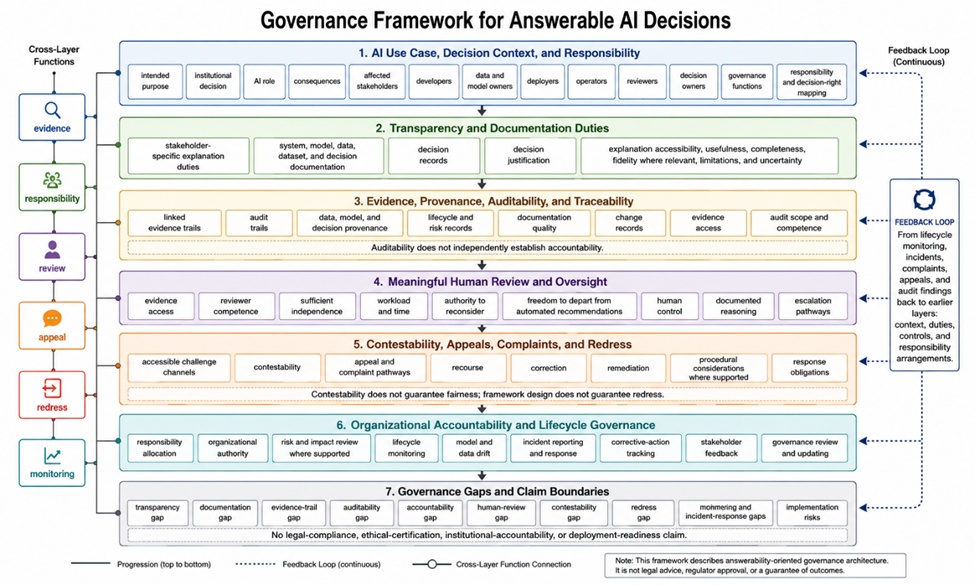
Figure 2. Governance Framework for Answerable AI Decisions
A conceptual governance framework showing AI use-case definition, responsibility mapping, transparency duties, documentation, evidence trails, auditability, traceability, human review, contestability, appeals, redress, monitoring, incident response, organizational accountability, and governance updating.
The first implementation risk is governance symbolism. Transparency statements, documentation templates, ethics principles, and committees may produce visible activity without usable evidence or corrective authority. Transparency should therefore be evaluated against concrete stakeholder questions, while documentation should be tested for accuracy, currency, accessibility, and relevance. Organizations should avoid treating disclosure volume as a proxy for answerability, particularly because visibility alone cannot resolve institutional accountability gaps [3].
A second risk is evidence fragmentation. Audit logs may record technical events while omitting decision context, human judgment, responsibility, or downstream consequences. Evidence-trail design should therefore connect system, model, data, decision, review, and incident records. Research should examine how such evidence can remain proportionate, privacy-conscious, interpretable, and resistant to retrospective rationalization. Operational records should support governance inquiry rather than become passive archives [11].
A third risk is procedural façade. Human reviewers may defer to automated recommendations; contestability may impose heavy burdens on affected persons; and appeal channels may lack authority to correct outcomes. Reviewer competence, independence, workload, evidence access, and intervention authority should be evaluated directly. Challenge pathways should not require individuals to reproduce information already controlled by the organization, and their effectiveness should be assessed by responsiveness rather than mere availability [18].
A fourth risk concerns organizational capacity and overprescription. The proposed framework requires staff, domain expertise, records management, authority, and correction resources that may be unevenly available. Implementation should therefore be treated as a context-specific research and governance problem rather than a universal checklist. The recommendations are conceptual and do not constitute legal advice, compliance guidance, policy prescription, audit instruction, procurement advice, platform-selection advice, or deployment instruction [24].
This article has proposed a conceptual governance framework for making AI decisions answerable through connected transparency duties, system and decision documentation, auditable evidence, traceability, responsibility mapping, contestability, appeals, meaningful human review, correction, redress, lifecycle monitoring, incident response, and governance updating. Its central claim is that explanation availability becomes institutionally valuable only when explanations are connected to evidence, authorized responsibility, effective challenge, review quality, and practical remediation capacity. Answerable AI should therefore be evaluated through the organization’s ability to preserve relevant records, justify decisions, respond to challenge, assign responsibility, correct failures, and learn from monitoring and incidents. The framework does not establish legal compliance, procedural fairness, ethical sufficiency, institutional accountability, or deployment readiness; it offers a structured basis for developing and examining those governance capacities within specific domains.
None
None
None
None
Open Access The author(s) retain copyright. This article is licensed under the Creative Commons Attribution-NonCommercial-ShareAlike 4.0 International License. It may be shared and adapted for non-commercial purposes with appropriate attribution, an indication of changes, and distribution of adaptations under the same license. Third-party material may be subject to separate terms identified in its credit line. View the license at https://creativecommons.org/licenses/by-nc-sa/4.0/.
 Transparent Intelligence Publishing